
Introduction
Bulk solids don't behave on schedule. Bulk density shifts, moisture creeps in, a refill aerates a powder, and suddenly the same screw speed delivers a different mass. A volumetric feeder can't see any of that, so the downstream extruder, blender, or packaging line pays for it.
A loss-in-weight (LIW) feeder solves this by weighing the hopper and its contents, then adjusting the metering device so the weight drops at the target rate.
This guide covers operating principles, feeder types, components, benefits and limits, applications, and how to select, install, and maintain these systems.
Key Takeaways
- LIW feeders measure mass flow directly instead of assuming constant bulk density.
- Accuracy depends on metering design, refill, flow, controls, and installation, not just load cells.
- Single-screw, twin-screw, vibratory, and pump designs suit different materials.
- Choose LIW for continuous or repeatable dosing; use net weigh fillers for discrete bags and boxes.
What Is a Loss-in-Weight Feeder?
A loss-in-weight feeder is a gravimetric feeder that calculates feed rate from the drop in combined weight of the hopper, feeder assembly, and material. Typically it sits above a downstream process such as an extruder, mixer, blender, or continuous production line.
"Weight feeder" is an umbrella term. Acrison's weigh feeder catalogue lists LIW, batch/dump, and weigh-belt equipment under that single label, so it isn't a synonym for LIW.
| Category | How it works |
|---|---|
| Loss-in-weight | Weighs the hopper assembly, calculates weight loss per unit time, adjusts metering speed |
| Volumetric | Delivers discrete volumes per time; no inherent density compensation |
| Weigh-belt | Weighs a moving material bed on a short belt and adjusts belt speed |
| Net-weigh filler | Weighs repeated discrete charges into bags or boxes |
How Does a Loss-in-Weight Feeder Work?
The measurement loop
Load cells monitor the hopper assembly continuously. The controller electronically tares the assembly, calculates weight loss per unit time, and compares it with the operator's setpoint. If the rate drifts high or low, it changes screw speed, vibratory output, or pump speed to correct.

At startup, the hopper is filled and flow stabilizes. The controller then calculates an initial rate, and feedback control holds the target from there.
Refill and its cost to accuracy
Refill is the weak point. When the hopper hits its minimum weight, refill begins and weight-loss feedback pauses.
In conventional designs, the feeder runs volumetrically during refill, so density changes can cause errors during refill and recovery. Some Coperion controllers store hopper-weight-dependent feed factors to adjust speed, so fixed-speed refill isn't universal.
Design factors that affect accuracy:
- Hopper capacity and available space
- Refill size and frequency (small, frequent refills disengage gravimetric control more often)
- Post-refill delay before control resumes
- Refill speed: fast refills shorten volumetric time, but excessive transfer force can change powder density
A 2024 Springer study on a K-Tron KT20 hopper redesign reduced feed-factor variability and allowed lower refill levels.
Steady-state performance was similar for both hoppers, and accurate mass-flow measurement still wasn't available during refill. Better refills don't erase that limitation.
External disturbances
Several things distort the weight signal:
- Structural vibration from nearby equipment
- Rigid inlet or outlet connections
- Air currents
- Pressure changes, such as extruder backpressure lifting the outlet, clogged vent filters, or nitrogen blanketing
- Material buildup
Manufacturers recommend stable mounting, flexible connections, shock mounts, and shielding from drafts. Electronic pressure compensation can adjust the weight signal for pressure effects. Treat any accuracy figure as valid only for the conditions the vendor tested.
Components and Types of Loss-in-Weight Systems
Principal components
- Weighed hopper and load cells or weighing platform
- Metering device and drive motor
- Controller
- Discharge and refill connections
- Frame and vibration isolation
- Refill hopper and refill device
Choosing a metering device
| Metering type | Best for |
|---|---|
| Single screw | Free-flowing pellets and powders |
| Twin screw | Sticky, bridging, or flooding powders and pigments |
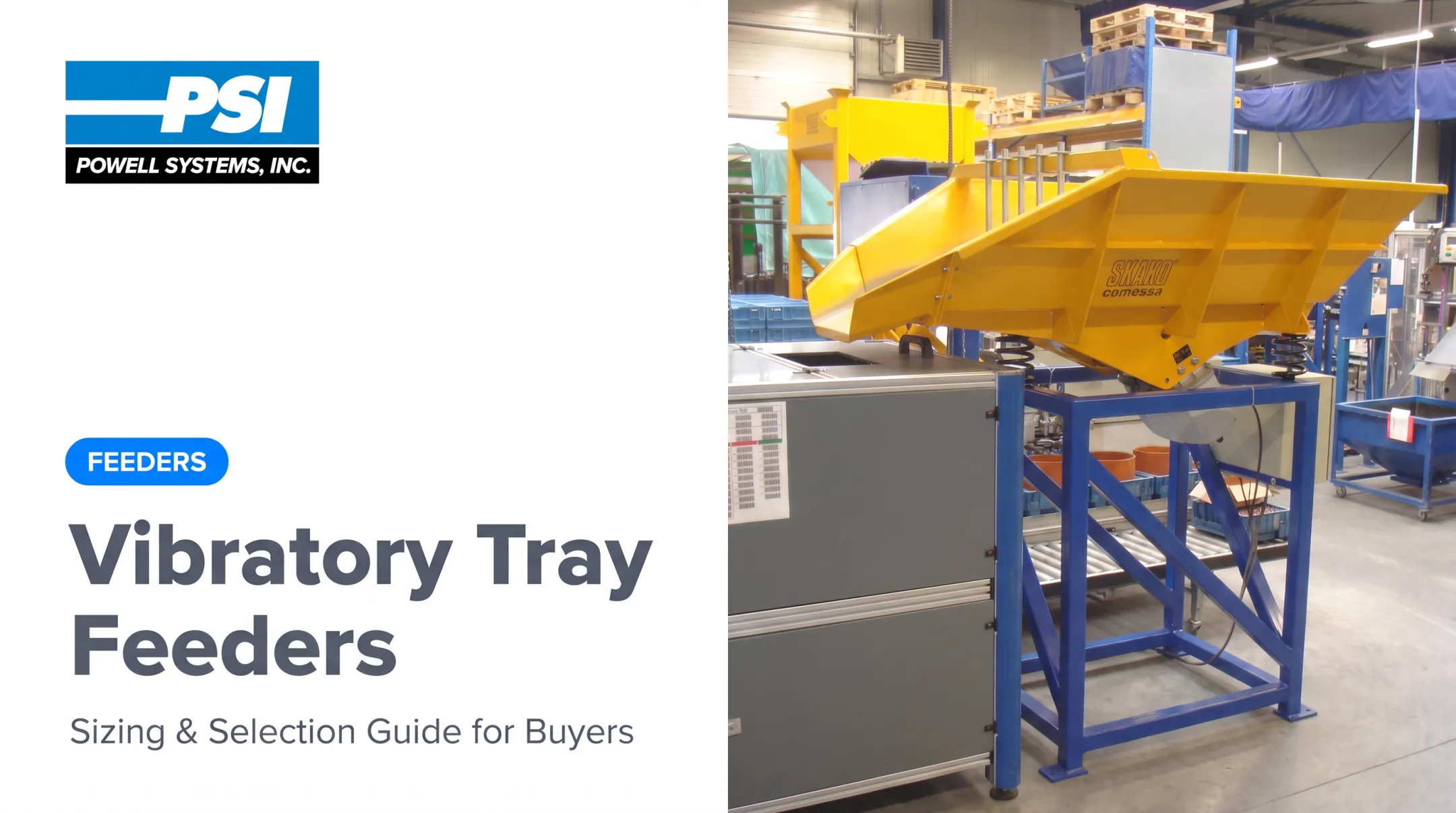
| Vibratory | Gentle feeding of free-flowing flakes, powders, and friable products |
| Pump-based | Liquids such as flavors, acids, and plasticizers; verify compatibility and sanitary needs |
For liquids, Coperion places the pump outside the weighing area with a flexible tank-to-pump connection, and heating can handle viscosity-sensitive duties.
Flow aids
Common flow aids include:
- Vertical agitators for bridging and ratholing in cohesive materials
- Controlled hopper-wall vibration (for example Coperion's ActiFlow) to aid discharge
- Limited aeration only when it will not fluidize the material
Skip external vibration as a flow aid. It corrupts the weight signal. Refill aeration can also fluidize powder and flush it through screws, causing overfeeding.
Multi-ingredient and batch use
Continuous direct compression in pharmaceuticals uses individual API and excipient feeders into a blender. LIW can also dispense batches, delivering ingredients simultaneously into a collection hopper to cut batch time.
Versus volumetric and weigh-belt
Volumetric feeders infer mass from volume, so density swings show up as rate error. Weigh-belt feeders weigh a moving bed and, as with Coperion's SWB, need no refill device. Choose among LIW, volumetric, and weigh-belt options based on material form, rate, and layout.

Benefits, Limitations, and Applications
Benefits
- Compensates for bulk density and nonuniform flow changes
- Reduces manual recalibration
- Improves recipe consistency
- Gives real visibility into material usage
- Detects empty hoppers, bridging, arching, and ratholing, which volumetric feeding alone can't see
Be careful with accuracy numbers. Acrison's Model 403 lists typical ±0.25 to 1% or better at two sigma over consecutive one-minute weighments. That's a model-specific claim, not a universal guarantee. Repeatability also differs from mean setpoint error, so compare vendors using the same material, setpoint, and sample time.
Applications
- Plastics compounding: gravimetric blending and extrusion feeding
- Food: flavors, aromatics, and meat slurry to extruders
- Chemicals: acids and plasticizers
- Pharmaceuticals: Eli Lilly developed continuous direct compression lines for Verzenio using individual feeders into a blender
Poor-fit conditions
- Materials that won't discharge reliably
- Severe vibration or unplanned pressure swings
- Refill capacity too small for the process
- Poor cleaning access
- Jobs needing only approximate dosing
Continuous feeding versus discrete packaging
LIW maintains controlled flow into a downstream process. Packaging is a different job.
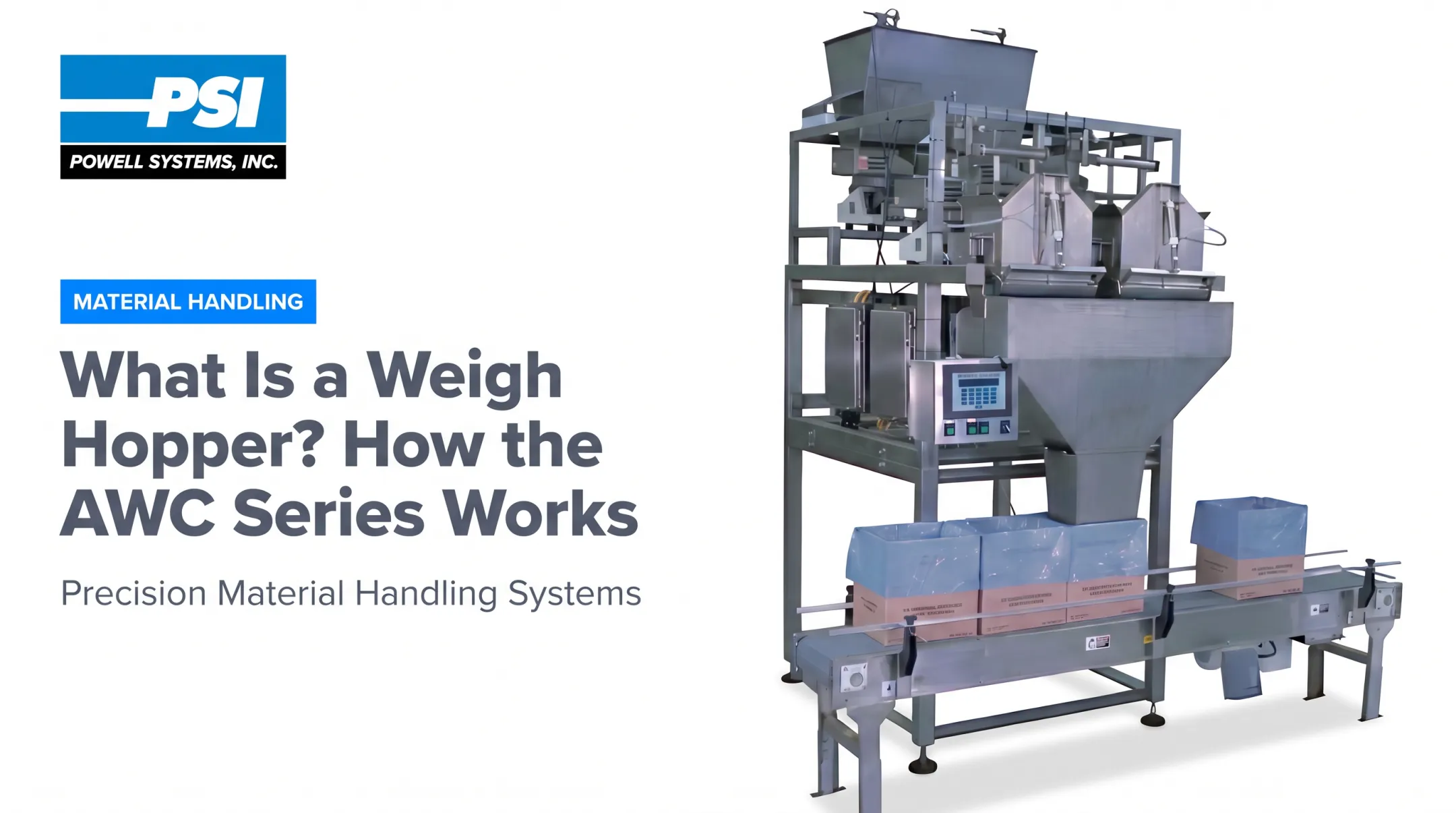
Powell Systems builds automatic net weigh fillers for the fastener and IQF food industries. The AWC Series uses strain-gauge load cells, runs vibratory feeding until the programmed weight is reached, then dumps the weigh hopper into a bag, box, or other container.
It handles fresh, frozen, or dry food and package weights from under 1 lb to over 50 lbs. The ASA is a PLC-controlled net weigh/count system for hardware and fasteners.
If you need individual packages of fasteners or IQF product, that's a net weigh filler. If you need a steady stream into an extruder, that's LIW.
How to Select, Install, and Maintain a Loss-in-Weight System
Start with the process
Document the following before talking to vendors:
- Material and its feed-rate range (minimum and maximum)
- Required consistency
- Operating hours and continuous or batch duty
- Upstream supply method and downstream process
- Available space and control-system requirements
Characterize the material
Coperion's selection inputs include:
- Particle size and shape
- Bulk density, compressibility, and cohesive strength
- Moisture and oil or fat content
Also factor in abrasiveness, friability, dust, segregation, and tendency to bridge or flood. Test where you can.
Then match hopper geometry, screw or vibratory configuration, flow aids, refill method, and contact materials. US requirements may apply:
- Food: FDA 21 CFR 117.40 requires cleanable, maintained equipment with food-contact construction; gravimetric systems are explicitly included
- Dairy and sanitary: 3-A acceptance where applicable
- Hazardous locations: OSHA 29 CFR 1910.307 and NFPA 70
- Combustible dust: NFPA 660 (2025) consolidates earlier standards including 652 and 654; OSHA says to test the actual material for Kst
Install to protect the signal
- Isolate the assembly from nearby vibration
- Use flexible connections so forces don't transfer into the hopper
- Shield from air currents
- Keep cables and piping from resting on the scale
- Check pressure effects at the discharge point
Commission and calibrate
- Confirm empty-hopper zero
- Verify load-cell response with known test weights, with no binding on the cell
- Test across the full operating range
- Check refill transitions
- Run catch tests to validate mass flow against setpoint
- Record baseline data

Maintain and troubleshoot
Intervals are model-specific. One manufacturer manual calls for daily checks of loose hopper parts, air quality, and obstructions, with weekly calibration and hose-connection checks. Also watch for:
- Screw or discharge-tube buildup and hopper blockage
- Worn screws or vibratory elements
- Failing flow aids and flexible connections
- Calibration drift and noisy weight signals
- Leaks, seal defects, and refill-device faults
- Refill alarms and controller error logs
Frequently Asked Questions
How does a weight feeder work?
It measures the weight of material and uses that to control discharge rate. A loss-in-weight feeder tracks hopper weight loss over time, while a weigh-belt feeder weighs a moving bed of material.
What is the purpose of a weight feeder?
It delivers a controlled, repeatable quantity of material to a mixer, extruder, recipe, or packaging operation, holding the specified mass rate despite density and flow variations.
What is a weight feeder?
A weight feeder is equipment that meters material using weight information. It's a broad category, and loss-in-weight feeders are one gravimetric type within it.
What are the different types of weight feeders?
Main types are loss-in-weight, weigh-belt, and batch weighing. Loss-in-weight metering uses single-screw, twin-screw, vibratory, or pump configurations.
What is a gravimetric feeder?
A gravimetric feeder regulates flow by measuring weight or mass rather than volume alone. That lets it respond to changes in material density or flow.