
That difference touches operator safety, floor space, equipment integration, maintenance, and operating cost. Manual handling is a real exposure: Liberty Mutual's 2023 Workplace Safety Index (using 2020 data) attributes $1.80B, or 21.6%, of covered US manufacturing injury costs to overexertion involving outside sources. That figure is context, not proof that any one machine saves a set amount.
The right choice depends on your parts, your container, the receiving point, and your required throughput.
Key Takeaways
- A bin tipper rotates a loaded bin to discharge it; a lift tipper raises the bin first and may also tip it.
- Supplier terms overlap, so confirm exactly what motion a proposed machine performs.
- Bin tippers suit nearby receivers; lift tippers suit elevated hoppers, feeders, and packaging lines.
- Payload, discharge height, receiver geometry, and cycle rate drive the decision.
Bin Tipper vs Lift Tipper: Quick Comparison
Names are unreliable here. Remcon lists box dumper, gaylord dumper, bin tipper, and container tipper as alternate names for one machine type. Flexicon, meanwhile, calls equipment that discharges 6-10 ft above the floor a high-lift box dumper. Compare motion and discharge height, not labels.
| Factor | Bin tipper | Lift tipper |
|---|---|---|
| Upfront and operating cost | Depends on capacity, dump height, drive, and controls | Adds lifting structure, guarding, and possible facility changes |
| Handling and integration | Tip angle, bin retention, receiver location, bridging risk | Lift height, overhead clearance, load moment, positioning accuracy |
| Safety and durability | Frame, guarding, interlocks, e-stops, wear access | Same, plus lift drive, structural loading, inspection routine |
Don't assume a bin tipper is always cheaper. A rotation-only unit that can't reach your receiver costs more once you add a transfer step. No universal price or payback figure fits every setup, so quote each configuration against your required height and cycle rate.
What Is a Bin Tipper?
A bin tipper secures a loaded container and rotates it past its pouring angle to empty bulk parts into a hopper, conveyor, or another container. Some models also raise the bin, so check the manufacturer's motion description.
The benefits are practical:
- Less manual lifting of heavy or awkward loads
- Repeatable dumping instead of hand-tipping
- Fewer uncontrolled spills
What determines suitability
Engineering variables matter more than the product name:
- Maximum payload, including the bin itself
- Bin shape, dimensions, and center of gravity
- Tip angle and discharge height
- Receiver opening size
- Part size, fragility, and tendency to bridge or hang up
Vestil's manual, for example, states that container plus contents must not exceed the rated load. A payload-only reading is a common mistake.
Limitations
Bin tippers struggle when the receiver sits too high, when alignment is poor, or when bins are nonstandard. Floor space and operator access also need planning.
Buyer's checklist
- Container retention method (retaining bars, quick-release pins, or adjustable retainers)
- Controls and cycle time
- Electrical or hydraulic utilities on site
- Washdown or corrosion requirements
- Maintenance access
- Fit with existing material-flow equipment
Use Cases of a Bin Tipper
Bin tippers empty bulk parts into a hopper, feeder, conveyor, or workstation. Typical loads include:
- Fasteners, stampings, forgings, and castings
- Plastics and automotive components
- Recycling totes and bulk boxes dumped onto sorting lines, as Remcon describes
A controlled tilt makes more sense than a big lift when the receiver is close, at floor level, or at a scrap-handling station.

Case example: MF TECNO built a bottle-cap packaging line where caps arrive in octabins. The unloader tilts each octabin gradually into a hopper, then repeats the motion to clear material left at the bottom. A bucket elevator feeds downstream packaging. Treat it as a qualitative example of staged tipping rather than a source of labor, throughput, or spill figures.
What Is a Lift Tipper?
A lift tipper raises a loaded bin to a set height and may then tilt it into an elevated receiver. SOLLAU describes a lift-then-tip design. Lift-only units exist too, so confirm which you're buying.
Height matters when your line uses elevated hoppers, conveyors, feeders, weighers, or gravity-fed processes. A lift tipper connects floor-level loading to that equipment and reduces intermediate transfers.
At Powell Systems, Flow-Mation specialty feeder systems use gravity-feed containers, dumpers, lift tippers, and lift truck rotators. They feed screws, fasteners, stampings, and forgings into washing, heat treating, plating, thread rolling, inspection, and packaging.
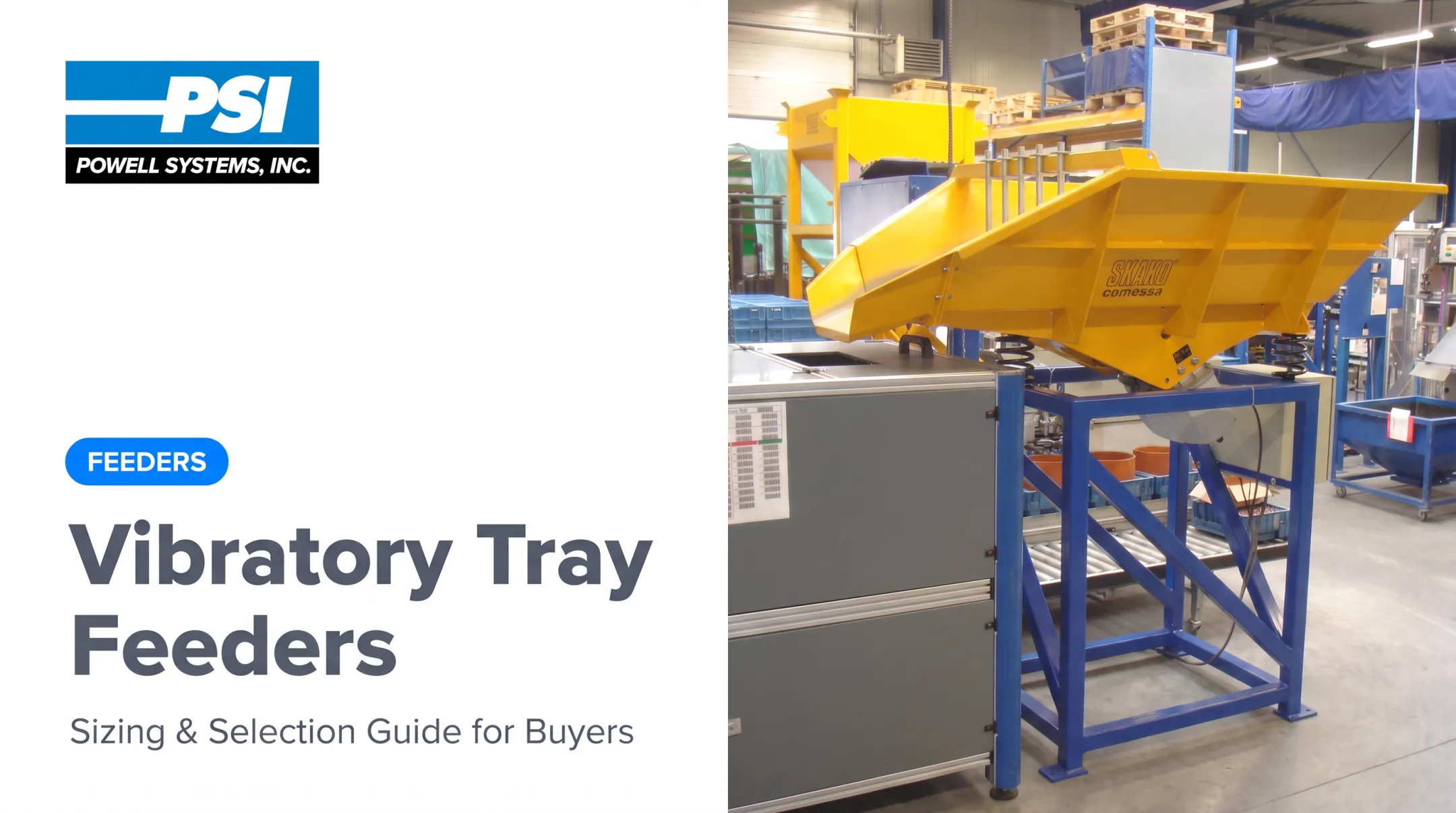
SKAKO lift tippers provide bulk loading for Powell weigh and count fillers while handling product gently.
Added design considerations
- Overhead clearance and floor loading
- Footprint and stability at maximum height
- Guarding around the raised bin
- Safe access during loading and unloading
Specification checklist
- Rated load at full lift height, not just the headline capacity
- Lift stroke and discharge angle
- Cycle time and control method
- Container retention and emergency stopping or lowering
- Maintenance points and integration with the receiving machine
SKAKO publishes 630–2,000 kg (about 1,390–4,400 lb) capacities and 1.5–5 m (about 5–16 ft) lift heights, but those ranges don't prove maximum capacity applies at maximum height. Ask for the rating of your exact configuration.

Use Cases of a Lift Tipper
Lift tippers serve high-volume lines where parts move from floor-level containers into elevated hoppers, feeders, scales, or automated filling systems. Typical sectors include:
- Fasteners and stampings
- Automotive and heavy-truck components
- Steel and aluminum processing
- Plastics and food packaging
Case example: Quality Pasta needed to move brittle pasta from Gaylord boxes to three packaging lines without excessive breakage or dust. Flexicon supplied two Open Chute Box Dumpers that raise and tilt boxes into 8 cu ft hoppers, plus three tubular cable conveyors.
The Flexicon case study reports under 1% breakage, but that figure belongs to the conveyors, not the dumpers alone. It also shows the naming overlap: a "box dumper" that raises and tilts.
Bin Tipper vs Lift Tipper: What Is Better?
The right choice depends on your plant. Weigh these factors:
- Material flow behavior and bridging tendency
- Bin payload and dimensions
- Required discharge height and receiver geometry
- Cycle frequency
- Floor and ceiling clearance
- Utilities, operator interaction, and safety requirements
- Maintenance resources and total cost of ownership
Choose a bin tipper when the receiver is reachable at a nearby or moderate discharge position and the job is straightforward dumping. Choose a lift tipper when parts must enter an overhead hopper, feeder, conveyor, or packaging line under control.
Verify before you buy
- Document full and partial load weights, including the bin.
- Measure the bin and the receiver opening.
- Confirm required tip angle and discharge height.
- Test representative parts for flow, since interlocking fasteners and stampings can hang up.
- Get written confirmation of safety features and integration limits.

A real-world pattern
PRAB documented Anthony Screw Products, an Ontario manufacturer, using a high-level automatic cart dumper to feed stringy machining turnings to a crusher. The goal was to cut floor-space demands and housekeeping from gravity bins.
The dumper is rated at 1,500 lb with a 180-second cycle; those are equipment specs, not measured plant throughput. The takeaway: elevation was needed because the receiver sat above floor level.
If your bins have unusual dimensions, Powell Systems builds standard and custom corrugated steel containers. Options include 7- to 14-gauge steel, 2-way or 4-way entry, and custom sizing. Send requirements to info@powell-systems.com.
Conclusion
A bin tipper can be the right call for controlled dumping into an accessible receiver. A lift tipper becomes necessary when elevation and line integration are central.
Before choosing, compare:
- Payload and container compatibility
- Discharge geometry and safety controls
- Facility constraints, maintenance, and lifecycle cost
Get ratings for your exact configuration in writing.
Frequently Asked Questions
What is the difference between a bin tipper and a lift tipper?
A bin tipper mainly tilts or rotates a container to dump it. A lift tipper raises the container to a higher discharge point and may also tip it. Supplier terminology varies, so confirm the motion.
Is a bin tipper suitable for heavy parts?
It depends on rated load, the loaded bin's center of gravity, container fit, retention, and the receiving point. Verify the manufacturer's rating includes the container weight.
When should a manufacturer choose a lift tipper?
Choose one for elevated hoppers, conveyors, feeders, or packaging systems, or when the required discharge height exceeds what a standard tilting unit reaches.
How do I determine the required tipper capacity?
Calculate maximum loaded bin weight, including the bin. Account for load distribution and dynamic operation, confirm bin dimensions, and choose equipment rated for the full operating profile.
What safety features should bulk parts dumping equipment include?
Look for guarding, bin retention, a stable frame, emergency stops, interlocks, controlled motion, and safe operator positioning. Document inspections too. Emergency stops don't replace lockout/tagout during servicing.
Can existing parts bins be used with a new tipper?
Only if dimensions, load rating, base, lifting points, and center of gravity match the equipment. Confirm fit with the supplier before purchase.