
Introduction
Automated feeding systems move, meter, orient, or deliver material into a downstream process with little manual intervention. This article covers industrial use: manufacturing, food processing, material handling, and packaging. It does not cover household pet feeders.
The problems are familiar. Material arrives unevenly, operators hand-feed parts, fragile product gets damaged, and doses drift. Then a starved packaging line or a jammed assembly station stops everything.
Powell Systems, a Fowler, Indiana manufacturer, started with steel tote boxes in 1920. It later built machinery that feeds, weighs, and packages parts automatically. Below, we cover how these systems work, the main equipment types, benefits and applications, and how to choose and implement one.
Key Takeaways
- An automated feeding system controls movement, metering, orientation, or delivery into the next process.
- The right system depends on the material, rate, accuracy, fragility, changeovers, and line design.
- Properly integrated feeding supports steadier throughput, less handling, and less product loss.
- Test with your actual product before you buy.
What Are Automated Feeding Systems?
Feeder, Automated Feeder, or Complete System
A feeder is a device that moves material. An automated feeder does it under sensor and control logic. A complete automated feeding system adds the surrounding pieces: supply, metering, transport, weighing, and the interface to the downstream machine.
Its purpose is to turn bulk or irregularly presented material into a controlled, repeatable flow for assembly, weighing, filling, or packaging.
Typical Components
- Hoppers or bulk storage
- Metering mechanisms
- Conveyors
- Orientation equipment
- Sensors and controls
- Weighing equipment
- Downstream machine interface
Not every system does everything. Some only convey or singulate parts. Others combine feeding with weighing, dosing, and packaging. CEMA, for instance, describes screw feeders as volumetric metering devices, which is a narrower job than weighing product.
How Automated Feeding Systems Work
Loading and Material Behavior
Material enters through a hopper, bin, tote, or conveyor. Consistent loading matters because an empty supply point stops the line.
The system must account for how the material behaves:
- Bulk density: hopper storage can compress material and change flow.
- Moisture or fat: raises cohesion and buildup, causing bridging.
- Shape: interlocking hardware needs gentler, more open feeding.
- Fragility: friable product needs gentle handling.
- Static: resin parts can cling to bowls and chutes.
Metering, Singulation, and Orientation
Three functions work together:
- Metering controls quantity
- Singulation separates items
- Orientation presents them in a predictable position
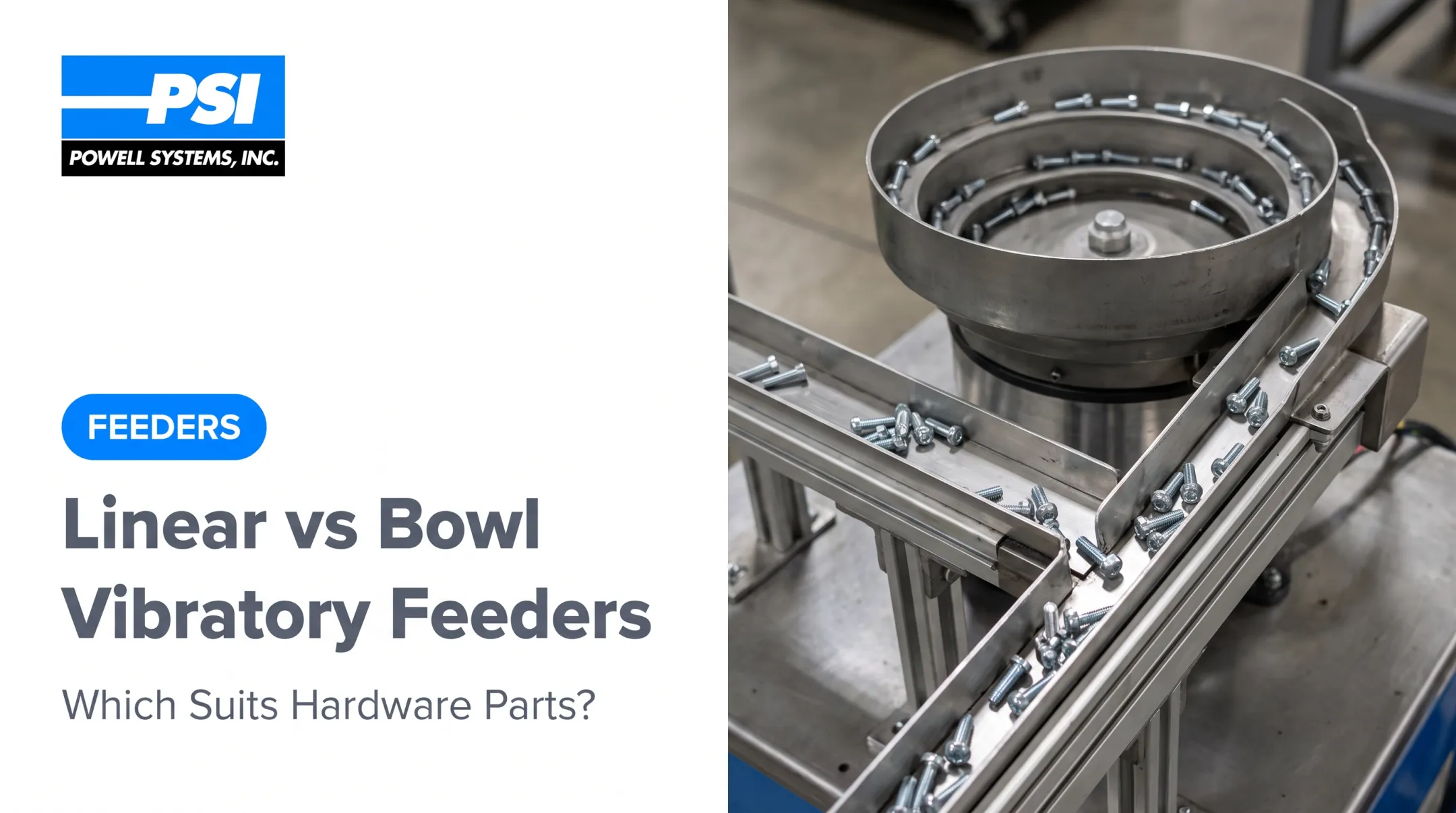
Mechanisms include vibratory movement, belts, rotary components, gravity, air assist, and robotic picking. No single mechanism fits every application.
Sensors and Controls
Sensors detect low supply, jams, and misfeeds. Controls coordinate speeds with upstream and downstream equipment. Standards such as PackML define machine states including blocked and starved, which map directly to accumulation and supply interruptions.
Weighing and Dosing
When a process needs a set quantity, weighing is added. Coperion explains that loss-in-weight feeders adjust speed from measured weight loss, but behave volumetrically during refill. Factor that refill transition into any accuracy evaluation.
Powell's AWC Series is a documented example. Product moves over one or more vibratory feed pans into a weigh hopper on strain-gauge load cells tied to a microprocessor.
Feeding stops at the programmed weight, and the hopper dumps into a bag, box, or other container. Powell lists average giveaway under 1/8 oz. for smaller pieces.
The Final Handoff
The last step is delivery to an assembly machine, packaging line, filling station, or shipping operation. Synchronization here prevents starvation, accumulation, and downtime.

Types of Automated Feeding Systems
Feed system selection follows product behavior, throughput, accuracy, and line layout. Keep the categories separate; each type does a different job.
| Type | Job |
|---|---|
| Vibratory and centrifugal | Move and orient compatible discrete parts |
| Belt and conveyor | Continuous transport, or gravimetric belt metering for fragile bulk |
| Hopper and elevator | Bulk supply and replenishment |
| Gravity and air-assisted | Simple supply or pneumatic part transfer |
| Net weigh and combination weigh | Deliver controlled weights into packaging |
| Flexible and robotic | Vision-guided presentation and pickup |
Weigh and Dosing Systems
Net weigh systems cut feeding at a programmed weight. Combination weighers weigh portions individually and select the combination closest to target. These are batch or portion functions, not the same as continuous mass-rate control.
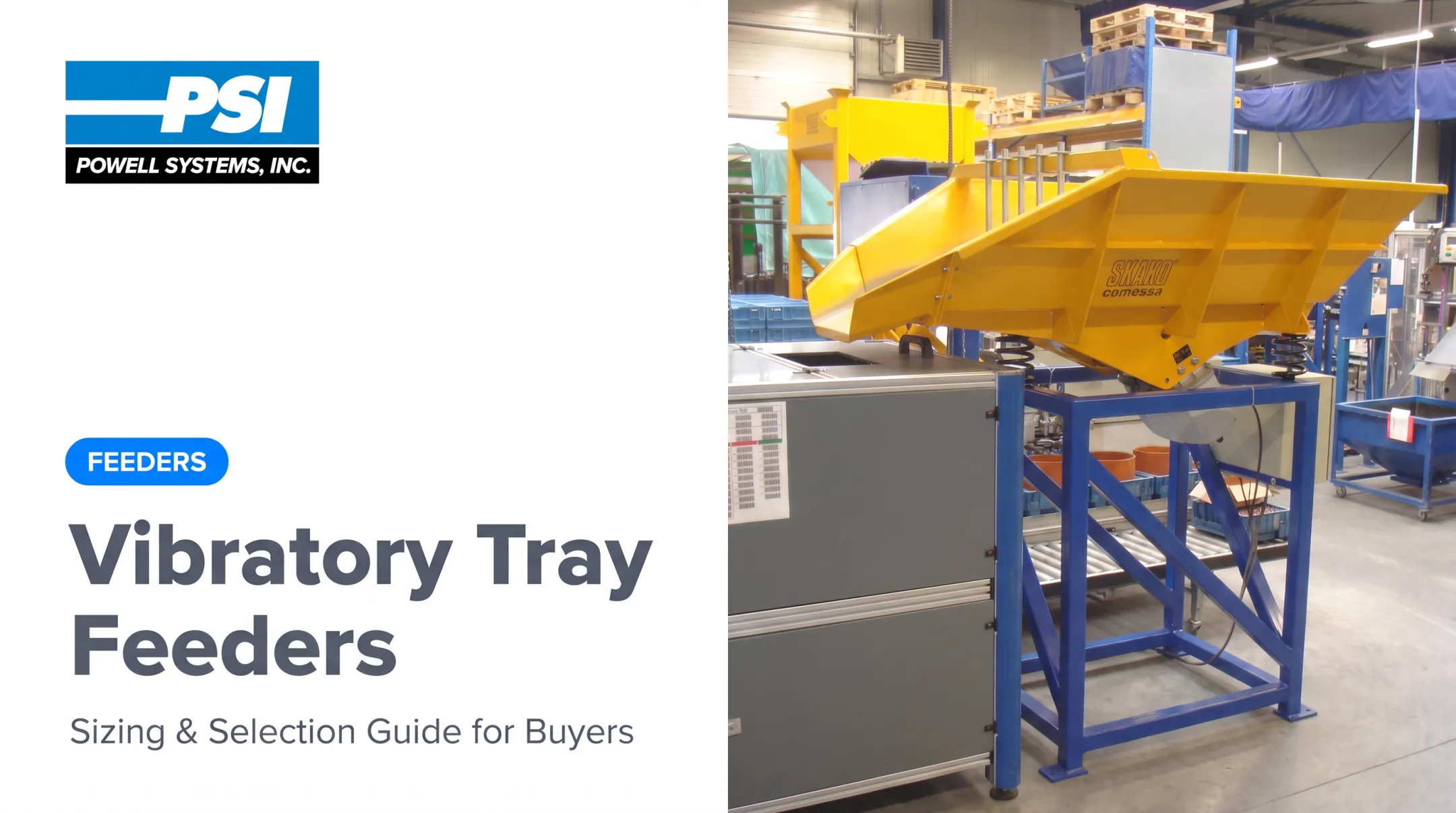
Powell's ASA is a PLC-controlled net weigh/count system with optional SKAKO vibration feeders for difficult hardware and lift tippers for bulk loading.
When Flexible or Robotic Feeding Fits
Choose flexible feeding when you face:
- Varied geometries or many SKUs
- Delicate product
- Frequent changeovers
A vibrating platform with vision and robotic pickup can present different parts without new tooling.
Packaging lines usually combine technologies: hopper, metering feeder, weigher, conveyor, and bagger or case packer.
Benefits and Applications of Automated Feeding Systems
Throughput and Consistency
A steady supply keeps downstream equipment running. Results still vary by case. NIST reports a 300% production increase at Coventry Industries after CNC machine-tending automation. That is a whole-cell result, not a feeder benchmark.
Benefits depend on design, product behavior, maintenance, line speed, and integration.
Material and Product Control
Good feeding reduces overfeeding, underfeeding, spillage, misfeeds, and extra handling. Measure these before installation:
- Waste and rejects
- Giveaway
- Rework
- Feed accuracy
Without a baseline, you cannot prove improvement.
Safety and Ergonomics
Automation can cut repetitive lifting, manual sorting, and awkward feeding positions. NIOSH's lifting equation recommends an index of 1.0 or less for manual tasks.
Automated equipment still needs:
- Guarding under OSHA 1910.212
- Lockout/tagout under 1910.147 for servicing
- Operator training and emergency stops
Applications
Common fits include:
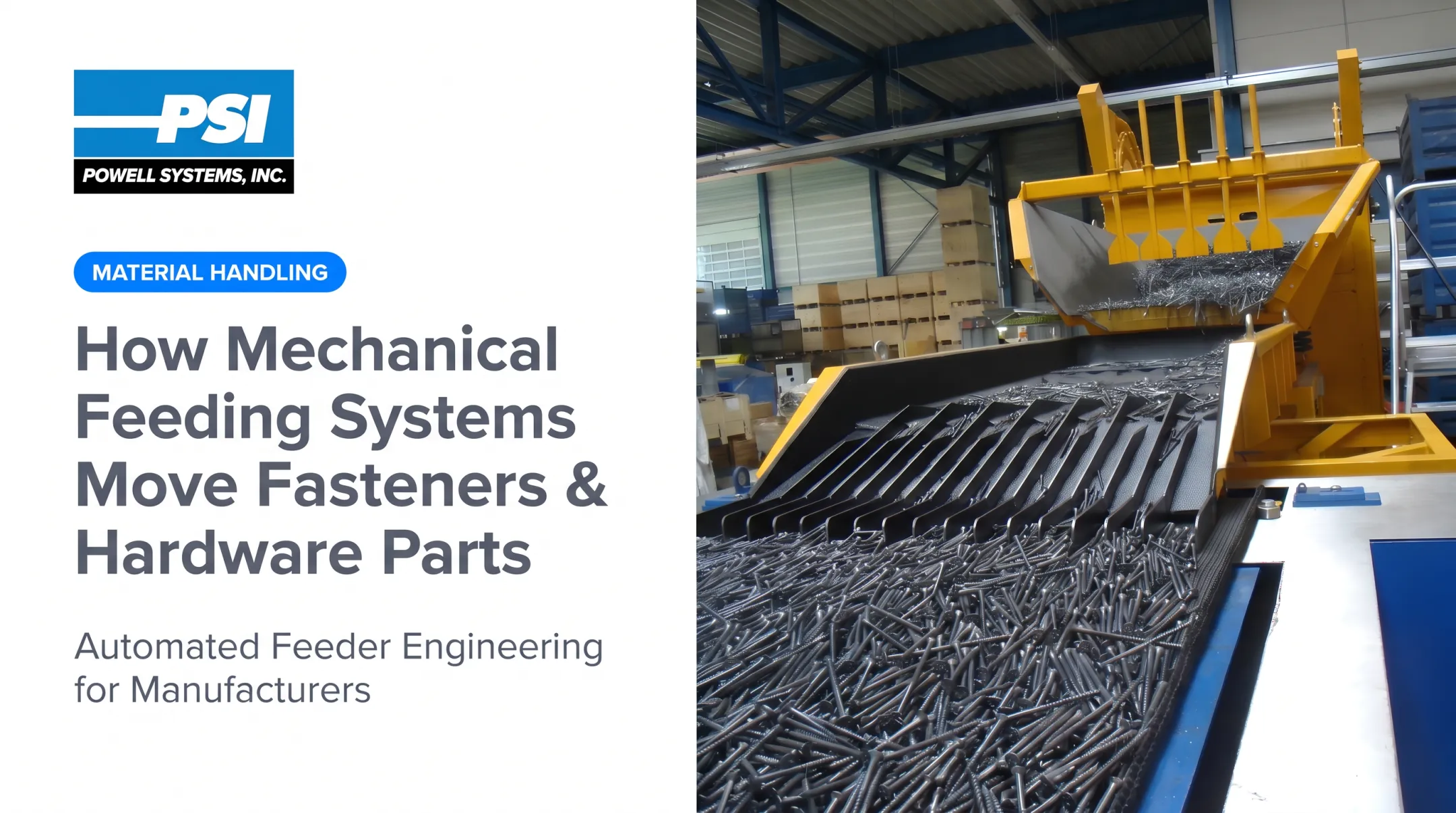
- Fasteners and stampings
- Automotive and heavy-truck parts
- Forgings and castings
- Steel, aluminum, and plastics
- Recycling and scrap
- IQF food
Discrete parts and food have different requirements. Food applications need cleanable construction and suitable food-contact materials under FDA 21 CFR 117.40. Powell's AWC Series has all-stainless-steel surfaces, high-pressure washdown construction, and USDA and Dairy-Grading approvals.

Packaging Operations
Feeding coordinates supply, weighing, filling, and packaging, improving shipping and handling. Powell focuses on automatic net weigh fillers for the fastener and IQF food industries. Configurations differ by application.
How to Choose and Implement an Automated Feeding System
Start With a Process Assessment
Begin with documented process data, not a favorite machine or a headline rate. NIST's automation guidance says to fix process inefficiencies first.
Document product characteristics:
- Dimensions, shape, and weight
- Surface finish and moisture
- Bulk density and fragility
- Static behavior and tolerance variation
Then production requirements:
- Target rate and acceptable accuracy
- Batch size and operating hours
- SKU count and changeover frequency
- Future capacity
Weigh the Tradeoffs
Match feeder type to your product and rate needs:
- High-speed dedicated equipment: fastest rates, least flexibility
- Flexible systems: handle variation at lower peak speed
- Gentle handling: protects fragile product during transfer
- Weighing or dosing: controls quantity at the feed point
Test Under Real Conditions
PMMI's factory acceptance guidance calls for actual production materials and agreed measurable criteria. Use real product, packaging, speeds, variation, and environment.
Short demos miss bridging, jams, wear, static, inconsistent presentation, and handoff accumulation. Run long.
Plan Integration
Check floor space, elevation changes, conveyors, controls, sensors, data collection, upstream supply, downstream equipment, and operator access.
Ask vendors about:
- Required utilities
- Communication protocols
- Changeover procedure
- Cleaning access
- Spare parts and maintenance intervals
- Training and warranty
- Technical support
Build the Business Case
Use your baseline data. Compare equipment cost with labor savings, less waste, fewer stoppages, higher usable throughput, better packaging accuracy, and reduced handling. Avoid generic ROI claims.
Define success metrics up front: feed accuracy, uptime, changeover time, reject rate, labor hours, material loss, and maintenance events.

Implement and Maintain
- Train operators on startup, changeover, and fault recovery
- Schedule preventive maintenance per OEM intervals
- Inspect wear components before they cause unplanned stops
- Calibrate weighing equipment on a fixed cadence
- Follow cleaning and sanitation procedures for your product class
- Review performance data against your success metrics
When standard equipment does not fit your product or line, consult a manufacturer. Powell Systems builds custom-designed workstations and has more than 100 years of material-handling experience.
Frequently Asked Questions
Can I leave my cat alone for 4 days with an automated feeder system?
Pet feeders are a different product category from industrial feeding systems. A pet should not be left unattended for several days without care, monitoring, water, and emergency support.
What is the best automated feeder system?
It depends on the material, required rate, accuracy, product sensitivity, changeovers, and downstream equipment. No single technology is best everywhere.
Do vets recommend automated feeder systems?
That question concerns pet feeders, so ask a veterinarian about your specific animal. This article addresses industrial equipment.
What does an automated feeder system do?
An industrial system meters, conveys, separates, or orients material. It delivers it consistently to processes such as assembly, weighing, filling, or packaging.
How do I choose an automated feeding system for manufacturing?
Start with product characteristics, throughput, accuracy, and changeovers. Add sanitation or safety needs, line integration, representative testing, maintenance, and total cost of ownership.