Steel containers account for approximately 48.6% of the global metal containers market, a clear signal of how heavily manufacturing depends on steel for handling, storage, and movement of parts. That share did not grow by chance. It highlights daily challenges on the plant floor: heat, weight, tight spaces, and handling that reveal weak containers.
If you manage a foundry, fastener operation, or automotive plant, you feel that pressure firsthand. Hot parts cannot wait to cool. Dense metal loads stress containers beyond their design limits. Forklifts strike the same entry points shift after shift. When containers bend, crack, or tip, the impact shows up fast through safety concerns, downtime, and lost floor space.
This article outlines how steel containers are used across metalworking operations and why selecting the right designs matters when conditions are unforgiving and margins leave little room for error.
Key Takeaways:
Steel containers handle heat, dense loads, and repeated forklift contact better than light-duty alternatives in metalworking plants.
Foundries, automotive operations, and fastener lines rely on steel containers for hot parts, scrap, staging, and internal transport.
Container configuration affects stacking safety, part discharge, and day-to-day handling control.
Design details such as steel thickness, fork entry, and stacking legs influence stability and load behavior over time.
Custom steel containers help plants more closely match container performance to part weight, temperature, and floor layout.
Why Steel Containers Are Essential in Metalworking Operations
Metalworking environments place constant stress on every piece of equipment you rely on. Containers are no exception. Between hot parts, dense loads, and nonstop forklift traffic, anything built for light or mixed-duty use breaks down quickly. Steel containers remain in service because they are built to tolerate the conditions your operation cannot avoid.
Here are the core reasons steel containers remain a requirement on metalworking floors:
Heat exposure tolerance: Castings, forgings, and stampings often enter containers while still hot. Steel resists warping and joint fatigue far better than plastic or thin-gauge alternatives when exposed to repeated heat cycles.
Support for dense, concentrated loads: Nuts, bolts, washers, and solid metal parts create extreme weight in small footprints. Steel containers hold shape under point loads that crush lighter bins.
Stacking stability under vertical pressure: Limited floor space forces you to store parts upward rather than outward. Steel containers with defined stacking legs carry vertical loads without leaning or shifting.
Forklift handling durability: Fork pockets take repeated contact from forks across every shift. Steel channels withstand impact and scraping that quickly distort other materials.
Resistance to sharp edges and scrap: Scrap metal, rough forgings, and unfinished parts cut into container walls. Steel resists punctures and deformation that lead to sudden failures.
Repairable service life: When damage does occur, steel containers can be straightened, reinforced, or re-welded instead of scrapped. That keeps fleets consistent and replacement costs controlled.
Those core strengths explain why steel containers appear repeatedly across foundries, automotive plants, and fastener operations.
Core Applications of Steel Containers in Metalworking Plants
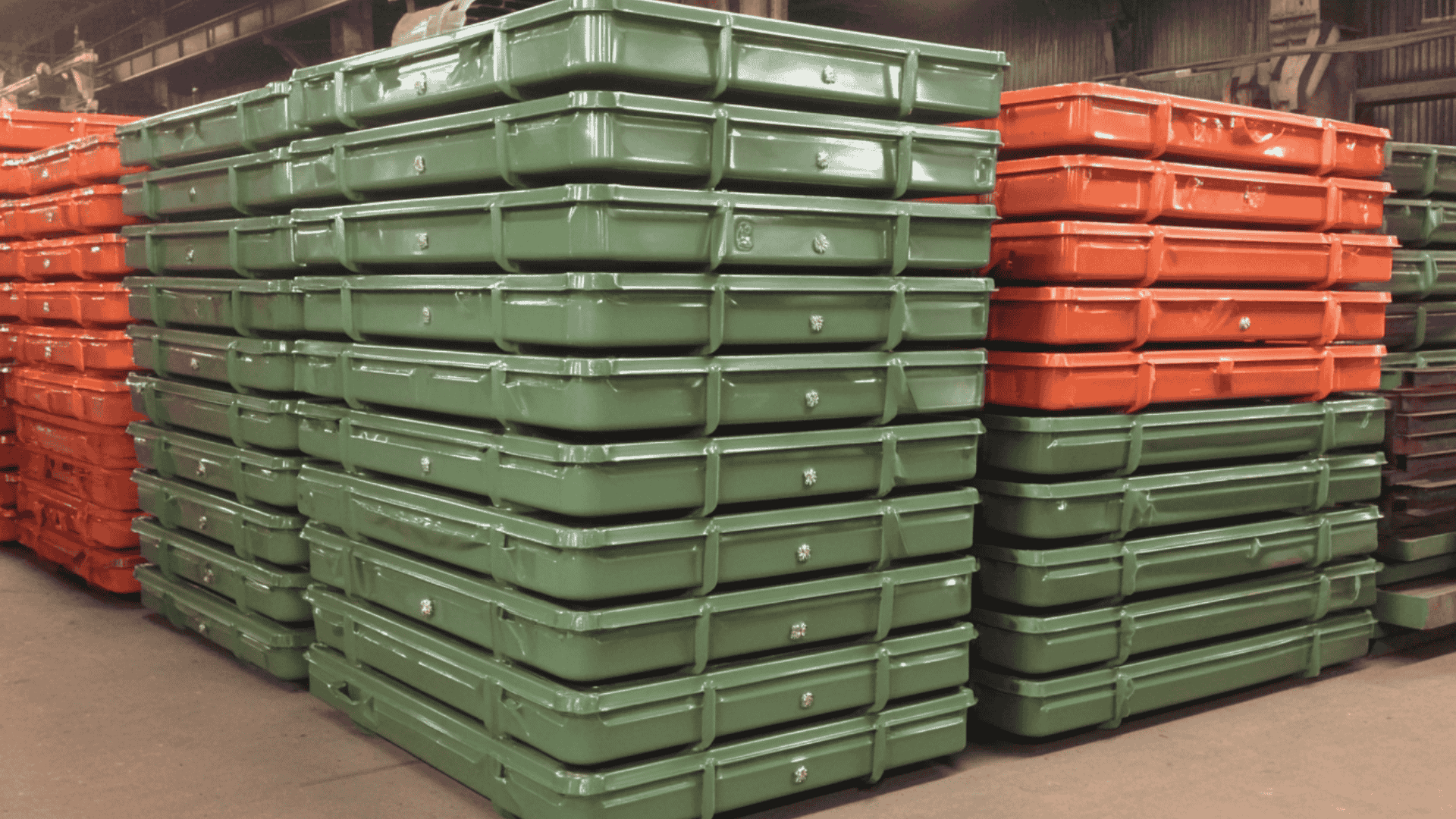
Steel containers appear throughout metalworking operations because they support the full life cycle of a part, from hot production through storage, staging, and movement between processes. Each application places different demands on container strength, shape, and handling features, which is why purpose-built designs matter.
Here are the primary ways steel containers are used across metalworking facilities:
Hot casting and forging handling: Containers receive parts directly from molds or presses while the heat is still present. Steel walls and reinforced floors tolerate thermal stress and uneven loads without losing shape.
Work-in-process staging: Parts often pause between operations for inspection, machining, or scheduling. Stackable steel containers allow vertical storage without shifting or collapsing as weight builds.
Fastener and small-part storage: Nuts, bolts, washers, and stampings create heavy loads in compact volumes. Smooth-sided steel containers help limit cross-contamination while supporting batch control.
Line-side part presentation: Automotive and fabrication lines rely on steady part access. Steel containers hold consistent form through repeated forklift placement and removal at workstations.
Scrap metal collection: Sharp, irregular scrap quickly damages lighter bins. Steel containers resist cutting, denting, and distortion during loading, transport, and dumping.
Controlled part discharge: Drop-bottom and gravity-feed steel containers support safe, predictable release of parts into hoppers, conveyors, or packaging stations.
Internal transport between departments: Steel containers move parts from casting to machining to assembly without transferring loads between containers, reducing handling risk.
Each application places different demands on containers, which is why selecting the right configuration matters as much as the material itself.
Also Read: Material Handling Container Types Every Plant Manager Should Know
Common Steel Container Configurations Used in Metalworking
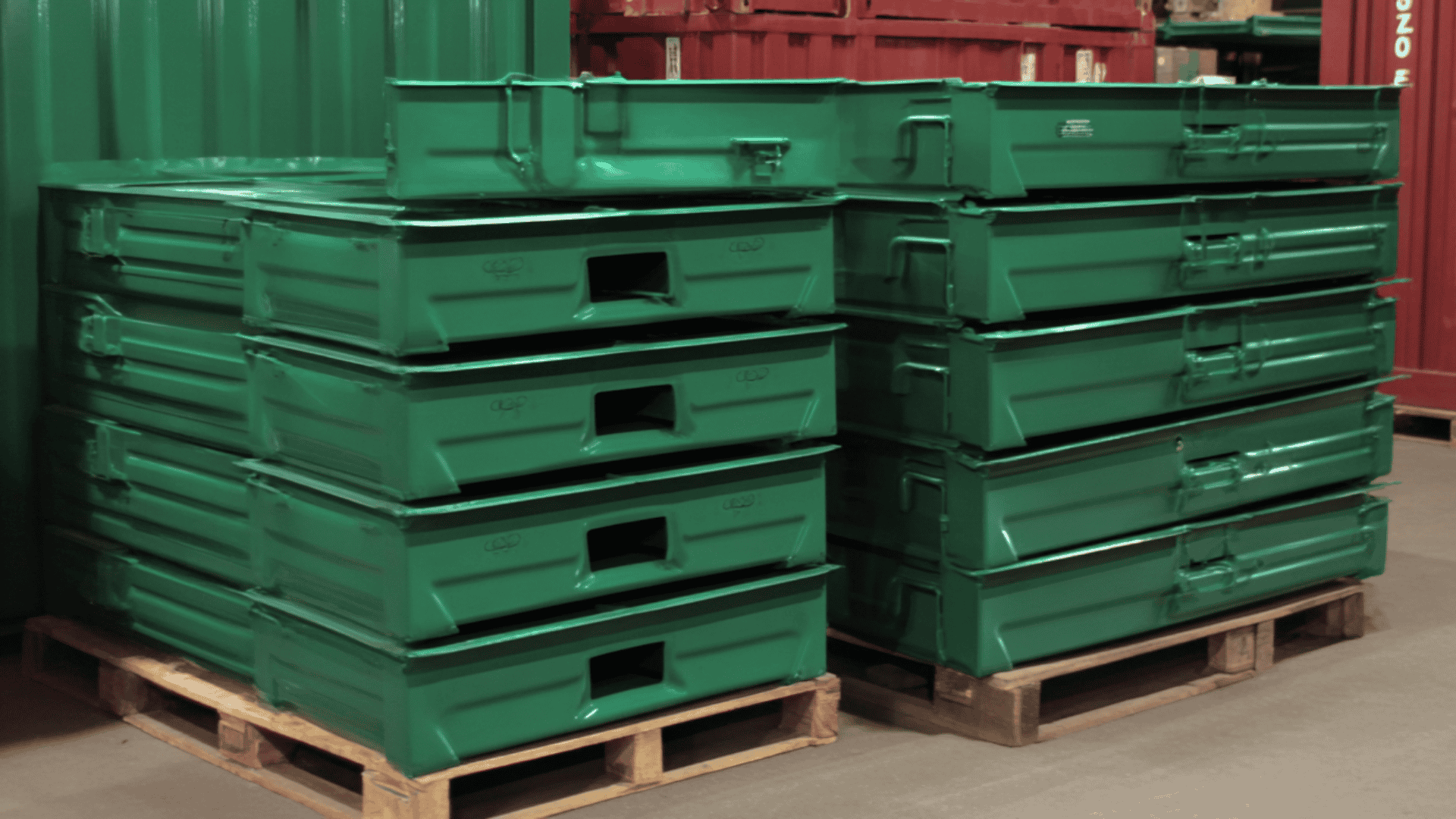
Not all steel containers serve the same purpose. Part size, weight, heat, and handling method all affect which configuration works on your floor. Selecting the wrong style often leads to poor stacking, unsafe dumping, or constant container damage that interrupts production.
Here are the most common steel container configurations used in metalworking operations:
Hot and heavy containers: Built with thicker steel and reinforced floors, these containers support castings, forgings, and dense stampings that place extreme stress on walls and welds.
Drop-bottom containers: Designed for scrap and bulk parts, drop-bottom units allow controlled release into hoppers or conveyors without manual dumping or forklift tilting.
Gravity-feed containers: Used where parts must flow toward an operator or packaging point, these containers support orderly discharge while keeping loads contained and stable.
Smooth-sided containers: Common in fastener and small-part handling, smooth interiors reduce part hang-up and help limit cross-contamination between runs.
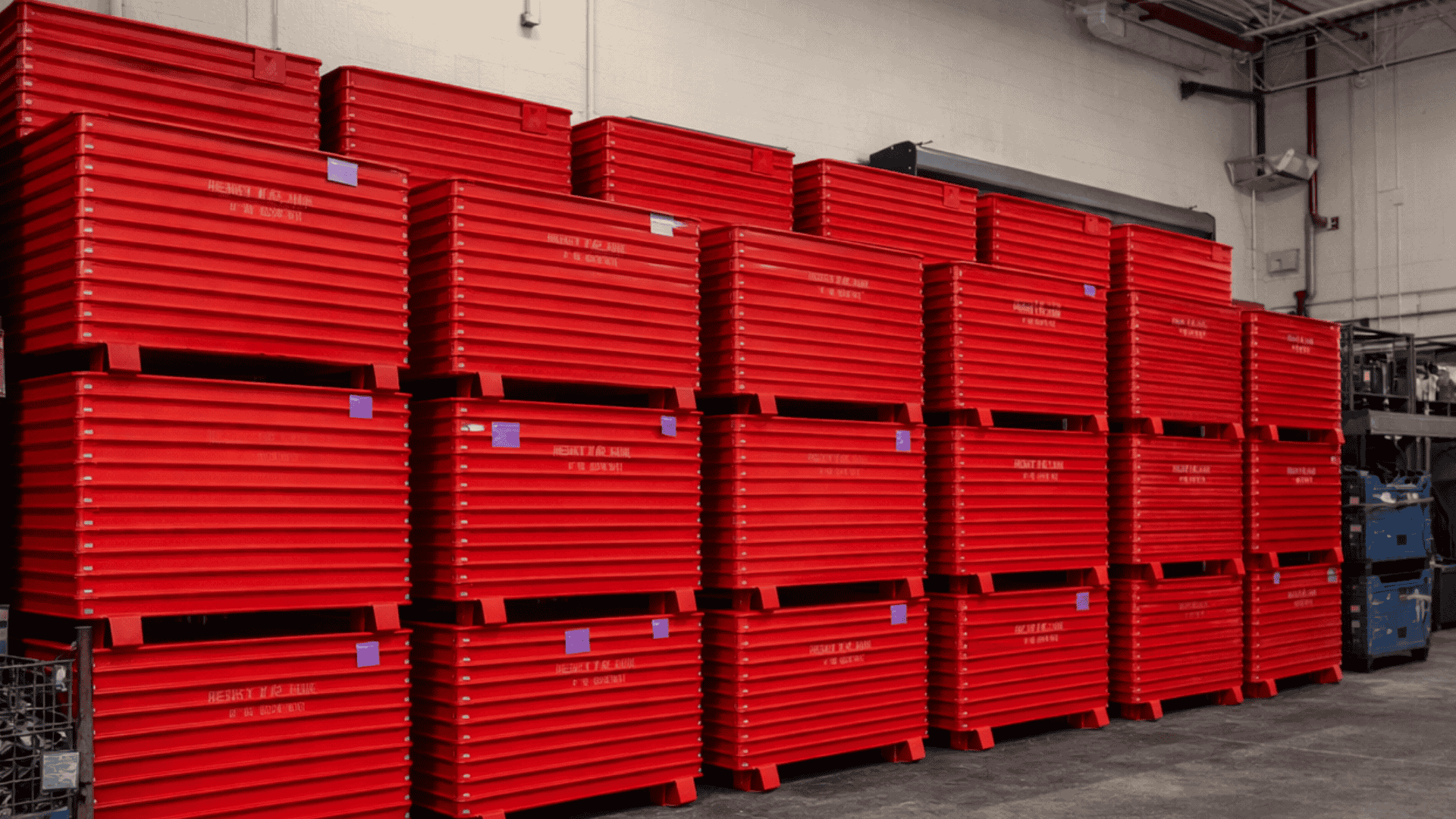
Corrugated steel containers: Formed sidewalls distribute load and add strength without excessive weight, making these containers suitable for irregular or sharp-edged parts.
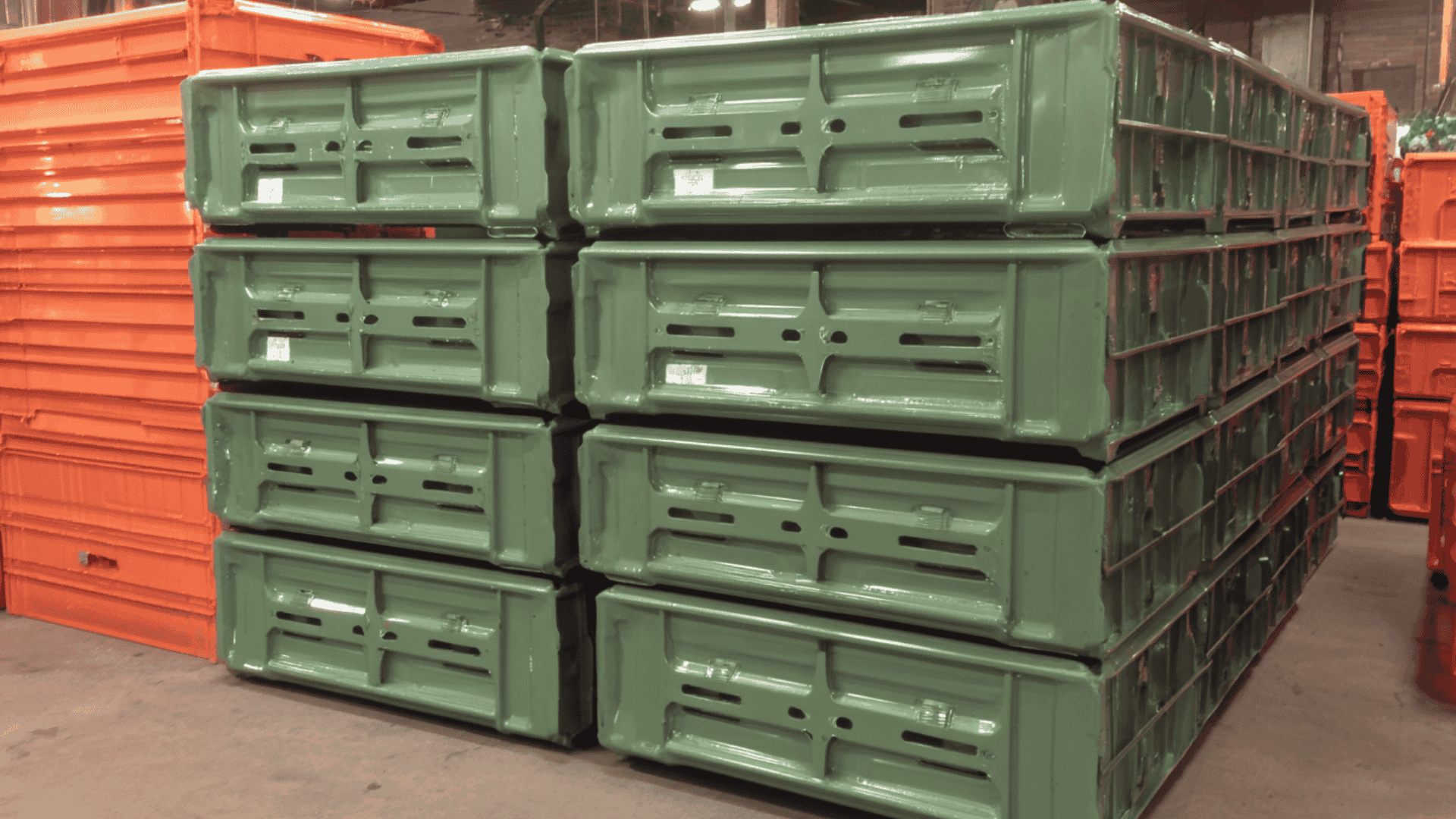
Platform boxes and pallets: Flat, open designs support oversized components that do not fit standard bin footprints while still allowing forklift access.
Tapered or nesting containers: Used where empty container storage matters, these designs allow nesting while maintaining strength during loaded use.
Two-way and four-way fork entry containers: Fork entry options are selected based on aisle width, traffic flow, and equipment access across the plant.
Container configuration affects more than fit and capacity; it directly influences how safely parts move through your operation.
How Steel Container Design Affects Safety on the Plant Floor
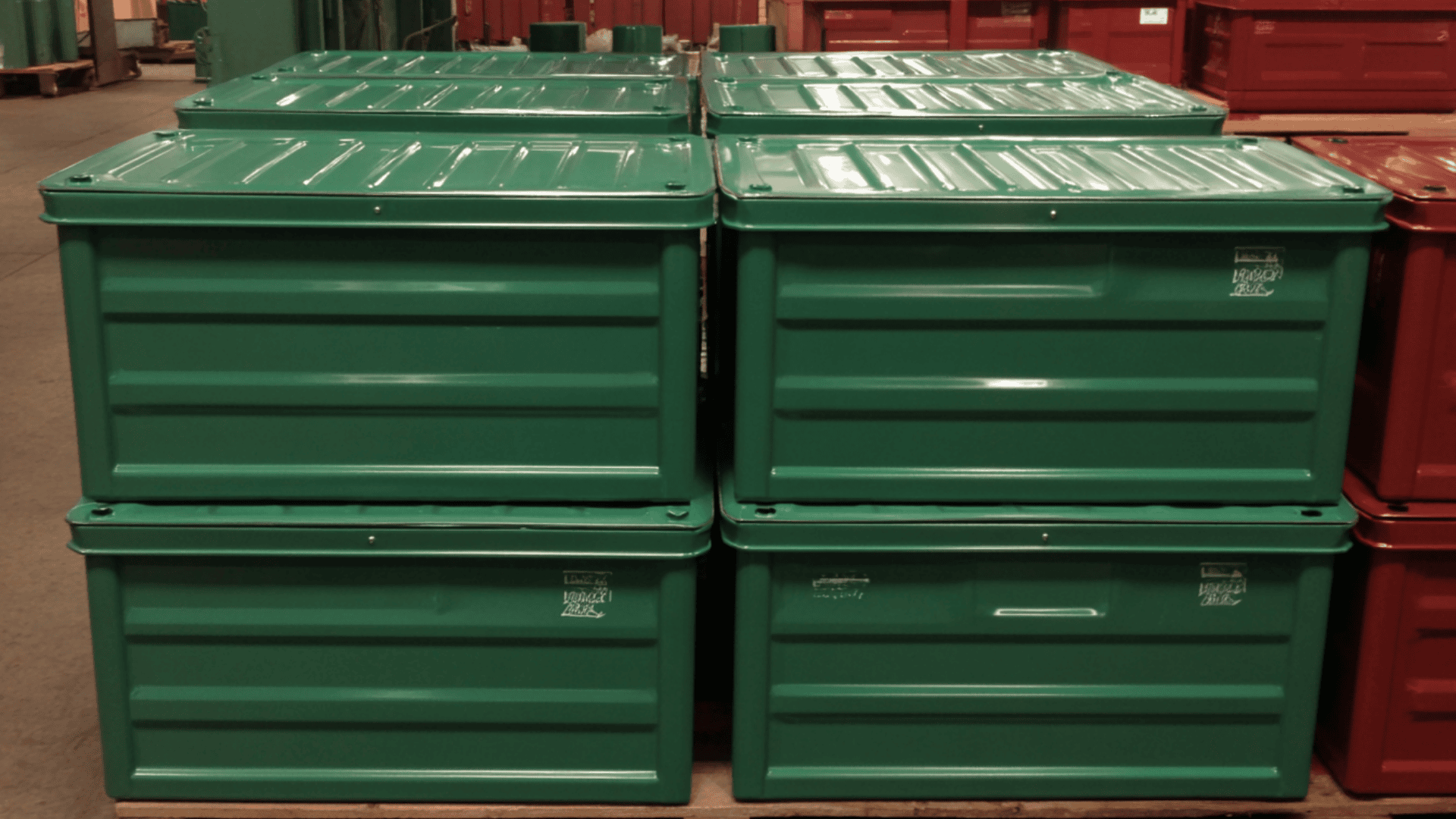
On metalworking floors, container design directly affects how safely parts move and how consistently work progresses. Small design weaknesses often show up as leaning stacks, damaged fork pockets, or unstable loads that slow handling and raise risk. When containers are built for weight, heat, and repeated use, they support steadier movement across every process step.
Here are the key ways steel container design influences safety and material flow:
Stable stacking under load: Defined stacking legs and reinforced frames keep containers aligned when stored multiple levels high, reducing the risk of shifting or collapse.
Controlled forklift interaction: Reinforced fork channels protect containers from bending during entry and exit, lowering the chance of dropped loads or sudden container failure.
Load distribution across floors and walls: Strengthened floors spread dense part weight instead of allowing pressure to concentrate in weak areas, which can lead to bowing or cracks.
Reduced tip-over risk: Proper base width and balanced load paths help containers remain upright during transport and staging, even when fully loaded.
Cleaner part flow between operations: Containers that hold shape allow parts to transfer between casting, machining, and assembly without rehandling or re-sorting.
Predictable discharge of parts: Drop-bottom and feed-style designs release loads in a controlled manner, limiting sudden shifts that can endanger operators.
Long-term consistency across shifts: Containers that resist deformation maintain the same handling behavior day after day, supporting safer habits among lift truck operators.
When standard designs fail to match your workflow, container performance begins to suffer in predictable ways.
Custom Steel Containers Built for Your Floor Layout and Loads
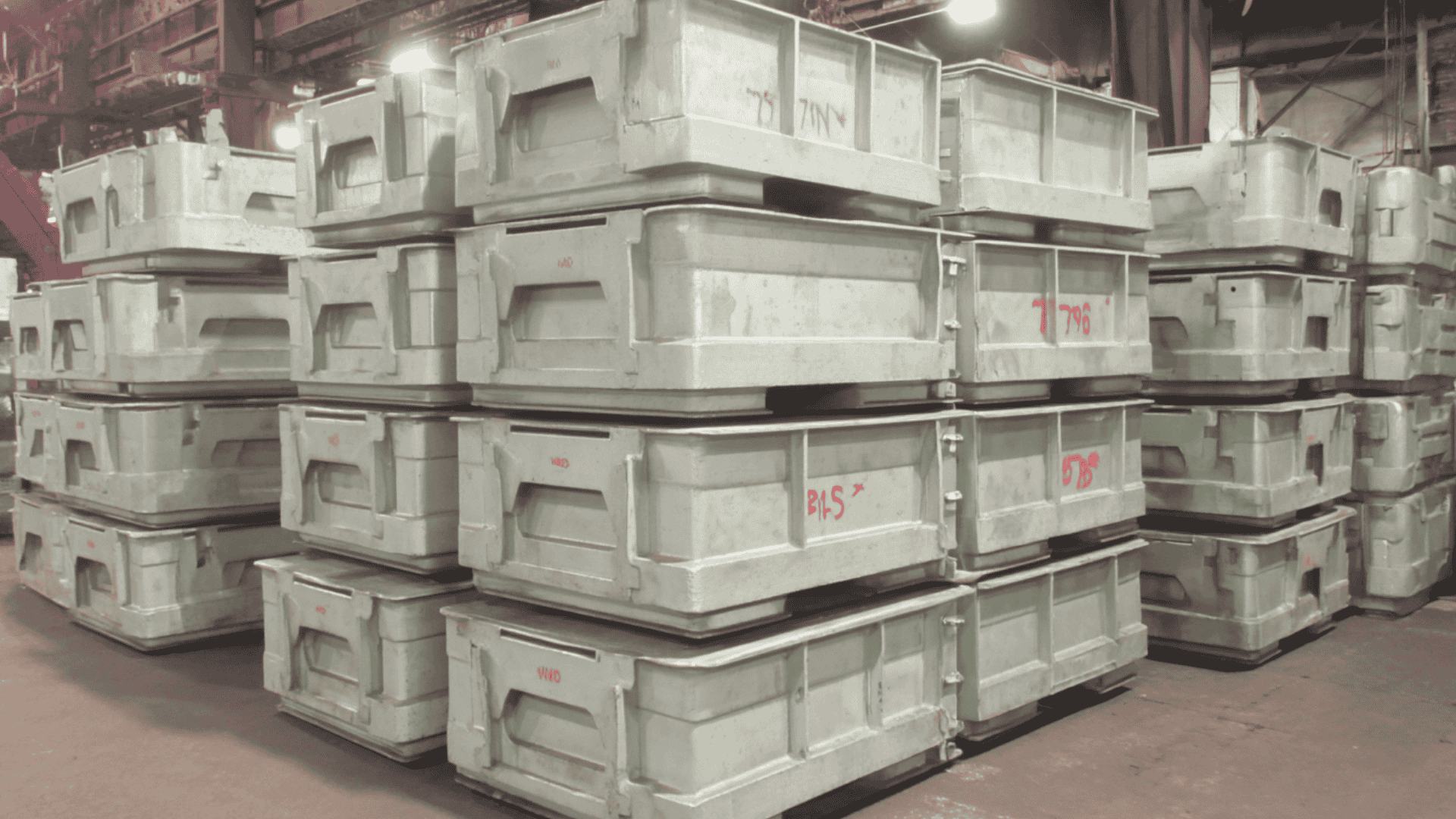
Standard container sizes often do not align with the realities of metalworking operations, leading to handling issues due to variations in part weight, temperature, and equipment layout. Custom steel containers are designed to fit the specific conditions of your operation.
Here are the main factors that drive custom steel container design in metalworking plants:
Container size and footprint: Dimensions are set to fit conveyors, workstations, racks, and trailers without wasted space or overfilled loads.
Steel thickness selection: Heavier gauges are chosen for dense parts and high stacking loads, while lighter gauges may suit lower-impact areas.
Fork entry direction: Two-way or four-way entry is selected based on aisle width, traffic patterns, and how lift trucks approach loads.
Discharge method: Drop bottoms, hinged gates, or gravity-feed features are added to control how parts exit the container.
Stacking height limits: Leg design and frame strength are matched to how many loaded containers must sit above one another.
Interior surface design: Smooth interiors, dividers, or formed features support cleanout, batch separation, and part protection.
Underclearance height: Leg height is set to match forklift capacity and floor conditions without reducing stability.
Identification and visual control: Paint color, welded tags, and ID plates support part tracking and reduce mix-ups between runs.
Selecting custom containers also means choosing a supplier with experience building for heat, weight, and repeated handling.
Also Read: Container Management in Automotive Manufacturing
Powell Systems: Steel Containers Built for Metalworking Environments
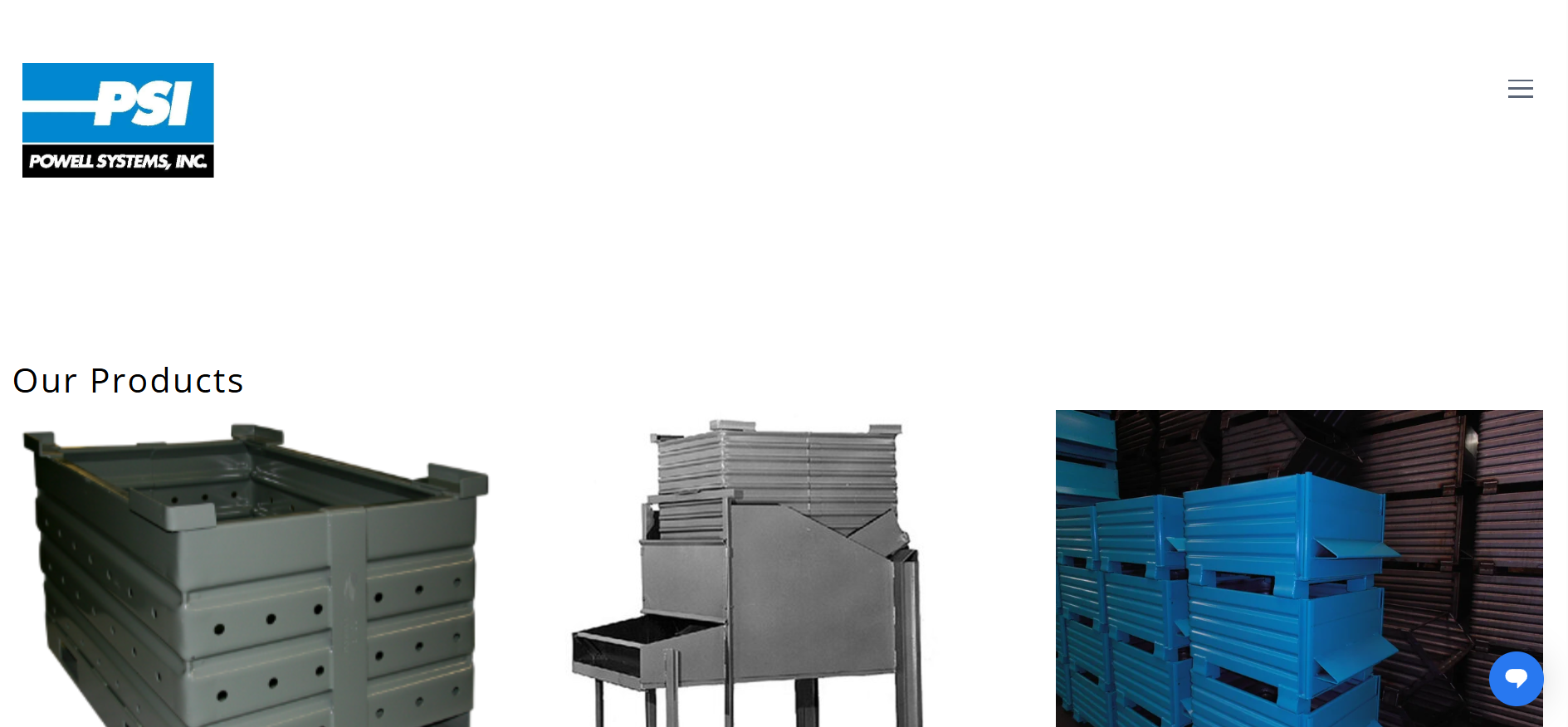
When containers face heat, dense loads, and constant handling, design shortcuts become obvious fast. You need equipment built by people who understand foundry floors, fastener lines, and automotive material flow. Powell Systems focuses on steel containers designed around those daily conditions, with products developed for long service life under heavy use.
Here are the ways Powell Systems supports metalworking operations through container design and product depth:
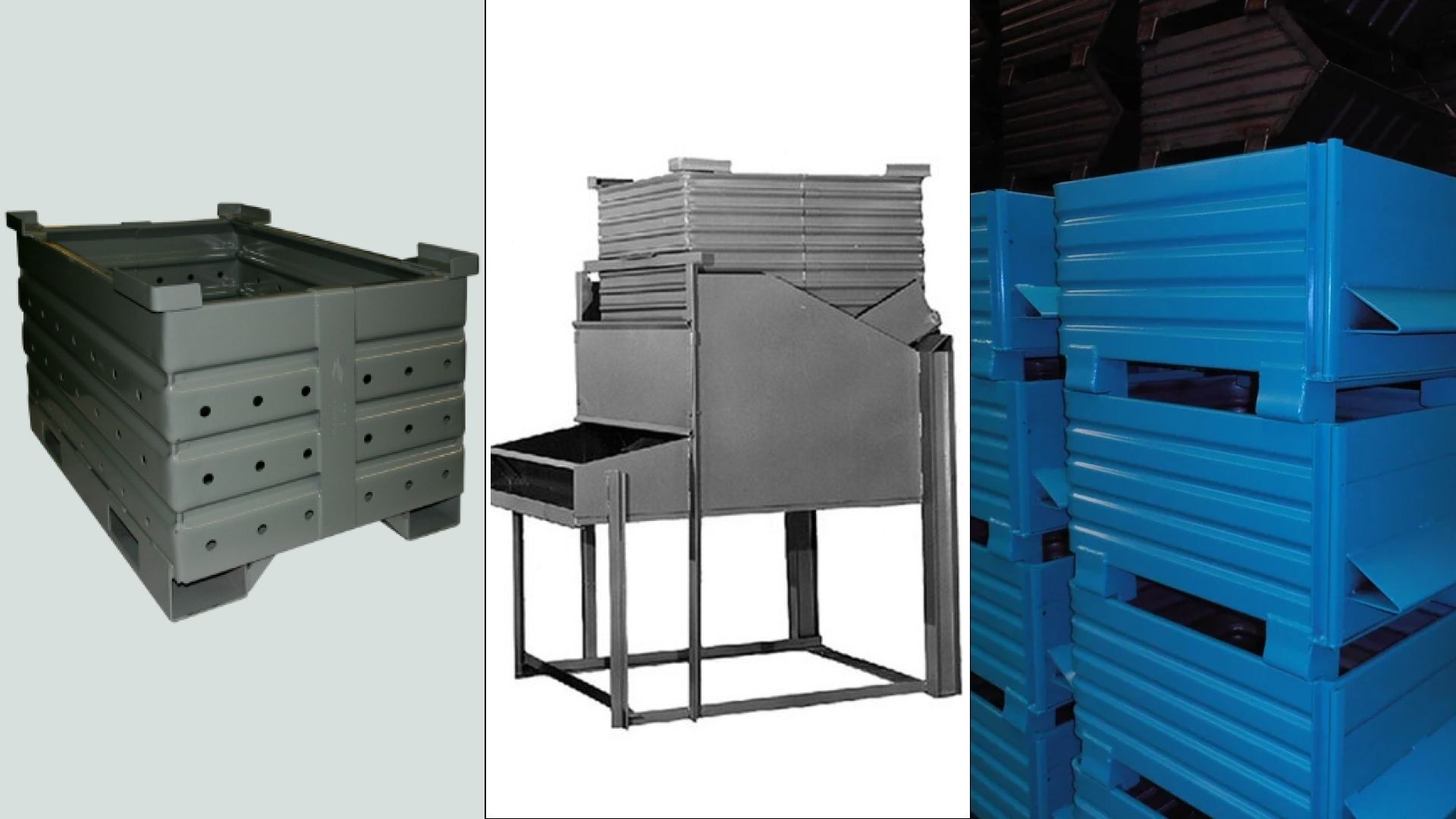
Hot & Heavy “The Brute”: Extra-heavy-duty steel containers built for castings, forgings, stampings, and other hot or dense parts. Higher stacking capacity supports vertical storage with added stability.
Drop Bottom containers: Designed for scrap and bulk part handling where controlled release matters. Bottom discharge allows parts to empty into hoppers, conveyors, or workstations without manual dumping.
Flowmatic gravity-feed containers: Used for in-process part handling where smooth flow and clean access are required. Offset stacking legs support stacking, while four-way fork entry improves access in tight areas.
B3 “Smooth Sided” fastener containers: Built for nuts, bolts, washers, and small stampings. Smooth interiors help reduce part hang-up and limit cross-contamination between runs.
Heavy-gauge steel construction: Container designs focus on steel thickness, reinforced floors, and stable frames to handle dense loads and repeated forklift contact.
Custom container design: Length, width, height, corrugation depth, fork entry style, and discharge features can be adjusted to match how parts move through your plant.
Support for fastener handling workflows: Container designs support integration with downstream weighing and packaging equipment used in fastener operations.
Midwest manufacturing and experience: With over 100 years of material handling work, Powell Systems builds containers in the U.S. and supports plants across the Midwest through direct communication and shorter lead times.
This focus on application-specific design allows Powell Systems containers to fit the demands of metalworking environments where failure is not an option.
Conclusion
Steel containers play a central role in how parts move, stack, and stay contained across metalworking operations. When heat, weight, and repeated handling are part of every shift, container design affects safety, uptime, and floor control. Choosing containers built for these conditions helps reduce handling issues, limit damage, and support steady material flow from one process to the next.
If your operation handles hot castings, dense fasteners, or stacked work-in-process, it may be time to review whether your current containers are meeting the demands placed on them.
Request a quote from Powell Systems to review steel container options and discuss steel container options designed around your part weight, temperature, and handling requirements.
FAQs
What are the different types of metal containers?
Metal containers fall into several categories based on material and use. Common types include steel containers, stainless steel containers, aluminum containers, wire baskets, and sheet metal bins. In metalworking environments, steel containers are preferred due to their load capacity, resistance to damage, and suitability for repeated forklift handling.
How do load ratings differ from stacking ratings?
Load rating refers to how much weight a container can safely hold internally. Stacking rating defines how many fully loaded containers can sit on top of it. A container may handle a high internal load but allow fewer units stacked above, which makes reviewing both ratings necessary before use.
Can steel containers be modified after they are in service?
Yes. Steel containers can often be modified after deployment. Common changes include adding fork pockets, reinforcing floors, adjusting stacking legs, or installing discharge gates. These updates help containers adapt to process changes without replacing the entire unit.
How do steel containers affect forklift wear and handling control?
Properly designed steel containers reduce forklift strain by maintaining square geometry and consistent fork entry points. Bent or unstable containers increase impact damage to forks and mast components, while well-built containers support smoother lift and set-down cycles.
When should a plant replace steel containers instead of repairing them?
Replacement becomes necessary when structural damage affects load stability or stacking safety and cannot be corrected through straightening or re-welding. In most cases, steel containers remain in service for many years before reaching that point.