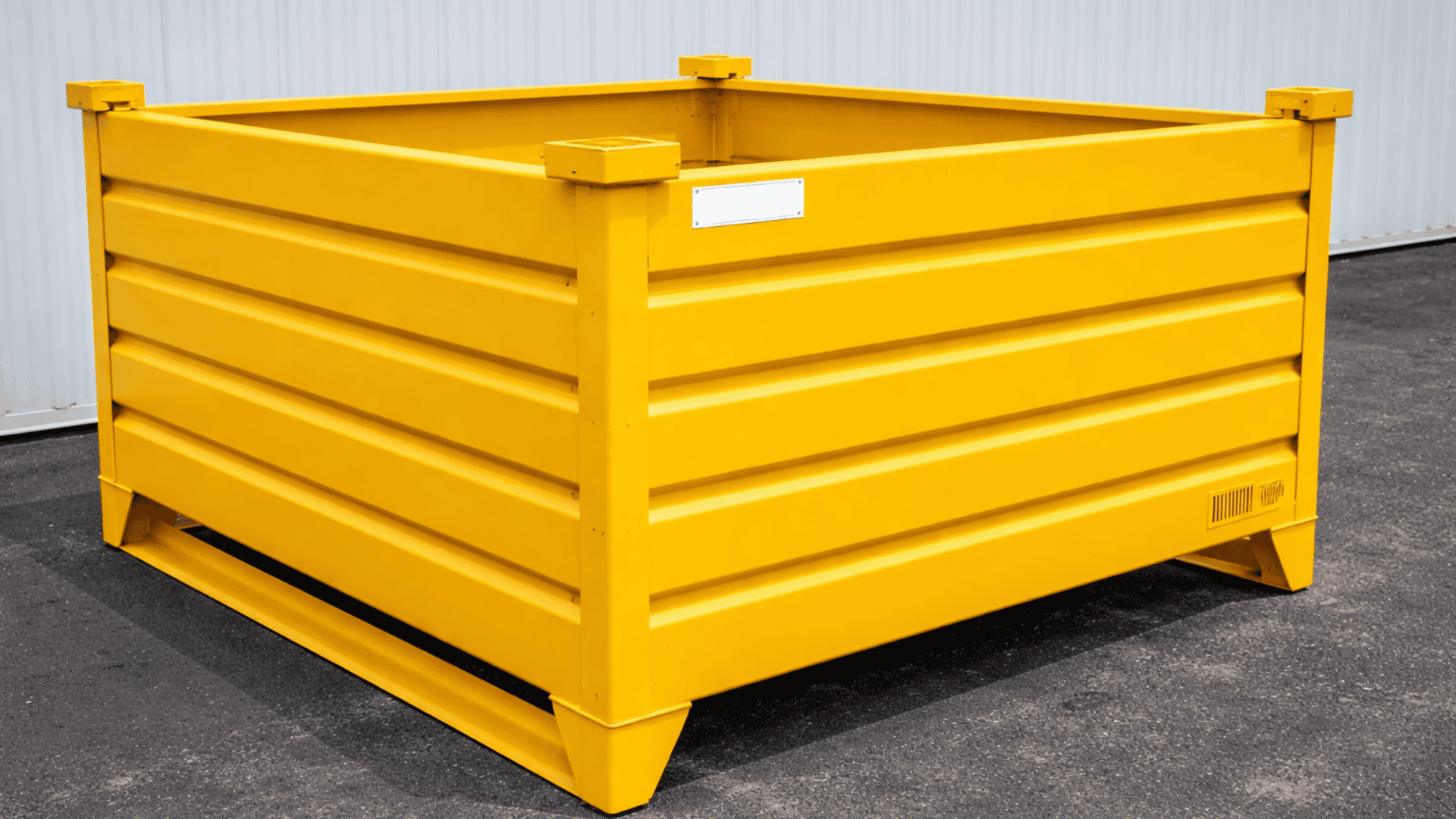
Managing high-volume production and heavy-duty parts means you need containers that can handle extreme conditions without breaking down. Choosing the wrong material for your containers can lead to costly delays and frequent repairs.
Corrugated steel is engineered to withstand these demands when formed into industrial container structures, offering durability and strength in the harshest environments. For industries like automotive manufacturing and foundries, these containers provide the resilience needed to keep operations running smoothly.
This article will explain why corrugated steel sheets are the ideal choice for industrial containers and how they can improve the efficiency and longevity of your operations.
Here’s the short version:
Corrugated steel is the preferred material for industrial containers due to its strength, durability, and long lifespan.
It offers superior load-bearing capacity and resistance to wear compared to other materials like plastic, aluminum, and wood.
Custom solutions allow businesses to personalize containers for specific operational needs, improving efficiency and reducing maintenance costs.
Corrugated steel is ideal for industries such as automotive manufacturing, foundries, and warehousing where heavy-duty, reliable containers are essential.
When properly coated or finished, corrugated steel resists corrosion and performs reliably in harsh industrial environments.
What Are Corrugated Steel Sheets?
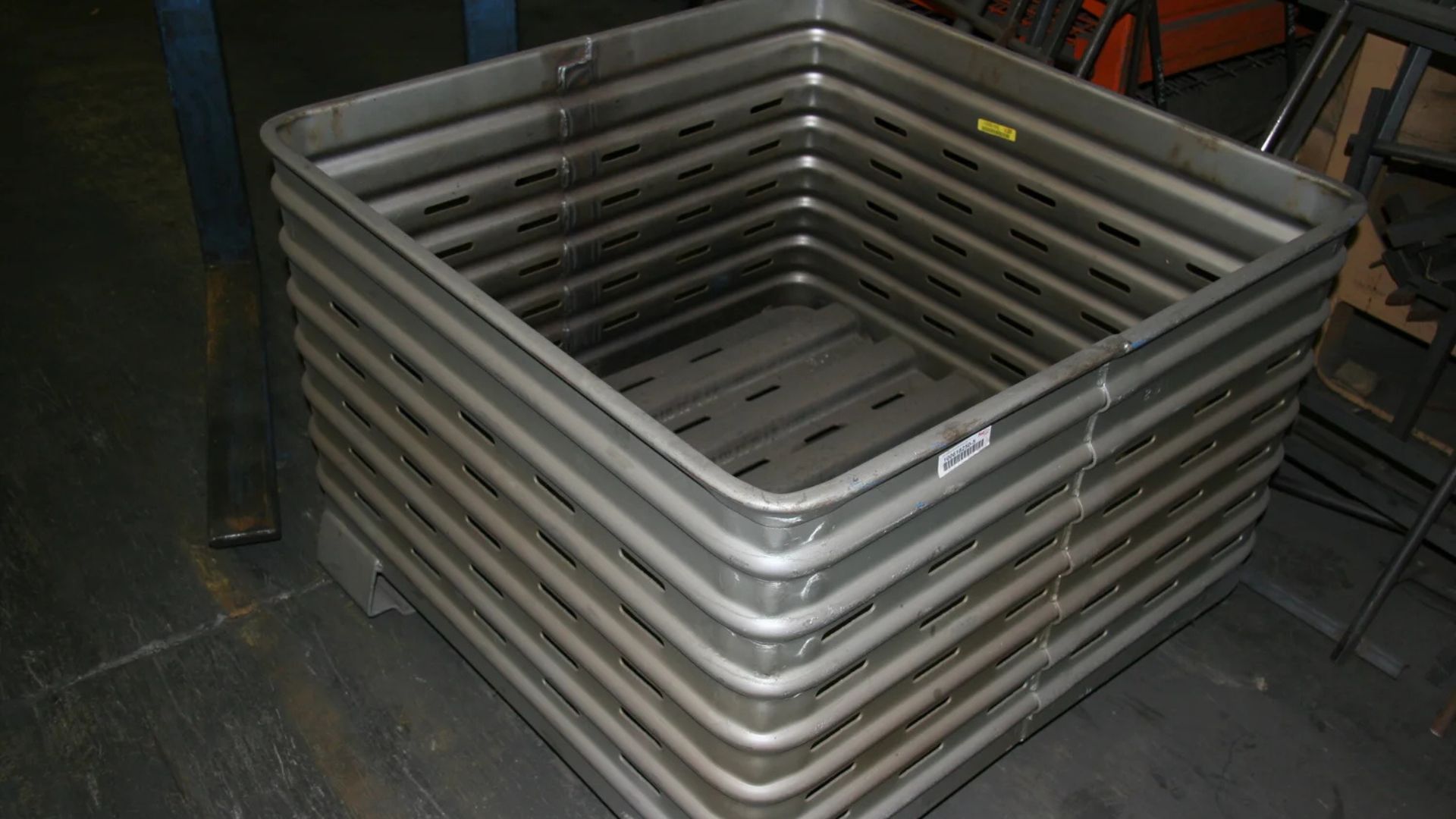
Corrugated steel sheets are sheets of steel that have been shaped into a series of parallel ridges and grooves. This design improves the material's strength, making it more resistant to bending, impact, and stress. The corrugated structure allows for better load distribution, which is crucial in heavy-duty applications.
These sheets are often made from carbon steel and may be galvanized or coated depending on the application. They are often used in industrial containers because they can withstand extreme conditions while maintaining structural integrity over time.
Now that you understand what corrugated steel sheets are made of, let's look into why they are so beneficial in industrial container applications.
The Role of Corrugated Steel in Industrial Containers
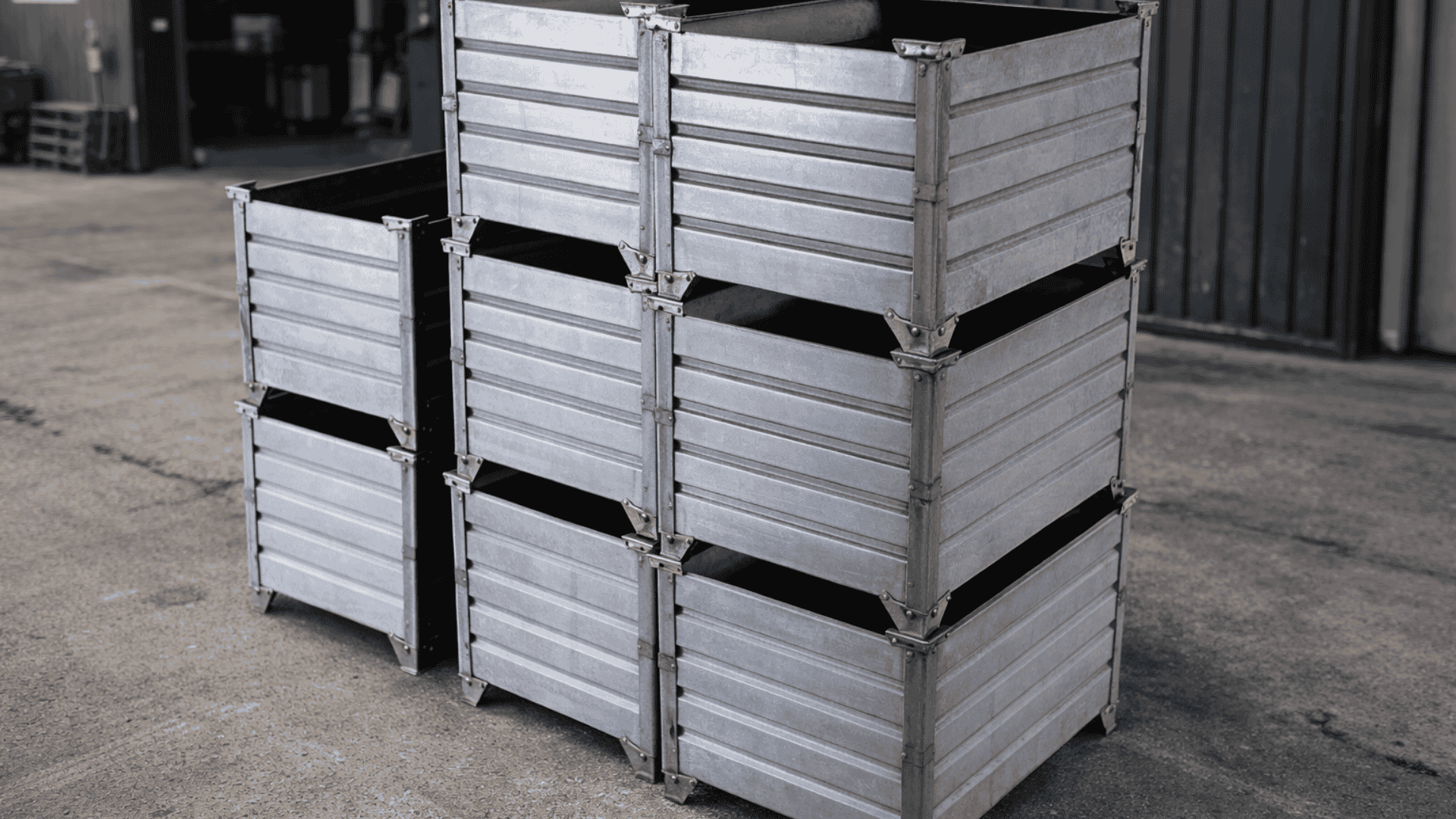
Corrugated steel is essential for industrial containers due to its ability to withstand heavy loads and challenging environments. It is engineered to provide both strength and flexibility, making it the ideal choice for high-stress applications where performance and durability are crucial.
Here’s how corrugated steel specifically contributes to industrial containers:
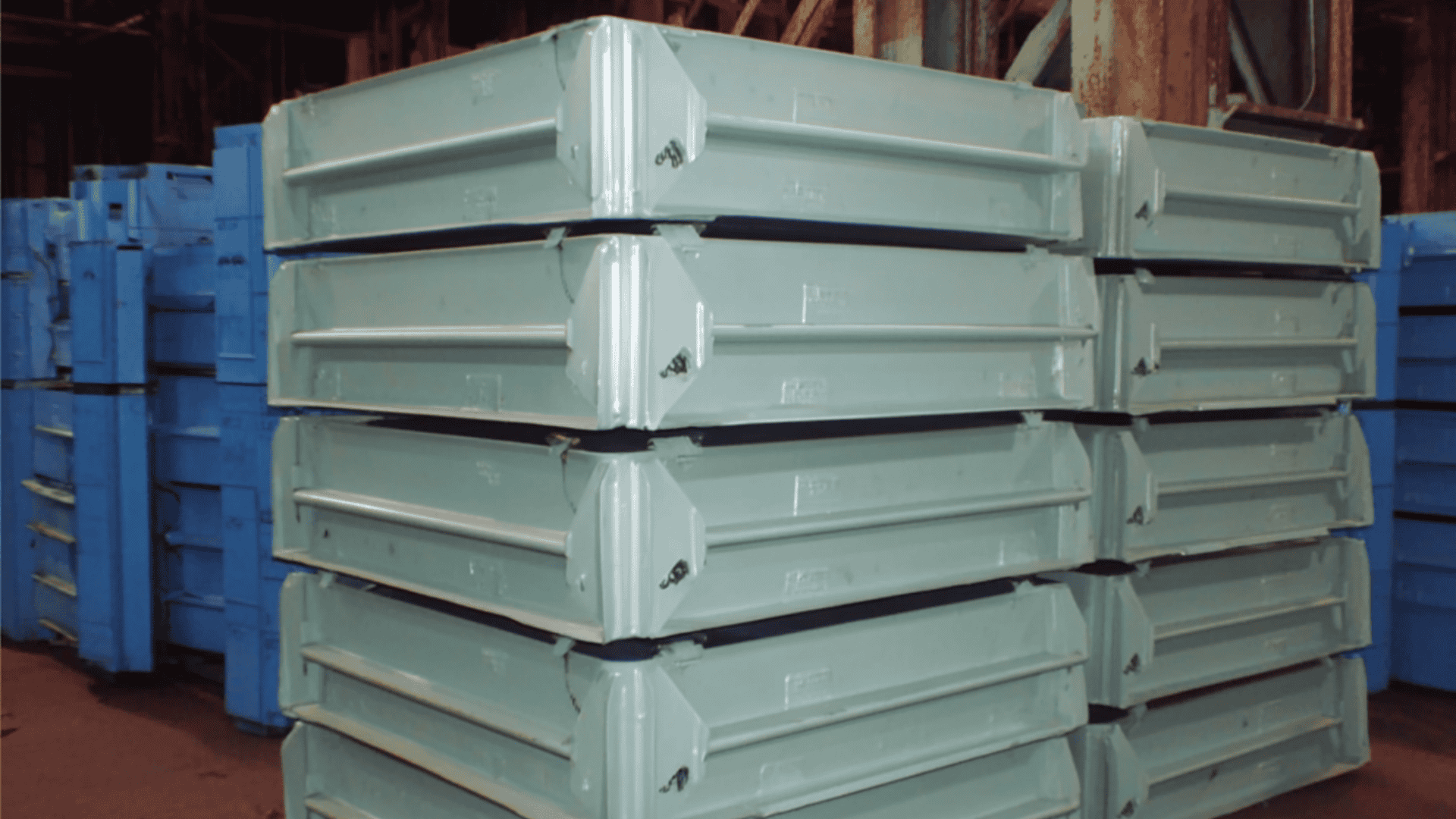
High Load-Bearing Capacity: The corrugated design significantly boosts the material’s structural integrity, enabling containers to handle more weight than standard steel without bending or warping.
Impact Resistance: Corrugated steel containers can withstand impacts from machinery or other heavy materials without compromising their shape or function. This is critical in industries like automotive and metalworking, where container safety is vital.
Temperature Resistance: Corrugated steel maintains structural strength when handling hot parts common in foundries and metalworking, depending on steel grade, thickness, and exposure duration.
Corrosion Protection: Galvanized corrugated steel features a protective zinc coating that resists rust and corrosion, extending the container’s lifespan in moist, humid, or chemically harsh environments.
Efficient Space Utilization: The stackable design of corrugated steel containers optimizes storage space, ensuring that large volumes of materials can be efficiently stored and transported in confined spaces.
With its superior strength and efficiency, corrugated steel is the backbone of reliable industrial containers.
Let’s now explore why corrugated steel sheets are preferred over alternative materials in container manufacturing.
Why are Corrugated Steel Sheets Preferred Over Other Materials?
Corrugated steel is often the material of choice for industrial containers due to its strength, durability, and long-lasting performance in demanding environments. Compared to plastic, aluminum, and wood, corrugated steel offers superior load-bearing capacity, resistance to wear, and longevity.
Here’s a comparison of corrugated steel with other common materials used in container manufacturing:
Material | Strength | Durability | Load-Bearing Capacity | Cost-Effectiveness |
Corrugated Steel | High; resists bending, warping, and impact | Extremely durable; resistant to rust and corrosion | Handles heavy loads without deforming | Higher initial cost, but offers long-term ROI due to durability |
Plastic | Low; prone to cracking under heavy loads | Less durable; can degrade with exposure to UV, chemicals, or extreme temperatures | Cannot handle heavy loads like steel | Lower upfront cost, but frequent replacements and maintenance |
Aluminum | Moderate; lighter weight but lower resistance to dense point loads and repeated industrial handling | Less durable than steel; prone to dents and scratches | Moderate; less suited for heavy-duty applications | Moderate upfront cost |
Wood | Low; can break or warp under heavy use | Susceptible to moisture damage, rot, and pests | Not suitable for heavy loads | Low initial cost but requires frequent replacement |
With its superior load-bearing capacity, resilience against wear and tear, and durability, corrugated steel clearly stands out from the alternatives.
For operations handling dense or hot metal parts, Powell Systems designs corrugated steel containers engineered for long service life in demanding industrial environments. Their custom designs ensure optimized performance and long-term efficiency for industries with demanding needs.
Now that you understand why corrugated steel is the material of choice, let’s explore how it is applied across various industries.
Applications of Corrugated Steel Containers in Industrial Sectors
Corrugated steel containers are widely used across several industries due to their strength, durability, and ability to withstand extreme conditions.
Here’s how corrugated steel containers are applied in various industrial sectors:
Automotive Manufacturing
Application: Handling and transporting heavy automotive parts such as castings, stampings, and forgings.
Benefits: Can carry high-weight loads without warping, ensuring safe transport and storage of critical parts.
Foundries and Metalworking
Application: Storing and moving hot castings, forgings, and metal scraps.
Benefits: Heat-resistant properties allow containers to handle parts directly from the production line without risk of deformation.
Warehousing and Distribution
Application: Storing in-process metal components between production stages
Benefits: Supports stacking and controlled part flow in manufacturing environments
Heavy Manufacturing and Metalworking
Application: Handling dense, hot, or irregular metal parts across foundries, machining, and fabrication operations.
Benefits: Corrugated steel resists deformation, impact, and stacking pressure under continuous industrial handling.
These applications demonstrate how corrugated steel containers support critical operations in a variety of industries.
Now, let's look at how these containers contribute to improving operational efficiency in various industries.
How Corrugated Steel Containers Improve Operational Efficiency?
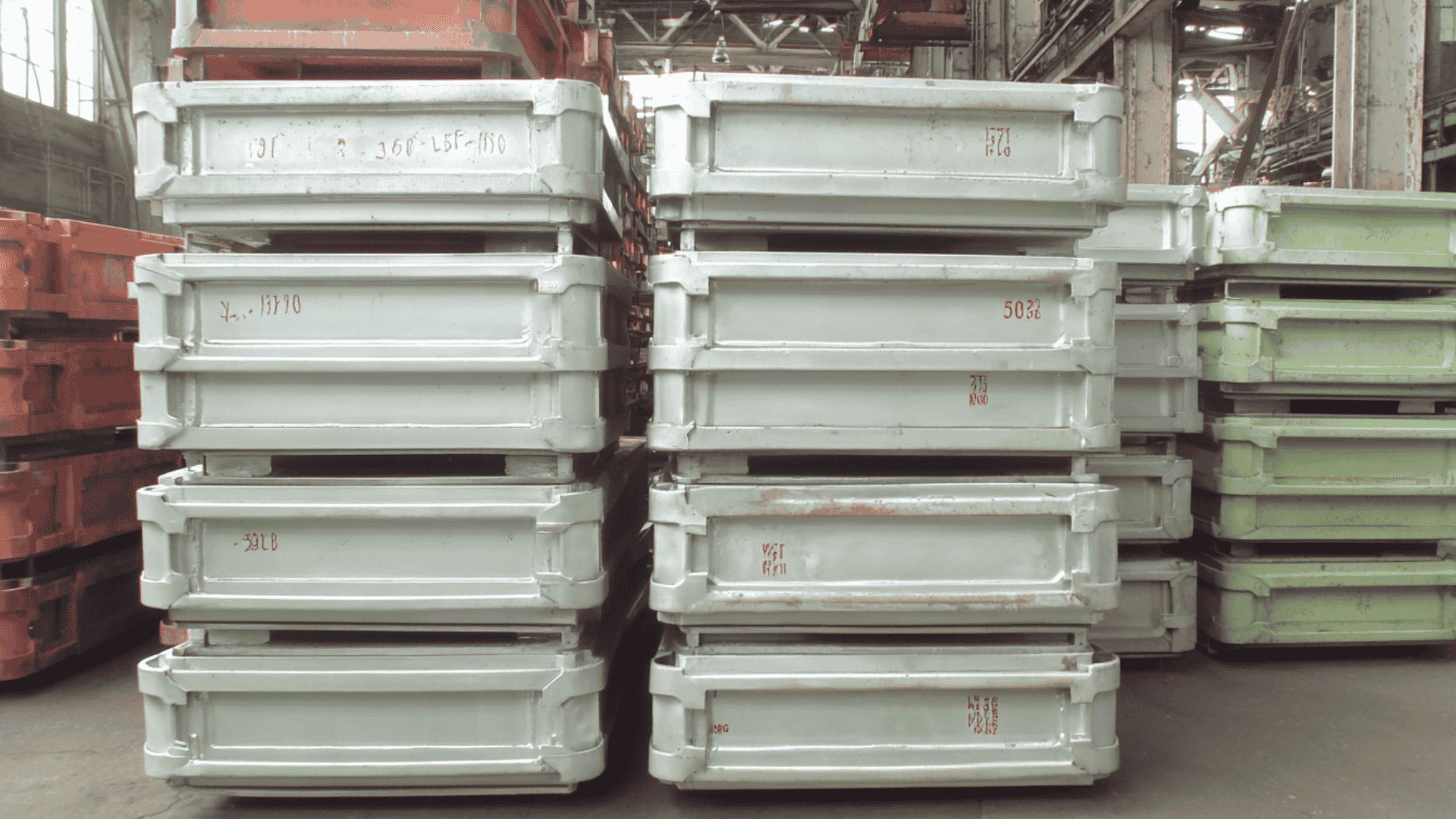
Corrugated steel containers offer key benefits that directly impact measurable operational metrics.
Here's how they contribute to improving efficiency:
Increased Throughput
Impact: Fewer breakdowns and higher durability lead to increased uptime and more consistent throughput in production and warehousing.
Reduced Downtime for Maintenance
Impact: Stronger containers mean fewer repairs, keeping operations running smoothly without unexpected disruptions.
Lower Handling Costs
Impact: Consistent container geometry and forklift-compatible designs reduce handling inefficiencies and reliance on manual workarounds.
Faster Material Movement
Impact: The efficient design of corrugated steel allows for quick loading/unloading, improving logistics efficiency and reducing material cycle times.
These factors improve key operational metrics, such as throughput, maintenance, handling costs, and logistics efficiency.
Why Is Powell Systems the Best Choice for Corrugated Steel Containers?
At Powell Systems, we specialize in providing durable and custom-designed corrugated steel containers that meet the unique needs of demanding industries.
Here's why our solutions are ideal for your operations:
Custom Solutions: We design personalized containers to fit your specific needs, ensuring optimal performance in your workflows.
Product Range: Our offerings include Flowmatic® containers for efficient part movement and "The Brute" containers for extreme-duty applications.
Durability: Our containers are built to withstand heavy loads, harsh conditions, and extreme temperatures, ensuring long-term reliability.
Corrosion Resistance: We specify steel grades, thicknesses, and finishes based on load, heat exposure, and handling conditions
Operational Efficiency: Our custom containers help minimize downtime and reduce maintenance costs, improving your overall operational efficiency.
With our expertise and solutions, we ensure your containers are built to meet the highest standards of strength, durability, and performance.
Wrapping Up
Corrugated steel containers offer unmatched strength, durability, and versatility, making them the ideal choice for industries with demanding needs. Their ability to handle heavy loads, resist wear, and perform in harsh environments sets them apart from alternative materials.
At Powell Systems, we provide high-quality, custom-designed corrugated steel containers personalized to your specific operational requirements. With our durable solutions, you can improve efficiency and reduce maintenance costs.
Get a Quote today and see how we can provide the perfect container solution for your business.
FAQs
Can corrugated steel containers be used in extreme weather conditions?
Yes, corrugated steel containers are designed to withstand extreme temperatures and harsh weather, making them perfect for both high and low-temperature environments.
Are corrugated steel containers resistant to corrosion?
Yes, most corrugated steel containers are galvanized or treated to resist rust and corrosion, ensuring long-term durability in moisture-prone environments.
Can corrugated steel containers be customized for specific needs?
Yes, corrugated steel containers can be custom-designed to meet unique size, shape, and operational requirements, making them adaptable to various industries.
How do corrugated steel containers compare to plastic containers in terms of strength?
Corrugated steel containers are stronger and more durable than plastic containers, able to handle heavier loads and rougher handling without cracking or deforming.
What is the typical lifespan of a corrugated steel container?
Corrugated steel containers can last 20-30 years with proper maintenance, making them a cost-effective long-term solution compared to other materials like wood or plastic.