Introduction
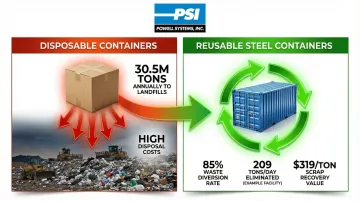
Manufacturing operations face mounting pressure to reduce waste while controlling costs. The numbers are stark: according to the EPA's 2018 Waste Characterization Report, 30.5 million tons of containers and packaging ended up in U.S. landfills that year alone—nearly 21% of all landfilled material.
Sustainability in industrial contexts means more than environmental compliance. It's about long-term value, reduced total cost of ownership, and operational reliability that builds over decades. This guide examines why corrugated steel containers offer a smarter, more sustainable alternative to disposable material handling solutions.
Key Takeaways
- Last 25-50 years versus 3-5 years for plastic alternatives
- Contains 90%+ recycled content and is 100% recyclable at end-of-life
- Cut replacement costs with longer lifespans and minimal maintenance
- Prevents product damage and operational disruptions through superior durability
- Recovers $319 per ton average in scrap value, offsetting disposal costs
What Are Corrugated Steel Containers
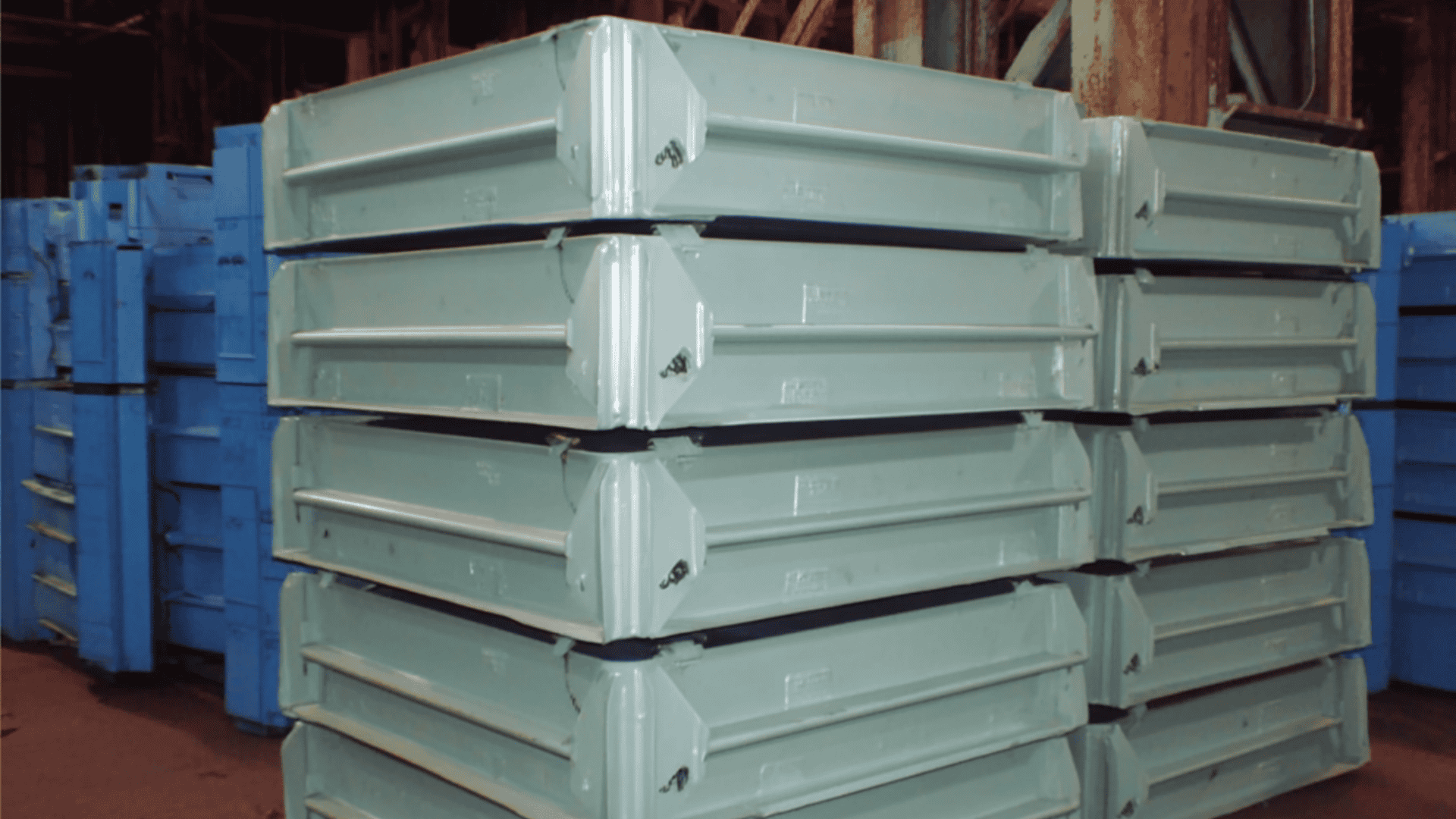
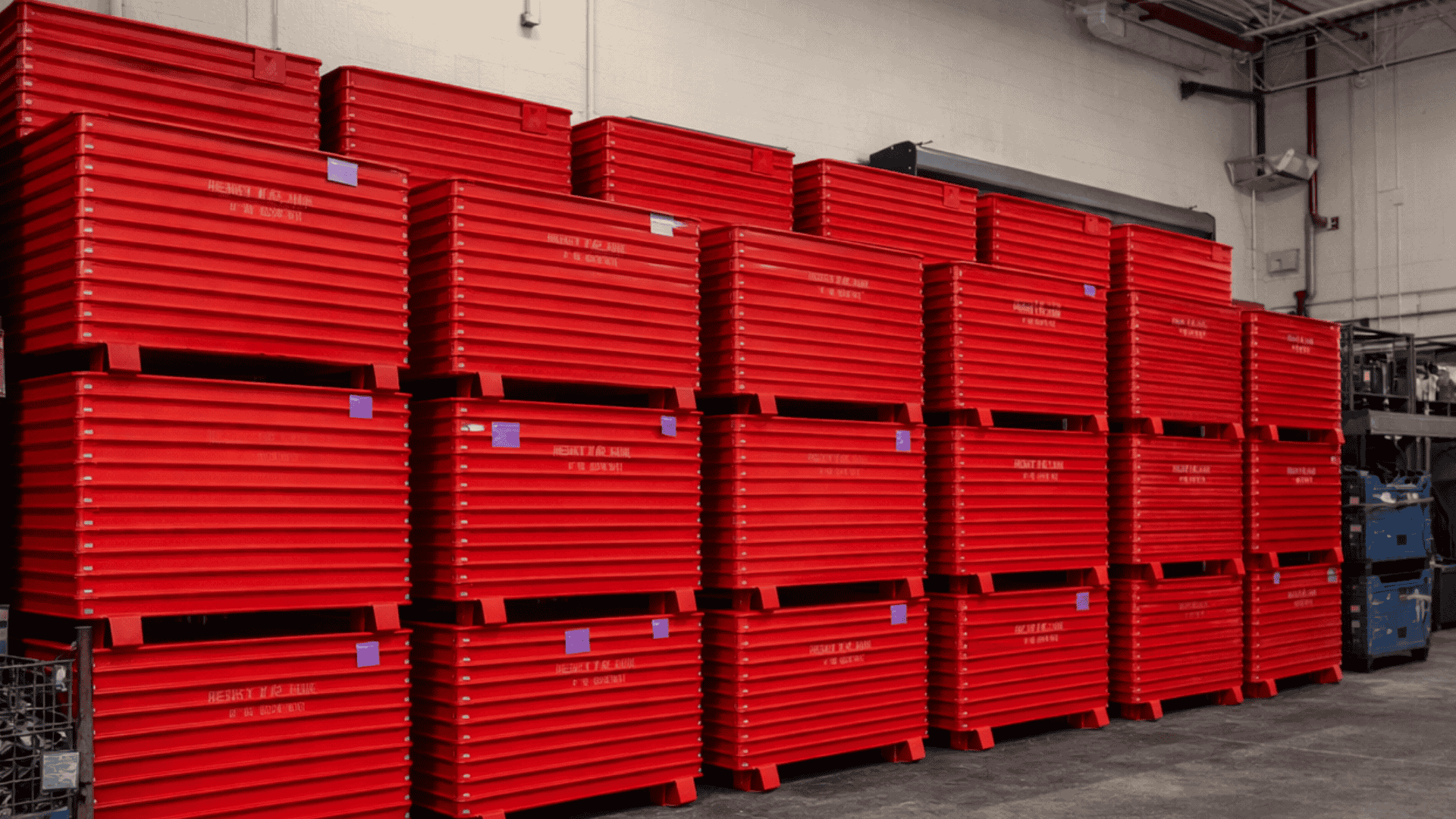
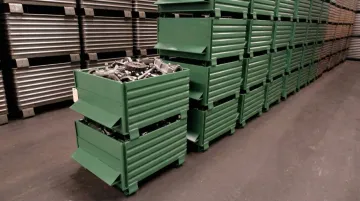
Corrugated steel containers are material handling equipment with corrugated (ribbed/fluted) steel construction used for transporting, storing, and organizing industrial parts and materials. Manufacturers design these containers as long-term investments rather than disposable consumables, built for decades of repeated use in demanding environments.
Common industrial applications include:
- Fasteners and stampings
- Automotive and heavy truck components
- Construction materials
- Food processing ingredients
- Oil and gas parts
- Forgings and castings
The corrugation process adds structural rigidity and load-bearing capacity. This enables containers to maintain integrity through thousands of load/unload cycles while supporting weights ranging from 3,000 to 6,000 pounds.
Key Advantages of Corrugated Steel Containers
The sustainability advantages below focus on measurable operational and financial outcomes: reduced replacement cycles, lower total cost of ownership, waste reduction, and consistent performance over extended timeframes.
Each advantage directly impacts metrics industrial operations track—asset lifespan, maintenance costs, safety incidents, waste tonnage, and procurement frequency.
Exceptional Durability and Extended Service Life
Corrugated steel containers are engineered to withstand harsh industrial environments—heavy loads, impacts, temperature extremes, moisture, and chemical exposure.
The corrugation process itself adds structural rigidity and load-bearing capacity, allowing containers to maintain integrity through thousands of load/unload cycles.
Operational impact:
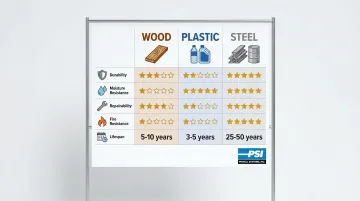
- Steel containers typically deliver 25-50 year operational lifespans versus 3-5 years for plastic bins or 5-10 years for wooden crates
- Toyota's adoption of returnable metal containers replaced millions of pounds of wood and cardboard, avoiding over $229 million in costs between 2017 and 2019
- Longer asset life reduces procurement workload, vendor management overhead, and capital expenditure volatility
Material performance comparison:
| Feature | Wood | Plastic | Steel |
|---|---|---|---|
| Durability | Good | Medium | Excellent |
| Moisture Resistance | Low | Excellent | Excellent |
| Repairability | Easy | Difficult | Excellent (welded repairs) |
| Fire Resistance | Low | Low | High |
KPIs impacted: Asset lifespan and depreciation schedules, capital expenditure budgets, waste disposal costs, procurement cycle frequency, total cost of ownership.
Best suited for: High-volume operations with repetitive handling cycles, harsh environments (outdoor storage, temperature extremes, corrosive atmospheres), applications requiring OSHA/safety compliance, operations with limited capital budgets for frequent replacements.
Complete Recyclability and Circular Material Economy
Steel is the most recycled material globally, and corrugated steel containers are 100% recyclable at end-of-life with no quality degradation.
Most structural steel contains 90%+ recycled content, meaning new containers are already part of closed-loop material cycles.
Financial and environmental benefits:
- End-of-life containers retain scrap value and can be sold to metal recyclers, offsetting disposal costs
- Steel recycling rates reach about 85% at end-of-life, far exceeding plastic alternatives
- Using recycled steel generates 78% fewer greenhouse gas emissions than virgin steel production
- Scrap steel prices averaged $319 per ton in 2025, creating a financial offset that plastic alternatives cannot match
Waste diversion impact:
Companies transitioning to reusable steel systems achieve dramatic waste reduction. Chrysler's switch to 100% returnable containers at one plant eliminated 209 tons of solid waste per day. Kroger expanded reusable container use and improved their waste diversion rate to 85% in 2024.
KPIs impacted: Waste diversion rates, landfill tonnage, sustainability reporting metrics (Scope 3 emissions), end-of-life material recovery value, corporate ESG goals.
Particularly valuable for: Organizations with zero-waste-to-landfill commitments, companies reporting ESG metrics to stakeholders, operations in regions with landfill restrictions or high tipping fees, facilities pursuing LEED or ISO 14001 certification.
Lower Total Cost of Ownership Through Reduced Maintenance and Replacement
Corrugated steel containers require minimal maintenance—no warping, cracking, UV degradation, or rot like plastic or wood alternatives.
Durability translates to predictable performance where containers don't fail unexpectedly, reducing emergency procurement and operational disruptions.
Cost advantages:
- Fewer replacements mean lower cumulative purchasing costs and reduced administrative burden
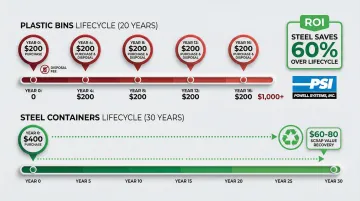
- While steel containers cost 15-20% more upfront than plastic, ROI over a decade is significantly higher due to eliminated replacement costs
- Reduced damage to containers means fewer damaged parts during handling, lowering scrap rates and rework costs
- Steel containers can be custom-designed by manufacturers like Powell Systems to optimize material flow and ergonomics, further enhancing efficiency and safety
TCO comparison example:
Over a 20-year period, a plastic bin costing $200 replaced every 4 years requires 5 purchases totaling $1,000, plus disposal fees. A steel container costing $400 with a 30-year lifespan costs $400 total, with end-of-life scrap value offsetting initial investment by approximately 15-20%.
KPIs impacted: Total cost of ownership, maintenance labor hours, emergency procurement frequency, product damage rates, worker injury rates, operational uptime.
Most impactful in: Lean manufacturing environments where downtime is costly, operations with limited maintenance staff, high-value part handling where damage is expensive, facilities with stringent safety requirements.
What Happens When Corrugated Steel Containers Are Not Used or Undervalued
Choosing plastic, wood, or cardboard alternatives over corrugated steel containers creates operational and financial challenges that compound over time. These materials may appear cost-effective initially, but their shorter lifespans and limitations lead to hidden costs.
Organizations that default to plastic, wood, or cardboard alternatives face several compounding challenges:
- Replacement frequency increases capital expenditures as materials wear out 5-10x faster than steel
- Waste disposal costs rise and landfill diversion rates drop when non-recyclable materials are discarded, impacting sustainability goals
- Container failures risk product damage and safety incidents—wooden crates splinter and plastic bins crack under load
- Missed opportunities for custom material handling solutions that optimize workflow and reduce labor
- Difficulty meeting corporate sustainability commitments around waste reduction and recycled content targets
How to Get the Most Value from Corrugated Steel Containers
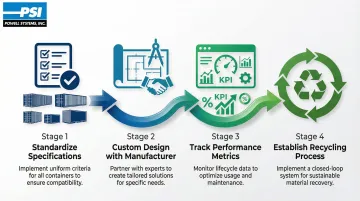
Maximizing the sustainability and financial benefits of steel containers requires strategic implementation across four key areas:
Standardize container specifications across operations. Consistent designs simplify training and reduce procurement complexity. Standardization also improves material flow efficiency and generates bulk purchasing benefits in maintenance and replacement parts.
Work with experienced manufacturers to design custom solutions. Manufacturers with deep expertise—such as Powell Systems, with over 100 years in material handling—can optimize containers for your specific applications, loads, and workflows. Custom engineering maximizes durability while addressing unique operational requirements.
Track performance metrics to validate ROI:
- Monitor lifespan achieved and replacement frequency
- Track maintenance incidents and damage rates
- Document waste diversion contributions for ESG reporting
- Use data to identify improvement opportunities
Establish end-of-life recycling processes to capture scrap value and support circular economy goals. Partner with local metal recyclers to streamline container retirement and recovery, ensuring your steel containers contribute value even after decades of service.
Conclusion
The sustainability value of corrugated steel containers lies in their exceptional durability, complete recyclability, and low total cost of ownership. These benefits that compound over decades. Choosing steel containers is a long-term infrastructure decision that supports operational efficiency, cost control, safety, and environmental responsibility simultaneously.
These containers represent proven, time-tested solutions that deliver consistent value when applied correctly and maintained properly.
Powell Systems brings over 100 years of expertise designing containers that withstand harsh industrial environments while supporting corporate sustainability goals. For operations serious about reducing waste, controlling costs, and building resilient supply chains, steel containers are not just a material handling choice: they're a strategic investment.
Frequently Asked Questions
How long do corrugated steel containers typically last in industrial use?
Corrugated steel containers typically last 25-50 years with minimal maintenance, far exceeding plastic (3-5 years) or wood (5-10 years). This extended lifespan reduces replacement frequency and total cost of ownership.
Are corrugated steel containers actually recyclable at end-of-life?
Steel is 100% recyclable with no quality loss, and most structural steel contains 90%+ recycled content. End-of-life containers retain scrap value averaging $319 per ton, offsetting disposal costs unlike plastic bins that incur landfill fees.
How do corrugated steel containers compare to plastic bins in total cost of ownership?
While steel containers cost more upfront, their 5-10x longer lifespan and minimal maintenance deliver significantly lower total cost of ownership. Plastic bins require repeated replacement every 3-5 years, creating cumulative costs that exceed steel's initial investment.
What industries benefit most from using corrugated steel containers?
Fasteners, automotive, heavy construction, oil and gas, food processing, and metal fabrication benefit most from steel containers. Durability, high load capacity, and harsh environment resistance make them essential for operations handling heavy parts.
Can corrugated steel containers be customized for specific applications?
Manufacturers like Powell Systems offer custom design services to optimize dimensions, features, and configurations for specific workflows. Options include gauge thickness, entry configurations, interior dividers, and specialized discharge mechanisms.
Do corrugated steel containers require special maintenance?
Steel containers require minimal maintenance—periodic inspection for structural integrity, occasional cleaning, and proper storage to prevent moisture accumulation. This is far less than plastic alternatives that crack or wood that rots.