
Machine changeovers often stall production as teams search for parts, creating stress, delays, and pressure on already tight schedules. When parts lack clear, defined storage locations, safety risks rise, damage occurs, and downtime feels frustratingly preventable for plant managers.
Industry research shows that poor maintenance strategies can reduce an asset’s overall productive capacity by 5 to 20%. That loss compounds during frequent changeovers common across metalworking and automotive operations, as plants face tight schedules daily.
In this blog, we’ll explore how disorganized change parts storage slows setups, raises risk, wastes space, and inflates avoidable costs. You’ll learn practical storage principles, design options, Midwest-heavy use cases, and measurable returns from purpose-built solutions.
Key Takeaways:
Machine change parts create delays when storage fails to match their size, weight, and handling needs.
Poor storage increases damage, safety exposure, and part replacement costs during frequent changeovers.
Standard shelving often causes contact damage, visibility issues, and unsafe lifting during setups.
Effective change part storage relies on visual control, part protection, and proximity to machines.
Purpose-built storage reduces setup time, protects tooling, and improves the use of available floor space.
Why Machine Change Parts Create Bottlenecks on the Shop Floor
Machine change parts include dies, molds, guide rails, feed screws, fixtures, fasteners, and tooling swapped during scheduled or frequent production changeovers. These parts vary widely in size, weight, geometry, and tolerance sensitivity, making generic storage a recurring source of delays.
Here are the most common challenges that make machine change parts bottlenecks on busy shop floors.
Irregular geometry: Long bars, circular wheels, and complex profiles often do not fit standard racks, leading to stacking, contact damage, and delays in retrieval.
Weight variation: Light fasteners and heavy dies often share areas, creating unsafe handling conditions and inconsistent access times during changeovers.
Precision sensitivity: Machined surfaces and tight tolerances suffer when parts touch, chip, or collect debris between production runs.
High mix frequency: Frequent product changes multiply handling steps, increasing walking, searching, and confusion when storage lacks clear visual organization.
Space constraints: Floor congestion grows when parts sprawl across aisles or pallets, restricting forklift movement and staging near machines.
Delays are only part of the issue, because poor change part storage introduces safety, quality, and cost problems that surface later.
The Hidden Risks of Poor Change Part Storage
When shop floors rely on improvised shelving or mixed bins for specialized tooling, the consequences extend far beyond slower setups. Poor storage quietly increases costs, raises injury exposure, and creates quality problems that often surface only after damage has already occurred.
Here are the most common risks associated with inadequate machine-change part storage across manufacturing operations.
Damage to precision parts: Metal-on-metal contact within bins can cause nicks, burrs, and surface damage, ruining tolerances and triggering scrap.
Quality fallout: A damaged die or guide rail may produce thousands of defective parts before the issue is detected and traced.
Safety and ergonomics risks: Heavy change parts stored on the floor or in deep racks force awkward lifts, increasing the risk of strain injuries and crush hazards.
Unplanned handling: Retrieving poorly stored parts often requires additional repositioning, leading to uncontrolled movements around active equipment and forklifts.
Inventory loss and confusion: Without defined visual locations, parts get misplaced, leading to rushed replacements for items already onsite.
Many of these risks trace back to a single root cause: relying on shelving systems that were never designed for specialized change parts.
Why Standard Shelving Fails for Machine Change Parts

Standard shelving works well for uniform cartons and pallets but struggles with irregular, heavy, or precision machine change parts. These systems were never designed to support frequent handling, varied geometries, or tight tolerances common on manufacturing floors.
Here are the primary reasons standard shelving creates problems during machine changeovers.
Geometry mismatch: Long shafts, circular wheels, and complex profiles rarely sit securely, leading to unstable stacking and slow retrieval.
Contact damage risk: Flat shelves encourage parts to touch or pile, increasing surface damage and tolerance issues over repeated changeovers.
Manual handling exposure: Deep racks force operators to reach, pull, or lift awkwardly, raising strain and crush injury risks.
Poor visibility: Shelving lacks clear visual cues, making it difficult to confirm part presence during time-sensitive setups.
Limited staging flexibility: Fixed shelves restrict placement near machines, increasing travel distance and setup delays during frequent changes.
If shelving alone cannot support changeovers, the focus shifts to defining what effective machine change part storage actually requires.
Also Read: Material Handling Container Types Every Plant Manager Should Know
The 3 Pillars of Effective Machine Change Part Storage
Effective machine change part storage depends on intentional design that supports fast setups, protects tooling, and reduces unnecessary motion across the shop floor. When storage follows 5S principles, changeovers become predictable instead of chaotic.
Here are the three foundational pillars that define well-designed storage for machine change parts.
Visual Organization and Accountability
5S-driven storage relies on dedicated slots, shadow-style layouts, and clear labeling that make part status obvious at a glance. Operators should confirm part presence within seconds, eliminating searching and preventing delays during time-sensitive changeovers.
Protection and Preservation
Change parts require separation designed around exact geometry, preventing steel-to-steel contact that causes surface damage and tolerance issues. Dividers, dunnage, or lined contact points protect critical surfaces, extending tool life and reducing rework between production runs.
Mobility and Workflow Support
Storage should move with the process, bringing change parts directly to the machine instead of sending operators to distant tool rooms. Mobile carts and forklift-ready containers reduce walking, handling strain, and setup delays during frequent product changes.
With these principles in mind, the next step is to understand how they appear in the actual storage systems used daily.
What Do Custom Storage Solutions Actually Look Like?

Custom storage solutions move beyond generic bins and shelving by matching design to the physical realities of machine change parts. These systems are built around how parts are handled, protected, and accessed during repeated changeovers.
Here are common examples of what purpose-built storage for machine change parts looks like on active shop floors.
Part-matched interiors: Internal dividers and dunnage follow the exact geometry of each component, preventing contact and keeping parts oriented correctly.
Dedicated single-part locations: Each die, wheel, or tool has a defined position, removing guesswork and speeding retrieval during setup.
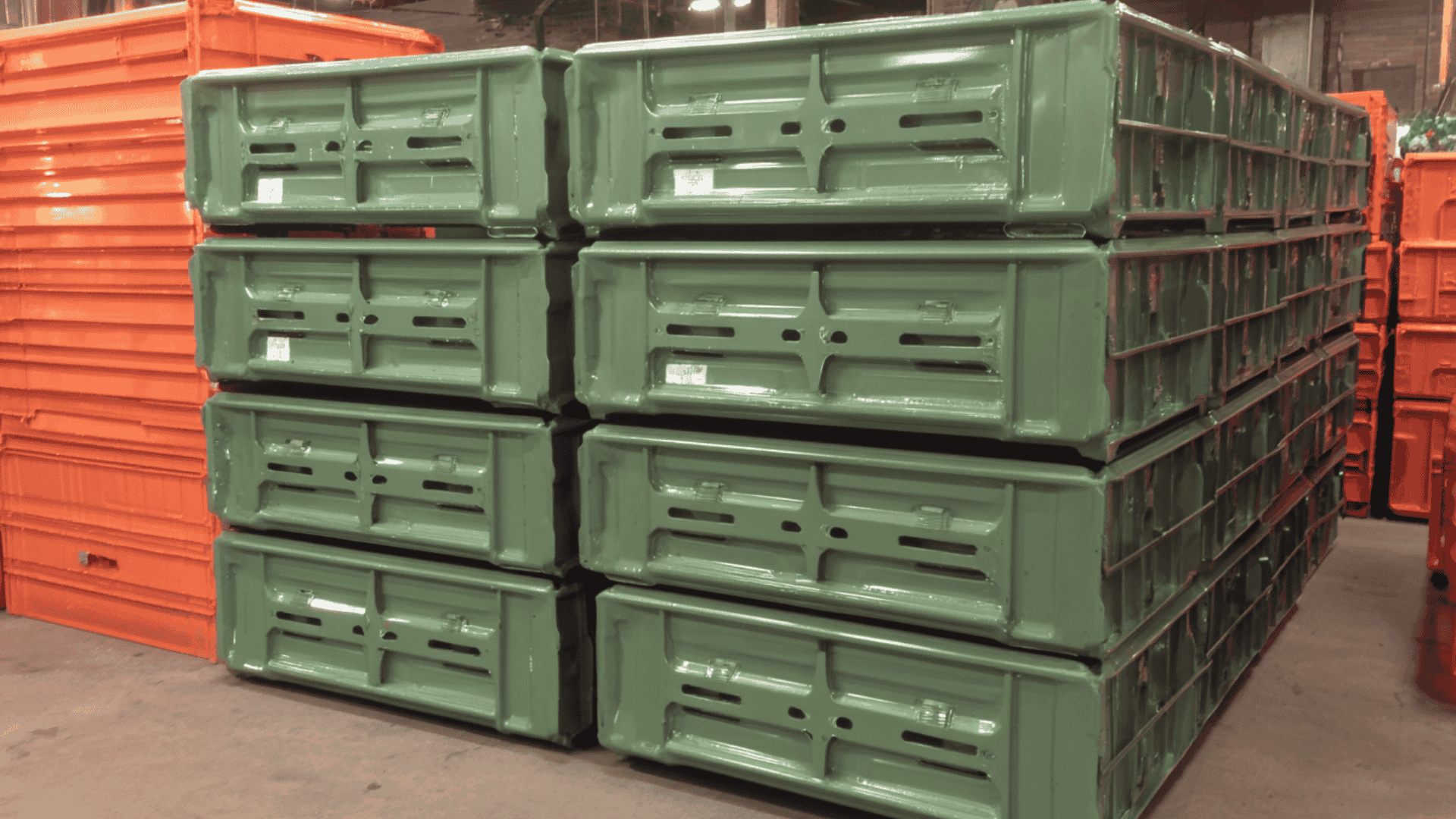
Heavy-duty containers: Steel containers support heavy loads, withstand impact, and withstand oil, heat, and debris found near production lines.
Mobile storage options: Rolling carts and forklift-ready containers bring change parts directly to machines, reducing walking and handling strain.
Stackable configurations: Vertical stacking saves floor space while keeping parts accessible when production schedules change frequently.
Beyond appearance and layout, the real question becomes how these storage designs impact cost, time, and operational performance.
How Custom Storage Delivers Measurable ROI
Purpose-built storage delivers returns that extend beyond the organization by directly reducing downtime, damage, and wasted space associated with machine changeovers. These gains accumulate quickly in high-mix, frequent-setup manufacturing environments.
Here are the primary ways custom storage produces measurable financial returns on the shop floor.
Reduced changeover time: Clear locations and protected parts cut searching and handling steps, lowering setup duration during every product change.
Lower replacement costs: Preventing surface damage helps avoid premature replacement of costly dies, tools, and machined components.
Improved labor productivity: Fewer steps and shorter travel distances reduce physical fatigue and free operators for higher-value tasks.
Safer handling conditions: Better access and controlled positioning lower injury exposure, helping reduce medical claims and lost workdays.
Better space utilization: Stackable, footprint-matched designs reclaim floor space that scattered parts would otherwise consume.
Achieving these returns depends heavily on who designs and builds the storage systems supporting your changeover process.
Also Read: Container Management in Automotive Manufacturing
Powell Systems: Engineered for Your Exact Requirements
When standard containers fall short, manufacturers need storage built around their parts, processes, and handling realities. Powell Systems focuses on building steel containers and storage solutions that match exact operational demands rather than forcing workarounds.
Here are the core capabilities that define Powell Systems’ approach to custom machine change part storage.
Built-to-spec dimensions: Container length, width, height, and underclearance are sized to match part geometry, forklift needs, and plant constraints.
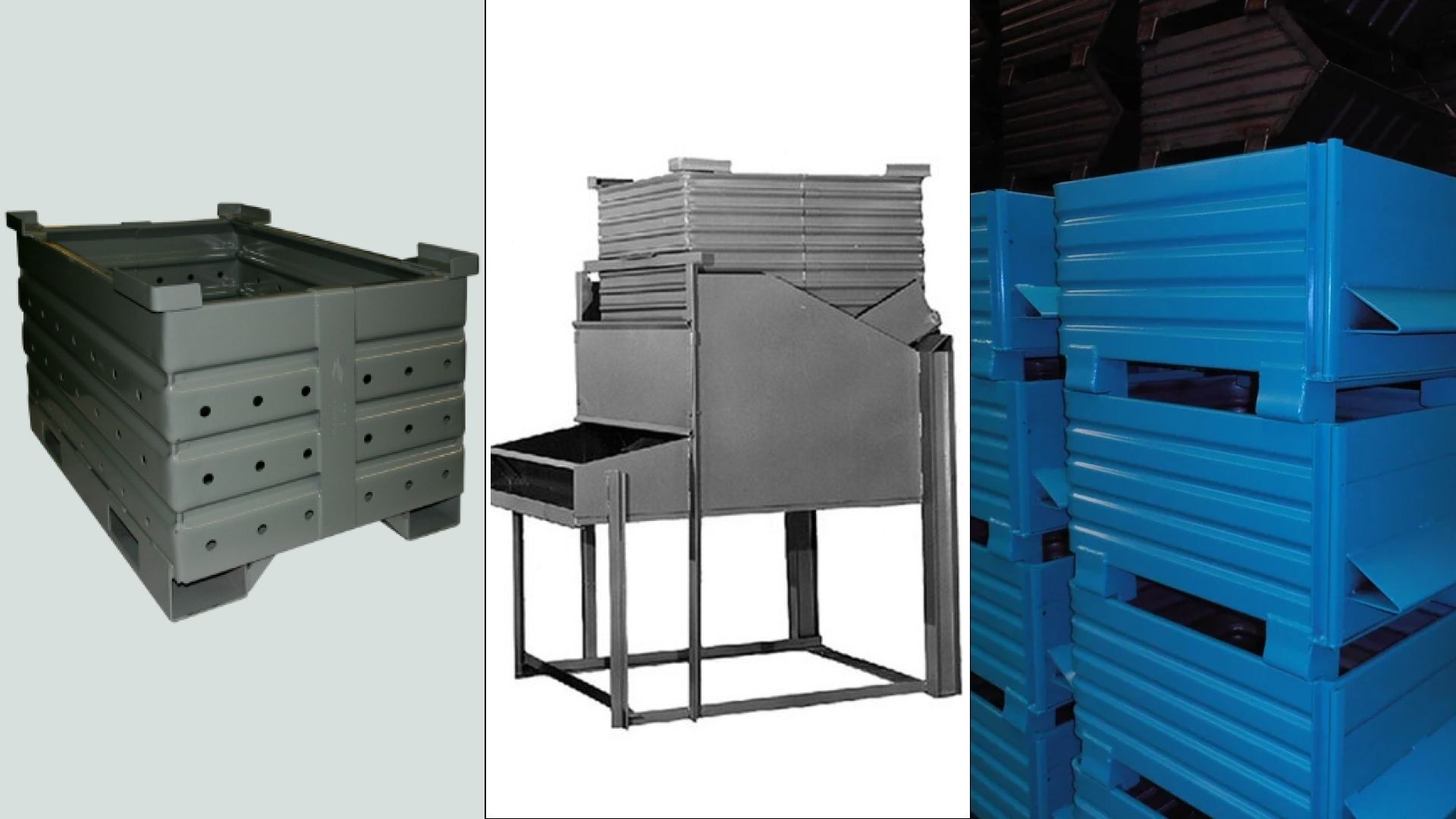
Wide container portfolio: Standard, smooth-sided, gravity-feed, roll-over, platform, tapered nose, and hot-and-heavy containers support diverse use cases.
Heavy-gauge steel construction: Box and platform gauges ranging from 7 to 14 support heavy loads, repeated handling, and harsh shop conditions.
Custom internal dividers: Corrugated steel dividers separate parts by shape and size, preventing contact and maintaining consistent orientation.
Flexible access options: Two-way or four-way forklift entry, roll-over channels, and side gates support safer handling and faster access.
Specialized discharge designs: Drop-bottom and hinged gate configurations allow controlled unloading of heavy or scrap parts without manual lifting.
Connect with Powell Systems to discuss a storage solution designed specifically for your change parts, load requirements, and forklift access needs.
Conclusion
Machine changeovers break down when storage forces searching, lifting, and improvisation around parts that should already be organized and protected. Purpose-built storage removes friction from setups, protects expensive tooling, improves safety, and supports consistent changeover performance across demanding manufacturing environments.
If changeovers still feel slower than they should, the issue may not be people or processes, but how parts are stored. Request a custom quote to discuss storage designed around your machine change parts, handling methods, and plant constraints.
FAQs
How do steel containers protect delicate machined parts from damage?
Steel provides external strength, while interior design protects the part itself. Containers can include custom dunnage or dividers made from softer materials to prevent metal-to-metal contact. Based on part sensitivity and temperature, interior linings may include wood, UHMW-PE, or urethane.
Can these containers handle oily parts without leaking?
Yes. Containers can be built with oil-tight construction for parts covered in coolant or cutting oil. Continuously welded seams prevent fluids from escaping from the container. Drain plugs or sumps can be added to allow controlled draining before the container is moved to storage.
Is it safe to stack containers loaded with heavy dies?
Stacking is safe when the container is designed for high load capacity. Heavy-duty units use formed stacking legs and reinforced corner posts that interlock vertically. This design transfers weight through the posts instead of the side walls. Always confirm the rated stacking capacity on the container data plate before use.
Are custom steel containers compatible with automated systems or AGVs?
Yes. Steel containers maintain dimensional stability, which supports consistent interaction with automated systems. Containers can be built to tight dimensional tolerances to match AGVs or robotic handling equipment. Fork pockets, skid bases, and access points can be positioned to match existing automation layouts.
Can internal dividers be changed if part designs change later?
Interior dunnage can be designed as removable or fixed. Welded dividers offer long-term durability, while bolted assemblies allow future changes. Removable designs let you update interior layouts while keeping the original steel container in service.