
Introduction
Vibratory hoppers and vibratory feeders both move bulk material, but they solve different problems. A hopper holds a reserve and helps it discharge. A feeder conveys material and, when sized correctly, meters it to the next stage.
Pick the wrong one and you see it fast: surging flow, operators poking at a bridged bin, damaged product, or a scale that never settles.
One berry processor had exactly this problem feeding multi-head weighers. A Dodman case study describes "feast and famine" feeding that an adjustable gate and vibrating tray corrected.
This guide compares the two on role, material fit, flow control, integration, and ownership, so you can match equipment to your line.
Key Takeaways
- A vibratory hopper stores and promotes discharge; a feeder conveys and meters.
- Flow assistance is not the same as precise rate control.
- Particle size, moisture, cohesion, abrasiveness, and fragility drive the choice.
- Use both when you need a material reserve and a steady discharge rate.
Vibratory Hopper vs Vibratory Feeder: Quick Comparison
| Factor | Vibratory hopper | Vibratory feeder |
|---|---|---|
| Primary function | Holds reserve, prevents bridging and rat-holing | Moves and meters material along a tray, pan, or tube |
| Position in process | Between bulk container or bin and the next component | Between storage and a scale, filler, conveyor, screen, or machine |
| Flow control | Reliable emptying; rate control may need a gate or separate device | Drive controls, amplitude, tray design, and bed depth regulate rate |
| Best fit | Cohesive, damp, or bridging-prone material | Repeatable rate, batching, weighing, screening |
| Ownership checks | Capacity, structural load, liners, dust, cleaning, refill frequency | Drive sizing, wear surfaces, controls, noise, maintenance access |
Why the control difference matters
Wall-mounted vibrators and bin dischargers promote movement, but Carrier's bin dischargers are flow aids, not necessarily metering devices. A feeder adds the rate control. Its accuracy depends on correct sizing and on managing the headload from the vessel above it.
What Are Vibratory Hoppers and Vibratory Feeders?
What is a vibratory hopper?
A vibratory hopper is a storage or discharge vessel with vibration or another active flow aid. A static feeder hopper simply stores material above a moving tray.
A well-designed hopper delivers more consistent discharge, fewer bridges and rat-holes, and less manual intervention. Vibration cannot fix every geometry problem, though. Continuous vibration can also compact some materials.
Key design variables:
- Wall angle and outlet size
- Headload and transition geometry
- Liner material and dust control
- Clearance between static structures and vibrating equipment
The hopper typically receives material from a tote, bin, or bulk bag and supplies a feeder, conveyor, scale, or filler.

What is a vibratory feeder?
A vibratory feeder is a powered conveying and metering device. Controlled vibration moves material across a tray, pan, or tube, and its job is to deliver at a usable rate, not to hold it.
The drive, springs, tray geometry, controls, and material bed all interact. Size the feeder for bulk density, particle size, capacity, duty cycle, and the load from the hopper above.
Types and use cases
Drive type and tray shape are separate classifications, so they overlap rather than compete.
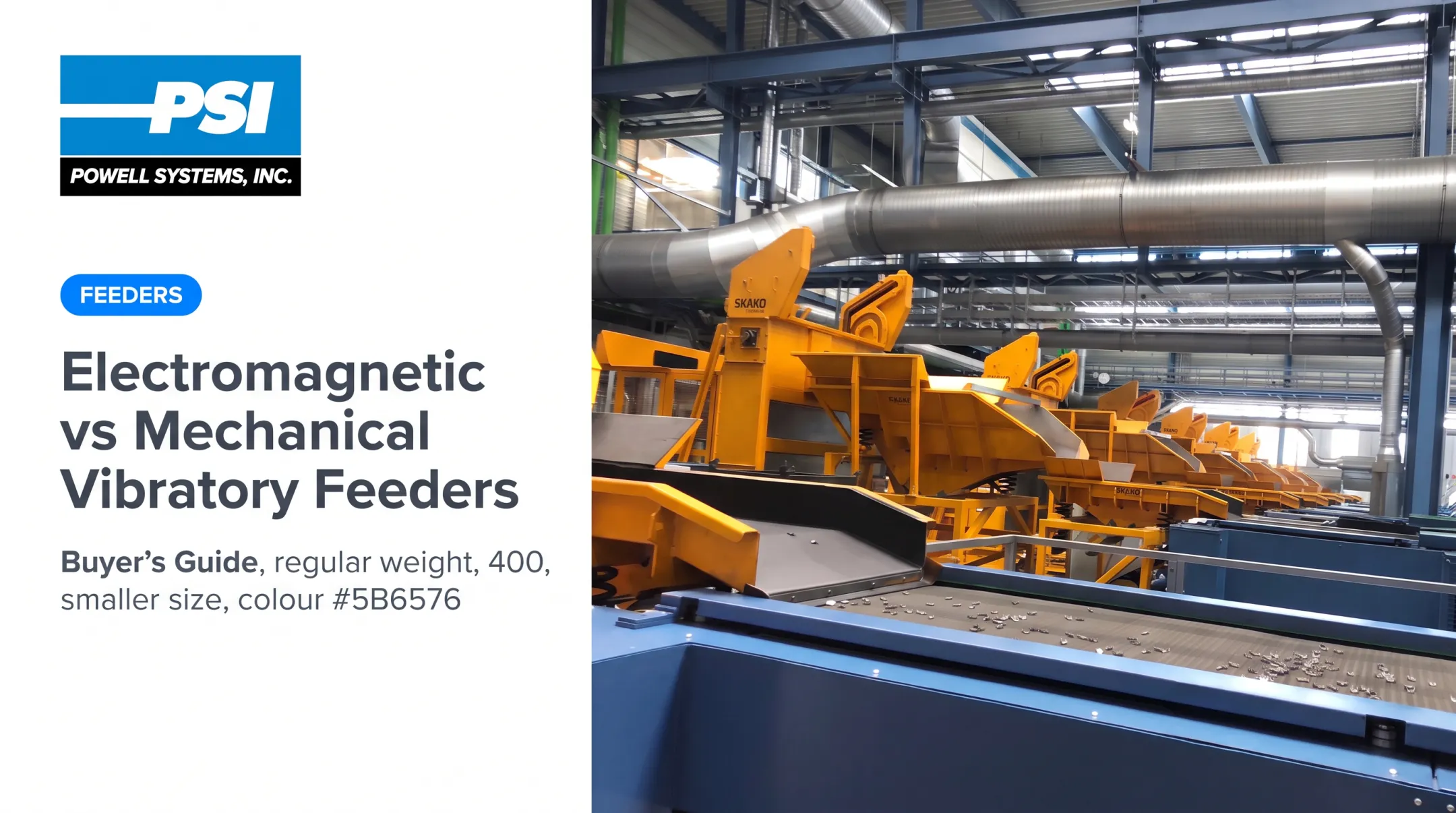
- Electromagnetic: electrical feed control and no sliding or rotating parts. Used for bulk feeding and metering, such as the Dodman berry line.
- Mechanical (unbalanced-motor): handles foundry materials, aggregates, scrap, and hot product.
- Pan or tray: a conveying-surface configuration for rock, minerals, and scrap.
- Tubular: enclosed, suited to dust-generating materials such as sand and metals.
- Linear and bowl: mainly parts transfer and orientation, not bulk metering.
Bowl feeders show the split clearly. RNA Automation uses one to feed screws single-file and heads-up for robotic pickup. That is orientation, not tonnage.
Applications span food and packaging, fasteners, stampings and forgings, steel and aluminum scrap, castings, aggregates, and recycling.
Vibratory Hopper vs Vibratory Feeder: What Is Better for Your Bulk Setup?
Neither wins outright. The right choice depends on whether your main constraint is storage and discharge, controlled conveying, metering precision, or a mix.
Material behavior
Evaluate these before anything else:
- Particle size distribution and bulk density
- Moisture and cohesion
- Abrasiveness and temperature
- Fragility and segregation risk
Fine, moist, or compressible solids can form stable bridges. Funnel flow can worsen segregation and let stagnant material cake. Fragile or friable product favors gentle feeder designs.
Test, don't guess. Flow testing measures cohesive strength, wall friction, and compressibility under realistic storage time, humidity, and temperature. ASTM D6128-22 is the standard shear-test method.
Required rate and control
A hopper maintains a reserve. A feeder controls delivery rate. Tighter rate needs usually mean stepping up control:
- A slide gate sets bed depth.
- Variable-speed or frequency-converter control adjusts amplitude.
- Weigh feedback adds loss-in-weight accuracy.
- Multi-stage feeding handles bulk-then-trim batching.

Process layout and integration
Check these factors early:
- Available height and footprint
- Refill method and dust containment
- Washdown needs and maintenance access
Static hoppers also need flexible connections to vibrating equipment. Excessively steep transitions add headload and can cause uneven flow. An overly long throat can cut capacity and damage the feeder.
Situational recommendations
- Choose a hopper when bridging, rat-holing, or difficult emptying is the problem.
- Choose a feeder when you need controlled conveying, metering, screening, or batching into a scale or filler.
- Choose both when the line needs a steady reserve and a repeatable rate. Test your material and size the pair together before buying.
Real-World Examples and Case Studies
Coperion K3: a measured development test
Coperion's December 2022 article describes a vibratory feeder for fragile, free-flowing materials. Conventional shock absorbers can allow unpredictable oscillation, so engineers replaced them with pendulums that constrain motion to the feeding direction.
Their reported result: 35% better accuracy on average across different materials and feed rates. This is a Coperion development test, not a customer's production result.
Baseline accuracy, materials, and sample size weren't disclosed, and no independent validation exists. It shows mounting design affects feed consistency; it isn't a universal specification.
A packaging-line view
On a weigh-fill line, feed accuracy shows up as giveaway control. In Powell's AWC Series, product moves over one or more vibratory feed pans into a weigh hopper on strain-gauge load cells. Vibration stops at the programmed weight, and the hopper dumps into the container.
Powell reports giveaway averaging under 1/8 oz. for smaller pieces. That is a manufacturer claim.

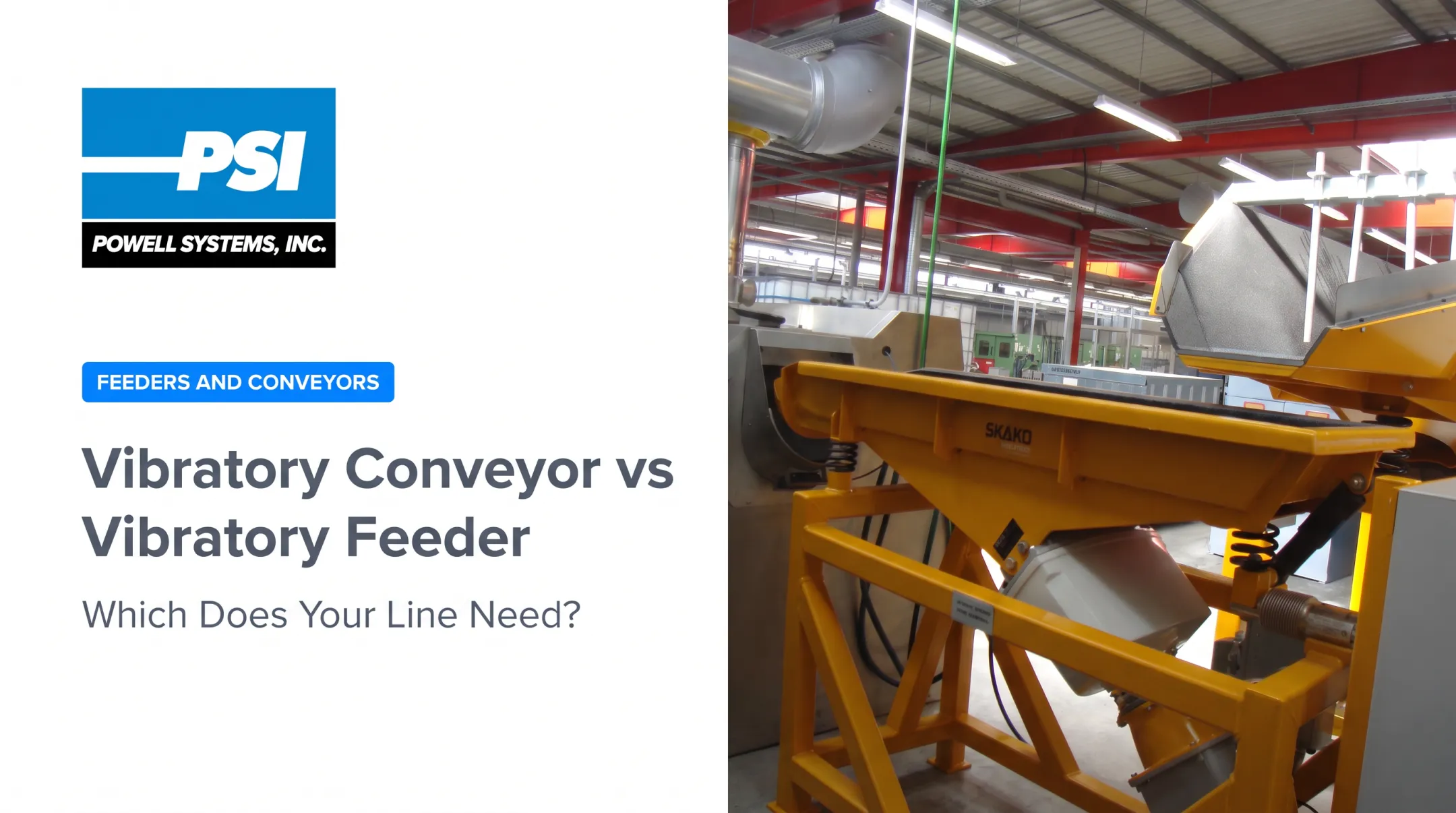
Powell Systems also distributes SKAKO vibration feeders, which suit interlocking, difficult-to-feed hardware.
If your bulk containers, feeders, or packaging interfaces need to work together, contact Powell Systems about custom corrugated steel containers and packaging systems at 765-884-0613 or info@powell-systems.com.
Conclusion
A vibratory hopper supports storage and reliable discharge. A vibratory feeder supports controlled movement and metering. Many bulk setups need both.
Getting the match right pays off in:
- Consistent flow and less manual labor
- Longer equipment life and easier maintenance
- Better product protection
- Steadier performance at your weighing or packaging station
Frequently Asked Questions
What is a feeder hopper?
It is the storage vessel that keeps material supplied to a feeder. It can be stationary or vibrating, and it differs from the feeder, which moves the material.
What is the purpose of a vibrating feeder?
It conveys bulk material across a vibrating surface and can meter it at a controlled rate to the next process stage.
What are the different types of vibratory feeders?
Main categories include electromagnetic, mechanical-drive, pan, tubular, linear, and bowl feeders. Best fit depends on your material and application.
When should you choose a vibratory hopper instead of a vibratory feeder?
Choose a hopper when discharge from a storage vessel, bridging, or rat-holing is the main problem. Choose a feeder when you need controlled conveying or metering.
Can a vibratory hopper and vibratory feeder be used together?
Yes. They are commonly paired when a process needs reliable discharge and a consistent feed rate to weighing, packaging, or conveying equipment.