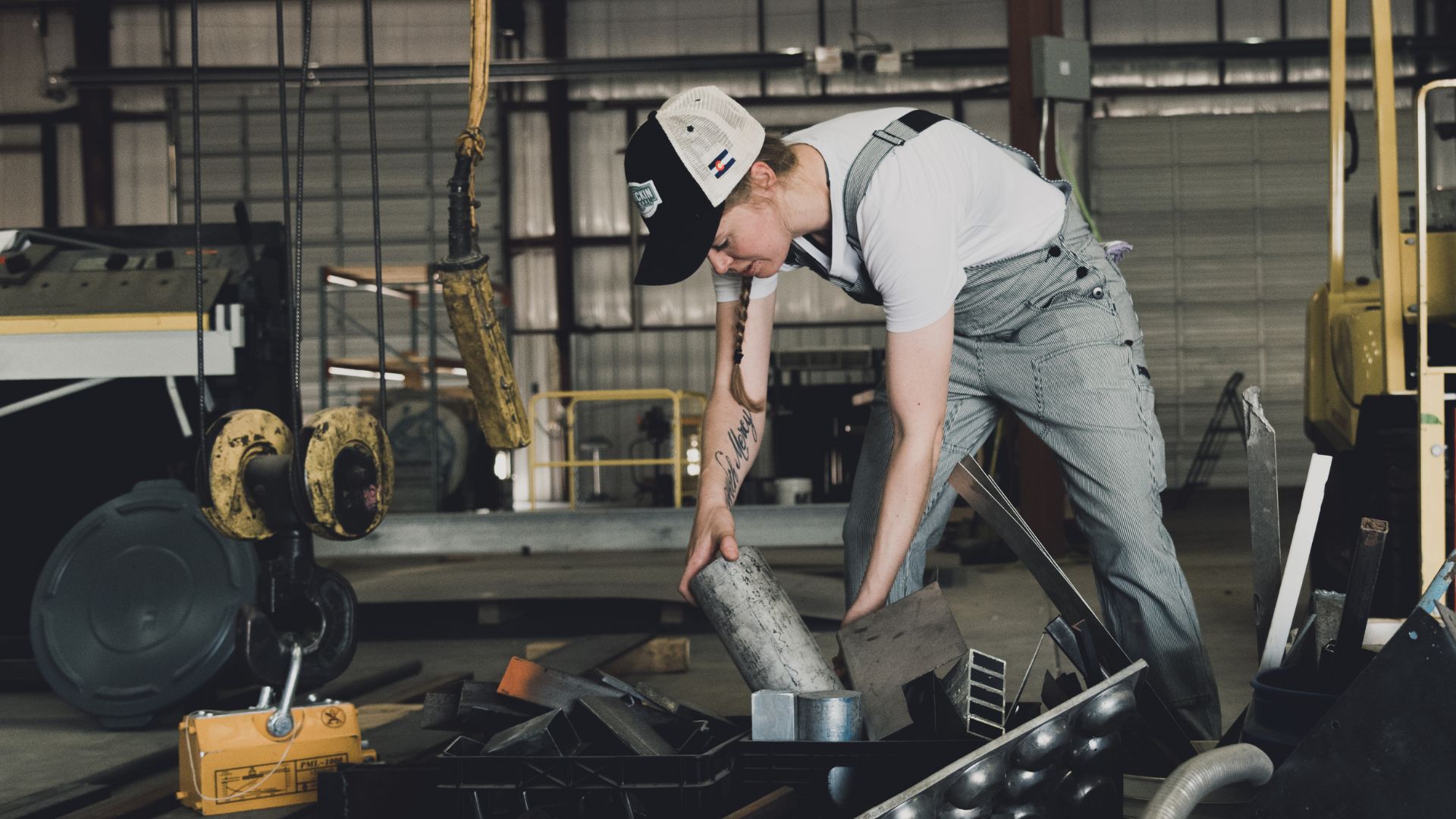
You deal with heavy parts, limited floor space, safety risks, and daily pressure to keep production moving. When material handling falls short, problems surface fast—strained workers, damaged parts, blocked aisles, and delays that disrupt the shift.
The cost of these issues adds up quickly. U.S. businesses spend more than $1 billion per week on workplace injuries, reaching over $58 billion per year, much of it tied to manual handling, poor layouts, and unsafe movement of materials.
This article explains what material handling means in industrial operations, outlines common equipment and container types, and highlights factors that help reduce risk and support steady production.
Key Takeaways:
Material handling affects safety, labor demand, space use, and production stability across every stage of an industrial operation.
Clear material handling principles help reduce repeated handling issues and support more consistent daily work.
Containers play a central role in protecting parts, controlling access, and supporting safe lifting and stacking.
Equipment and container choices should reflect part weight, temperature, handling method, and storage limits.
Experience with heavy industrial conditions matters when selecting material handling containers and equipment.
What Is Material Handling and How Does It Impact Production
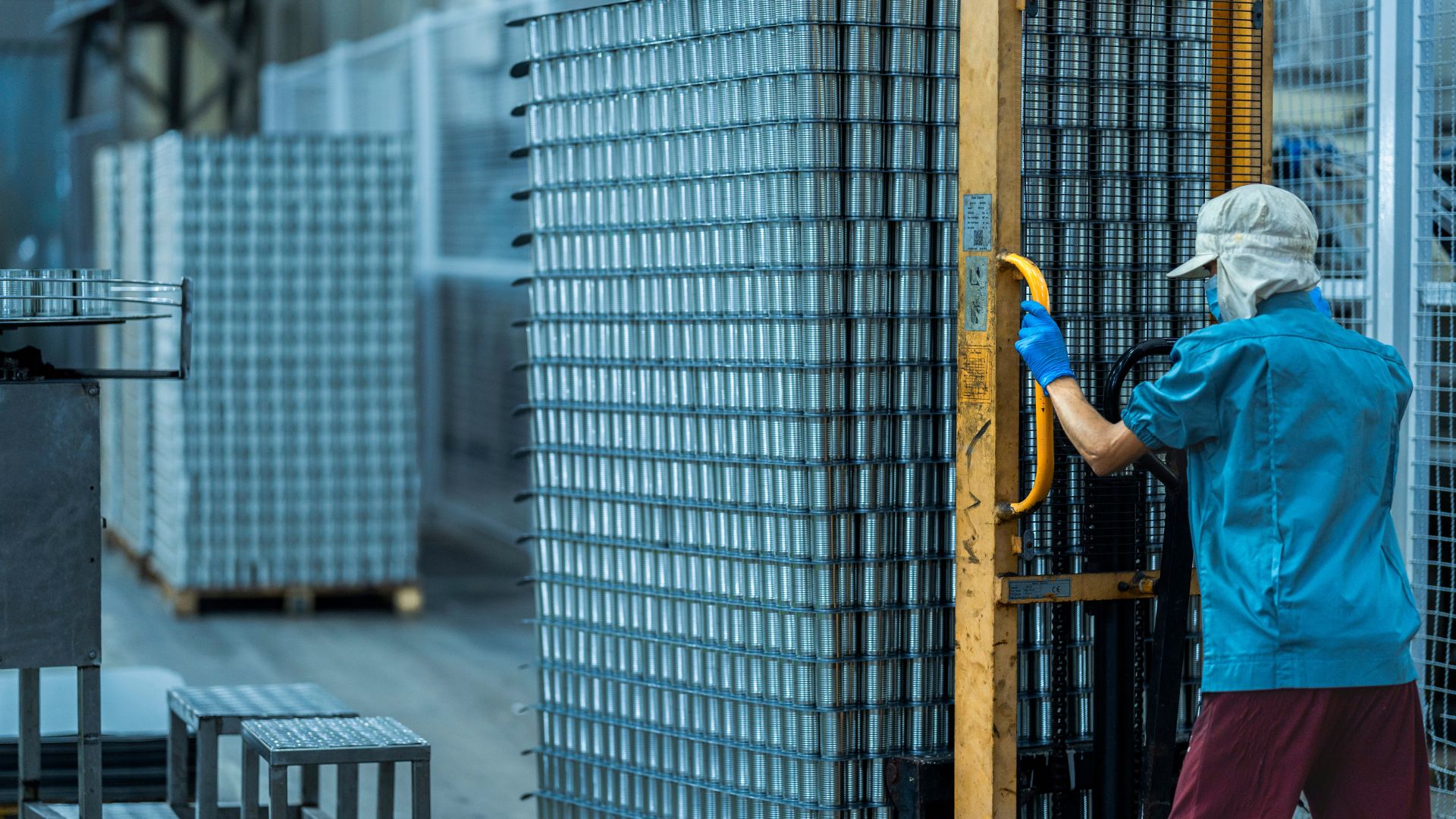
Material handling refers to how materials are moved, stored, protected, and controlled throughout a facility. This includes everything from receiving raw materials to moving parts between processes, staging items for assembly, and preparing finished goods for shipment. Any time materials are moved, staged, stored, or prepared for use, material handling is involved.
In industrial settings, material handling is not limited to forklifts or conveyors. It also includes containers, pallets, platforms, and systems that support lifting, stacking, feeding, and unloading parts. The design of these tools affects how safely workers interact with materials and how reliably parts flow through each step of production.
Once material handling is clearly defined, the next step is understanding how it fits into broader operations management and daily production control.
The Role of Material Handling in Operations Management and the Supply Chain
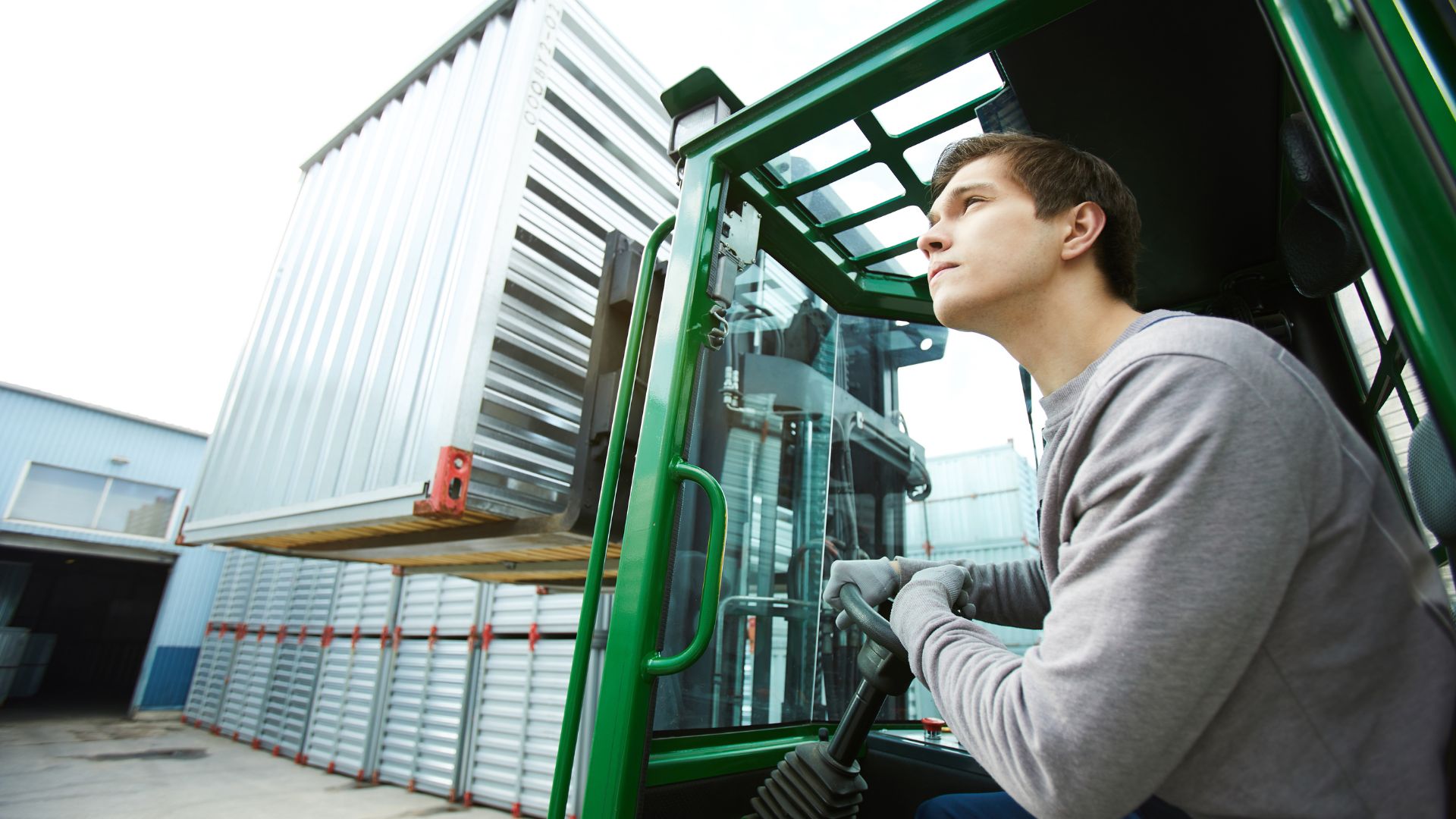
Material handling plays a direct role in how work moves through an operation. It connects planning with execution by determining how materials arrive, where they wait, and how they reach each process step. When handling methods match the work being done, material flow stays controlled. When they do not, delays, safety risks, and extra labor appear quickly.
Across operations management and the supply chain, material handling supports several core functions:
Production flow control: Containers, pallets, and handling equipment guide parts between workstations, helping maintain steady movement without excess buildup or shortages.
Labor and safety management: Handling methods influence lifting, reaching, and travel distance, which affects injury risk and daily workload on the floor.
Space use and layout planning: Stackable containers and predictable footprints support better use of floor space in storage, staging, and work-in-process areas.
Inventory visibility: Consistent handling units make it easier to track quantities, locations, and the status of materials as they move through the operation.
Supply chain coordination: When materials move between suppliers, plants, and customers, consistent handling methods support stable loading, transport, and receiving.
To manage material handling consistently, operations rely on clear principles that guide how materials should move and be handled.
10 Core Principles of Effective Material Handling
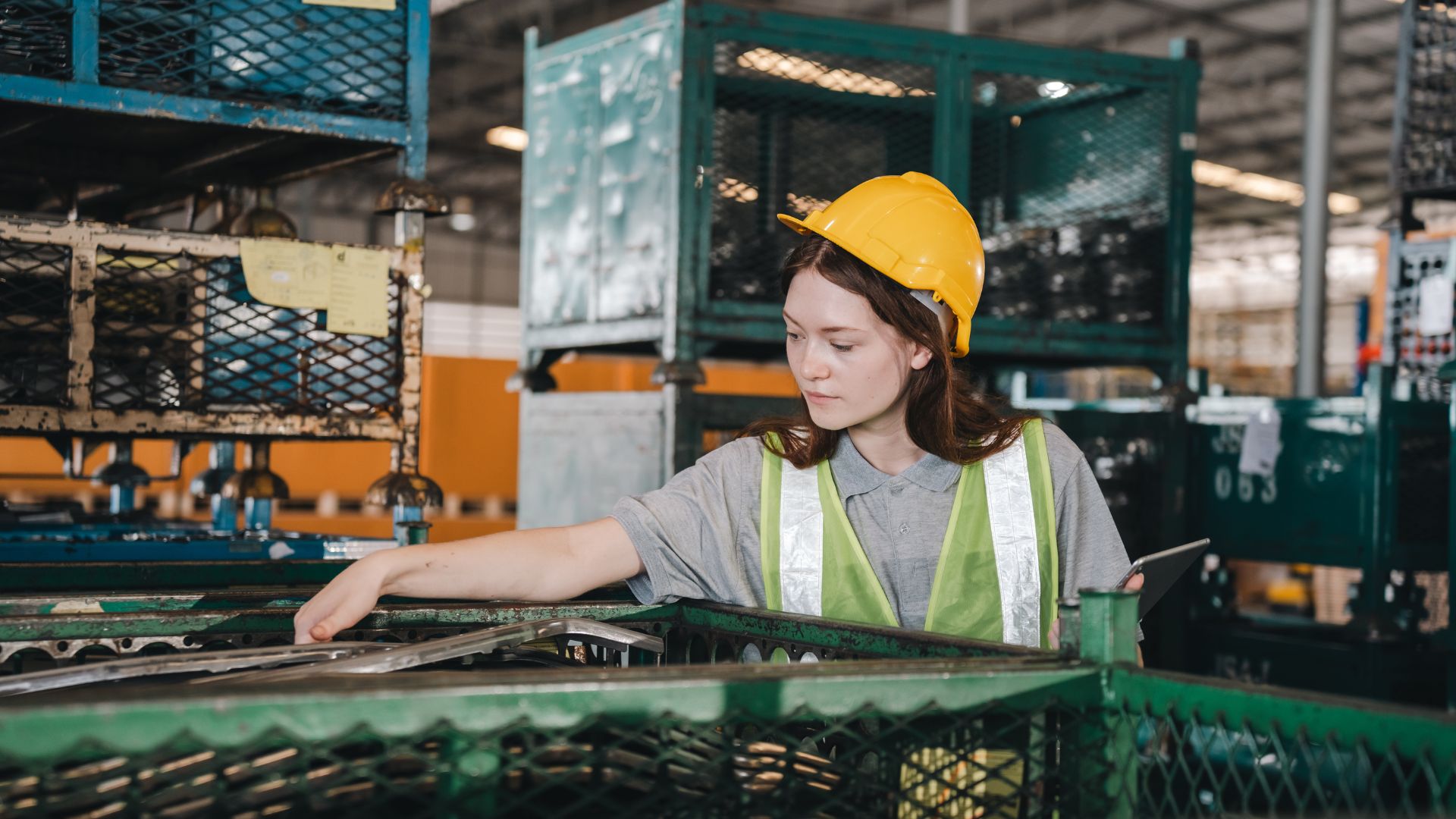
Material handling decisions affect safety, labor, space use, and daily production stability. When these decisions are made without structure, problems tend to repeat across shifts and departments. Clear principles provide a shared reference for how materials should move, how often they should be handled, and how people and equipment interact across the operation.
Here are the core principles that guide effective material handling systems in industrial environments:
Planning Principle
Every handling activity should be planned before equipment or containers are selected. This includes defining the material type, weight, condition, and movement path, along with any limits related to space, temperature, or handling equipment. Planning helps prevent mismatches that lead to rework or unsafe handling.
Standardization Principle
Where possible, similar materials should use the same container sizes, footprints, and handling methods. Standardization reduces training time, lowers handling mistakes, and makes it easier to move materials between departments or facilities without adjustments.
Work Reduction Principle
Material movement should be limited to what is necessary to complete the process. Extra transfers, double handling, and long travel distances increase labor demand and raise the chance of damage or injury. Fewer moves lead to more predictable results.
Ergonomic Principle
Handling methods should account for physical limits. Container height, access points, and discharge features should reduce bending, reaching, twisting, and lifting. Designs that position parts closer to waist level help lower strain during repetitive tasks.
Unit Load Principle
Materials are best handled as grouped loads instead of individual pieces. Unit loads reduce the number of handling actions, support stable lifting, and help maintain order during transport and storage.
Space Use Principle
Both horizontal and vertical space should be planned with intent. Stackable containers, consistent footprints, and clear storage zones help prevent congestion, blocked aisles, and unstable stacks that increase risk.
System Thinking Principle
Handling steps should work together rather than operate in isolation. Receiving, storage, staging, and production areas must align so materials transfer smoothly between steps. Many issues arise where one step does not match the next.
Automation Principle
Mechanical or automated handling equipment can reduce manual effort for repetitive or high-risk tasks when matched correctly to the application. The goal is to support consistency and safety without adding unnecessary complexity.
Environmental Consideration Principle
Material handling choices influence waste, reuse, and replacement rates. Containers with long service life reduce disposal needs and lower the demand for frequent replacements.
Life-Cycle Cost Principle
Costs should be viewed across the full service life of handling equipment and containers. Repair needs, downtime risk, and end-of-life value often outweigh differences in initial purchase price.
When these principles are applied consistently, the benefits show up quickly across safety, labor demands, and daily production flow.
Also Read: Container Management in Automotive Manufacturing
Key Benefits of Well-Planned Material Handling Systems
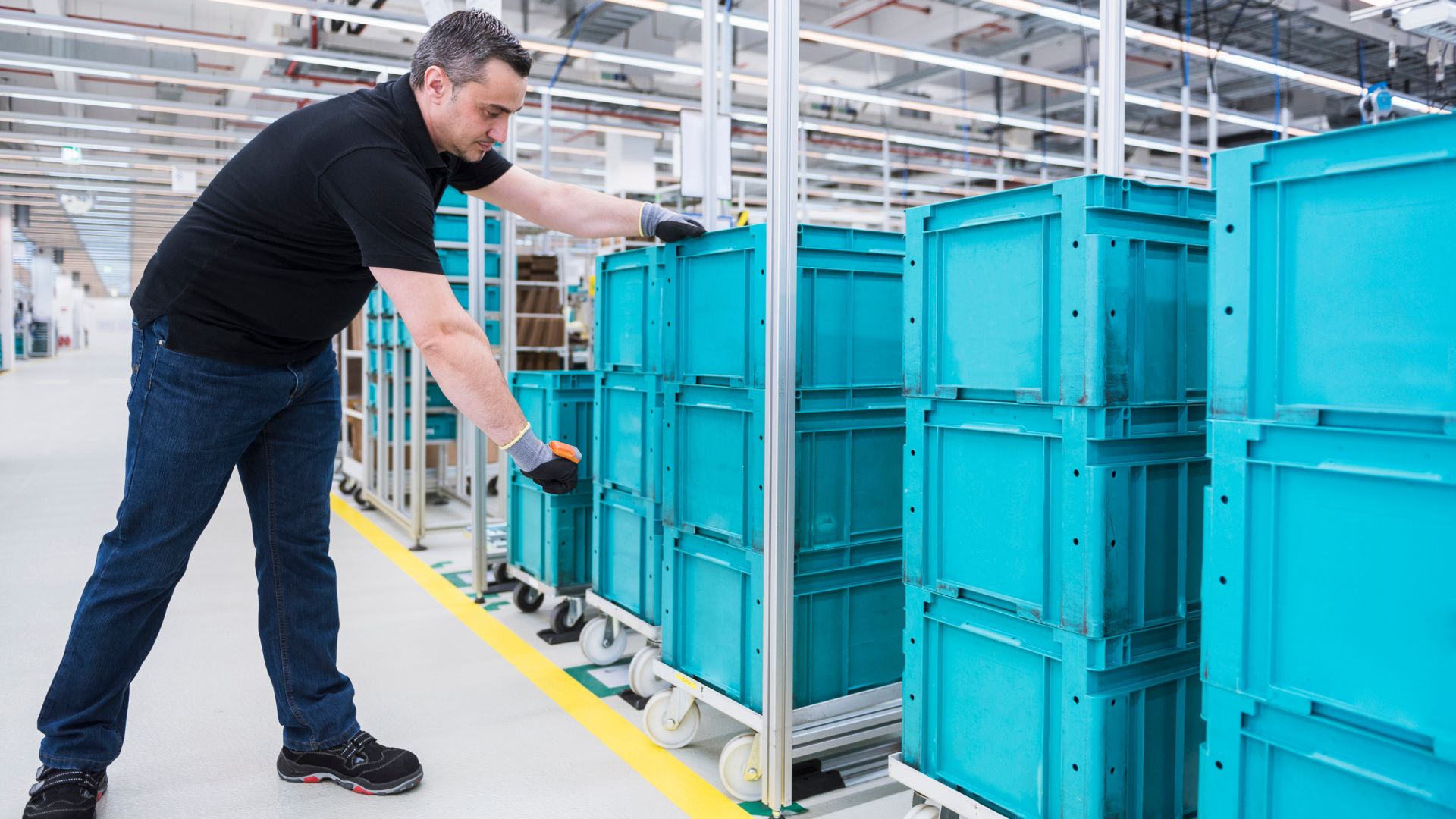
Material handling systems affect how safely and consistently work gets done across a facility. When handling methods match the task, parts move with fewer interruptions and workers face less physical strain. The benefits extend beyond movement alone and show up across daily operations.
When material handling systems are set up with care, they support several key outcomes:
Improved worker safety: Proper container design, controlled discharge, and reduced manual lifting help lower strain and injury risk during routine tasks.
Better part protection: Containers and handling methods that fit the load help limit damage, mixing, and loss as parts move through production.
More predictable material flow: Consistent handling units and movement paths help parts arrive where they are needed without unexpected delays or bottlenecks.
Reduced labor strain: Fewer lifts, shorter reaches, and less rehandling lower physical demand on operators throughout the shift.
Improved space control: Stackable containers and defined storage footprints support better use of available floor and vertical space.
Lower interruption risk: Stable stacks and reliable handling methods reduce cleanup, rework, and unplanned stops tied to handling failures.
Achieving these benefits depends largely on the types of equipment used to move, store, and support materials.
Main Types of Material Handling Equipment Used in Industry
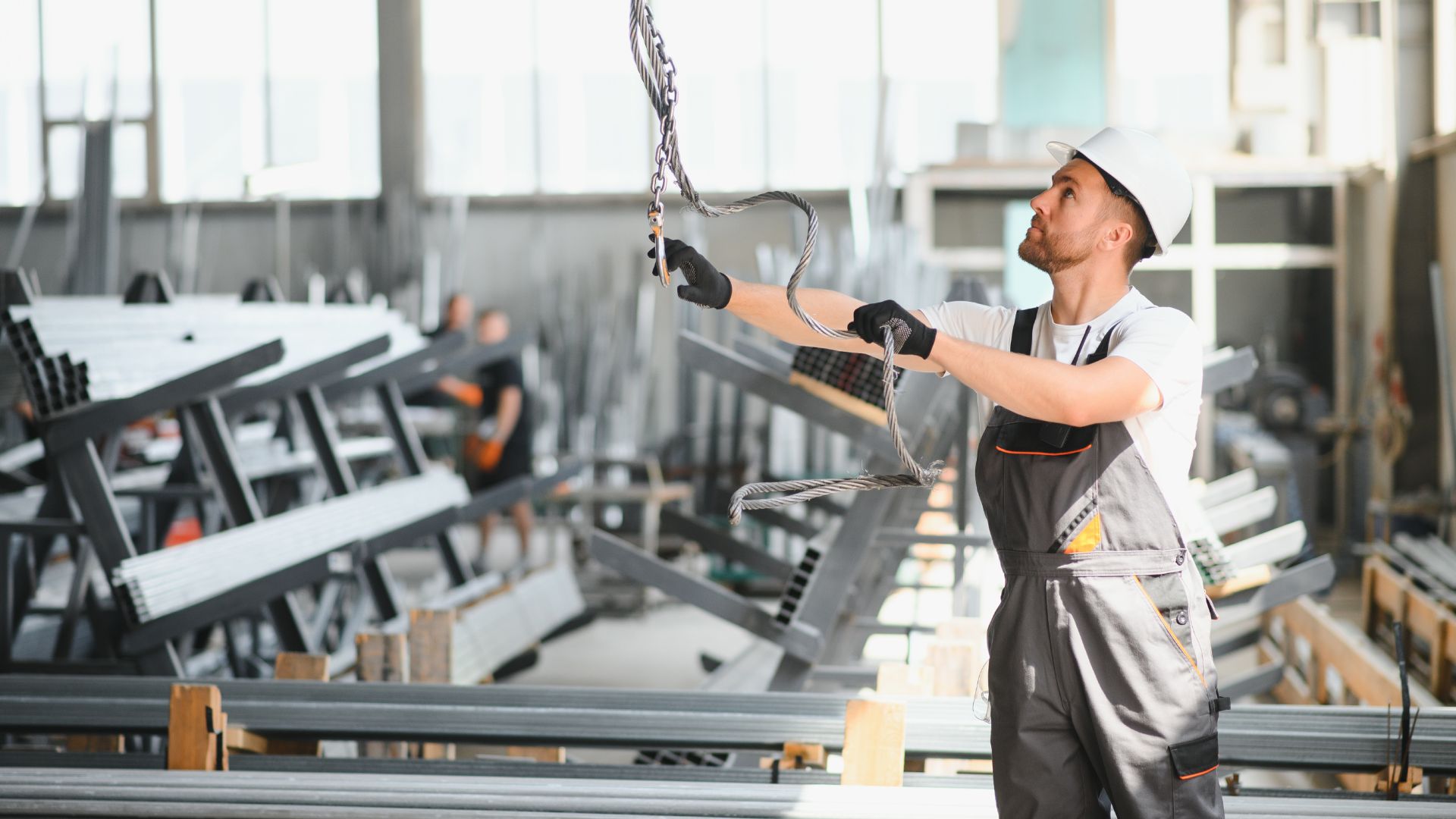
Material handling equipment includes a wide range of tools used alongside containers to move, store, and support materials within a facility. Each category serves a different purpose, and the right choice depends on part weight, handling frequency, available space, and how materials move through the operation.
Here are the main categories of material handling equipment used in industrial settings:
1. Storage and Handling Equipment
This category includes equipment designed to hold materials in place between handling steps or during storage.
Common examples include:
Containers and bins
Pallets and skids
Racks and stackable frames
These tools support stable storage, controlled stacking, and predictable forklift access. Their design affects space use, stack height, and part protection during idle periods.
2. Transport Equipment
Transport equipment is used to move materials between locations within a facility or across short distances.
Common examples include:
Forklifts
Pallet jacks
Carts and towable trains
This equipment supports horizontal movement across the floor and plays a key role in how materials flow between work areas, docks, and storage zones.
3. Positioning and Feeding Equipment
Positioning and feeding equipment help place materials where operators or machines need them.
Common examples include:
Gravity-fed containers
Hoppers and chutes
Lift tables and stands
These tools reduce reaching and lifting by bringing parts into a usable position and supporting steady part delivery during assembly or processing.
4. Bulk Material Handling Equipment
Bulk handling equipment supports large volumes of loose material.
Common examples include:
Conveyors
Dump hoppers
Roll-over or tipping systems
This equipment is often used for scrap, chips, or high-volume parts where controlled dumping and transfer are required.
5. Automated and Semi-Automated Equipment
Automated handling equipment reduces manual involvement in repetitive or high-risk tasks.
Examples include:
Automated feeders
Guided vehicles
Controlled discharge systems
These systems support consistent movement and reduce variation when matched to the workload and layout of the facility.
Among all equipment categories, containers play a central role because they interact directly with both materials and workers.
Types of Material Handling Containers and Where They Are Used
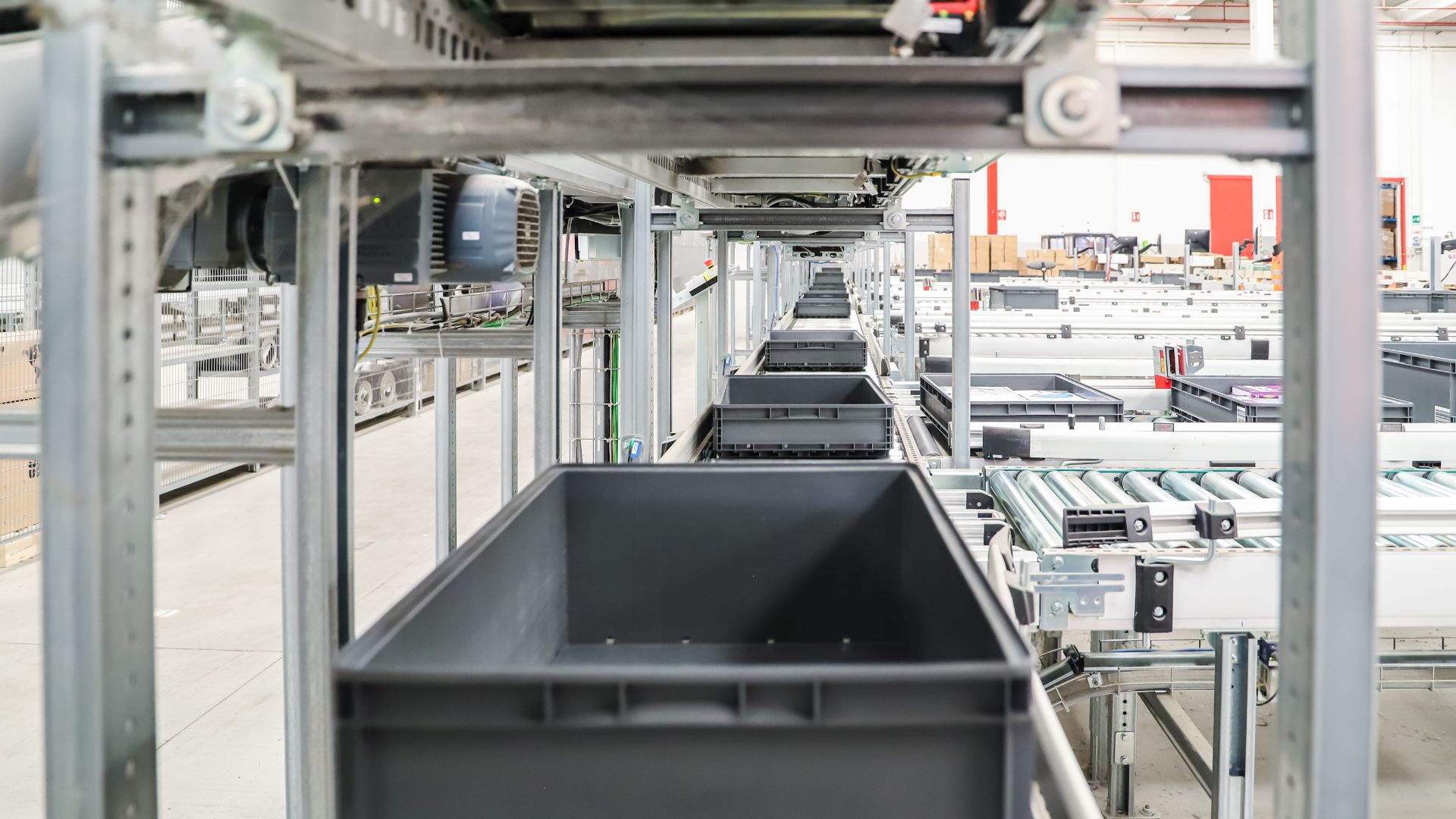
Material handling containers support nearly every movement of parts inside an industrial facility. Their design affects how materials are lifted, stacked, accessed, and discharged throughout production. Containers that match the weight, condition, and handling method of the parts help maintain control on the floor, while mismatched designs often lead to safety concerns, part damage, and unnecessary rehandling.
Below are common types of material handling containers used in industrial operations, with clear use cases and benefits for each.
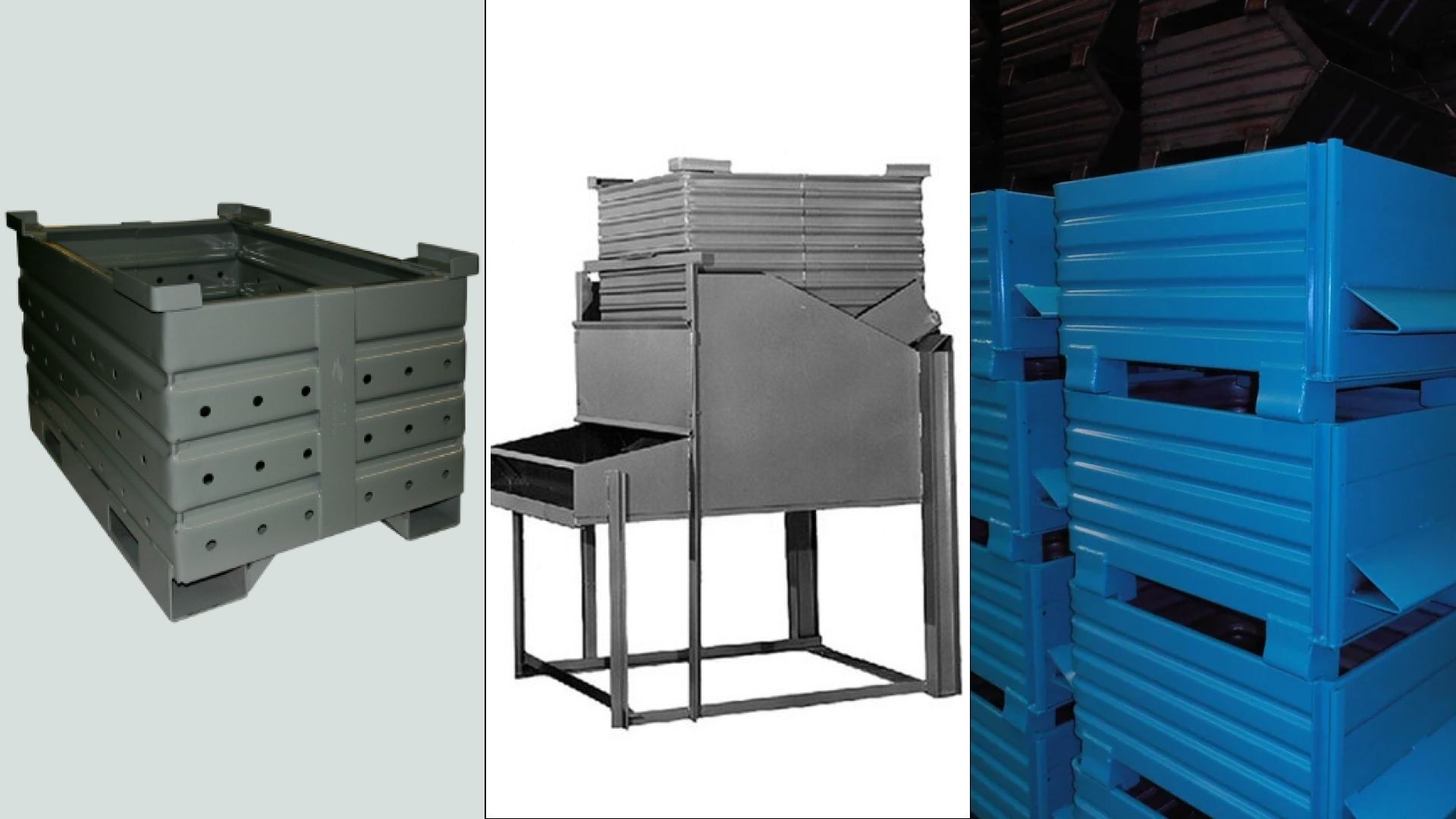
Standard corrugated steel containers are widely used for general handling and storage. Their enclosed box design supports controlled movement of parts between departments and during work-in-process staging.
Common applications
Work-in-process staging
Finished or semi-finished part storage
Internal transport between production areas
Key advantages
Corrugated panels distribute load stress across container walls
Offset stacking legs support stable vertical stacking
Four-way forklift entry allows flexible handling
Hot and heavy containers are designed for environments where weight and temperature exceed the limits of standard designs. These containers are built for dense metal parts and exposure to heat.
Common applications
Foundry castings
Forgings and heavy stampings
Parts are placed into containers while still hot
Key advantages
Heavier-gauge corrugated steel resists deformation under high loads
Construction tolerates heat without loss of shape
Higher stacking capacity for dense materials
Gravity-fed containers use a sloped base to move parts forward as items are removed. This design supports steady access at the point of use.
Common applications
Assembly line feeding
Machine tending
Line-side staging
Key advantages
Parts remain within easy reach
Reduced bending and deep reaching
Consistent forward movement of parts
Smooth-sided containers are built for operations where part separation and cleanliness matter. Interior surfaces are free from ridges or gaps.
Common applications
Fasteners such as nuts, bolts, and washers
Small stampings and precision components
Key advantages
Flat interiors prevent parts from lodging
Welded seams limit hidden gaps
Better lot control and reduced part mixing
Drop-bottom containers release contents through a hinged floor when activated by a stand or attachment. This supports controlled unloading.
Common applications
Feeding hoppers or workstations
Unloading dense or awkward parts
Batch discharge into bins or chutes
Key advantages
Full loads empty without tipping
Faster unloading with less manual handling
Lower risk during discharge
Roll-over containers are built to rotate during dumping when used with rotary forklift attachments. Their structure supports controlled movement while loaded.
Common applications
Scrap handling
Metal chips and bulk waste
High-volume dumping tasks
Key advantages
Reinforced fork channels support rotation
Controlled dumping during full turns
Suitable for repeated heavy cycles
Platform Boxes
Platform boxes provide an open surface for loads that do not fit within enclosed containers. They allow access from multiple directions.
Common applications
Dies and fixtures
Large sub-assemblies
Oversized or irregular components
Key advantages
Open access from all sides
High load capacity
Compatible with forklifts and cranes
Tapered nose boxes feature an open front with angled sides that allow access while containers remain stacked.
Common applications
Order picking
Line-side staging
Areas requiring front access
Key advantages
The front opening allows access without unstacking
Clear visibility of contents
Stackable footprint supports space control
Custom containers address handling needs that fall outside standard designs. They are built around specific parts, equipment, and workflows.
Common applications
Unusual part sizes or shapes
Special access or discharge needs
Equipment-specific handling requirements
Key advantages
Dimensions matched to the application
Features added for access or separation
Handling points designed for existing equipment
With these container types in mind, selection becomes a matter of matching designs to actual operating conditions.
Also Read: Material Handling Container Types Every Plant Manager Should Know
How to Choose the Right Material Handling Equipment and Containers
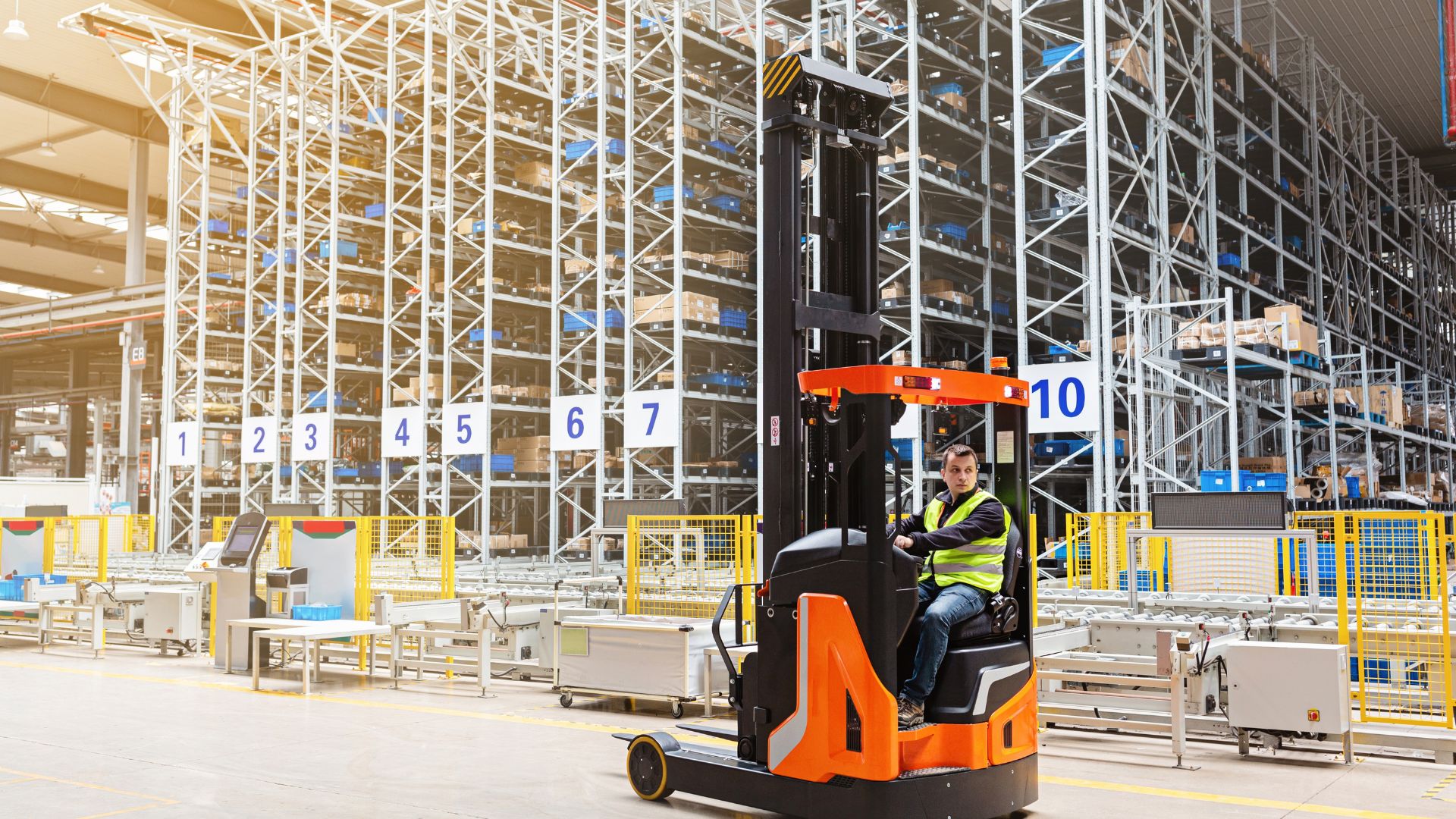
Selecting material handling equipment and containers requires more than matching size or load ratings. Each choice affects safety, daily labor, space use, and how materials move between steps. Reviewing the full handling process helps prevent issues that surface later on the floor.
Below are key factors to consider when choosing material handling equipment and containers for industrial operations:
Material weight and density: Dense metal parts place far more stress on containers, fork pockets, and stacking legs than lighter components. Equipment and containers should be rated for both static loads and forces created during lifting and transport.
Temperature exposure: In foundries and metalworking areas, parts may enter containers while still hot. Handling equipment and container materials must tolerate heat without bending or loss of strength.
Part size and condition: Small parts require smooth interior surfaces to prevent lodging and mixing, while large or irregular components may need open platforms or custom support points.
Handling method: How materials are moved matters. Forklifts, cranes, tow systems, and rotary attachments each place different demands on container design and equipment selection.
Access and discharge needs: Parts may need to be scooped out, fed forward, or released from the bottom. Choosing the right access or discharge method reduces manual handling and lowers risk.
Stacking height and space limits: Storage plans should account for stack height, aisle width, and floor load limits. Containers should remain stable at full stack height under normal movement.
Standard versus custom designs: Standard equipment meets many needs, but unique parts or workflows may require custom dimensions, openings, or handling points to avoid workarounds.
Long-term cost considerations: Service life, repair potential, downtime risk, and end-of-life value often matter more than initial purchase cost.
After reviewing material handling principles, equipment types, and container selection factors, one theme becomes clear: experience with heavy industrial conditions matters.
Why Manufacturers Choose Powell Systems for Material Handling
Not all manufacturers design for heat, dense metal loads, and repeated handling. Some focus on light-duty applications, while others build specifically for demanding shop floor use.
Powell Systems focuses on material handling needs common in metalworking and automotive operations, with an emphasis on corrugated steel containers built for weight, heat, and daily use.
Key areas where Powell Systems fits into industrial material handling include:
Heavy-duty application focus: Designs are built for castings, forgings, stampings, and dense metal parts where standard containers often fall short.
Specialized container designs: Purpose-built containers support specific tasks such as gravity feeding at workstations, controlled dumping, contamination control for small parts, and high stack storage.
Experience with harsh conditions: Long exposure to foundries and metal shops has shaped container designs that handle heat, impact, and repeated forklift movement.
Broad container portfolio: Multiple container types allow operations to address storage, work-in-process, assembly feeding, scrap handling, and oversized loads within one supplier range.
Custom design capability: When standard container sizes or features do not fit the process, dimensions, access points, and handling features can be adjusted to match actual operating needs.
Regional manufacturing knowledge: Familiarity with Midwest manufacturing environments supports container designs suited to common layouts, workflows, and handling practices in these facilities.
If you are evaluating containers for heavy parts, heat exposure, or tight handling requirements, an upfront review of part and handling requirements can help avoid costly mismatches later.
Request a quote to review container options or confirm custom designs, confirm container options, or review custom designs built to match how materials move through your operation.
Conclusion
Material handling affects how safely and consistently work gets done across your operation. The way materials are stored, moved, and discharged shapes daily labor demands, part condition, space use, and risk on the floor.
If you are reviewing your current setup or planning changes, now is a good time to assess whether your handling equipment and containers truly fit your operation.
Contact Powell Systems to review your material handling container needs, review standard options, or explore custom container solutions built for demanding industrial use.
FAQs
What are the three types of material handling?
Material handling is commonly grouped into manual handling, mechanical handling, and automated handling. Manual involves direct human effort, mechanical uses equipment like forklifts, and automated relies on programmed systems. Most facilities use a mix based on task risk and volume.
How often should material handling equipment be inspected?
Inspection frequency depends on usage, load severity, and operating conditions. High-use equipment should be checked daily by operators, with scheduled inspections handled by maintenance. Early checks help catch wear before it causes downtime or safety issues.
Can material handling setups affect product quality?
Yes, poor handling can lead to dents, surface damage, part mixing, or contamination. Containers and handling methods that match the part size and condition help maintain consistency from one process step to the next.
What causes most material handling delays inside plants?
Delays often come from mismatched container sizes, unstable stacks, or unclear storage locations. When materials are hard to access or require extra handling steps, work slows, and interruptions increase during shifts.
Is it possible to improve material handling without changing the layout?
Yes, changes to containers, stacking methods, or discharge features can improve access and control without moving walls or equipment. Small adjustments to how materials are held often reduce handling effort immediately.