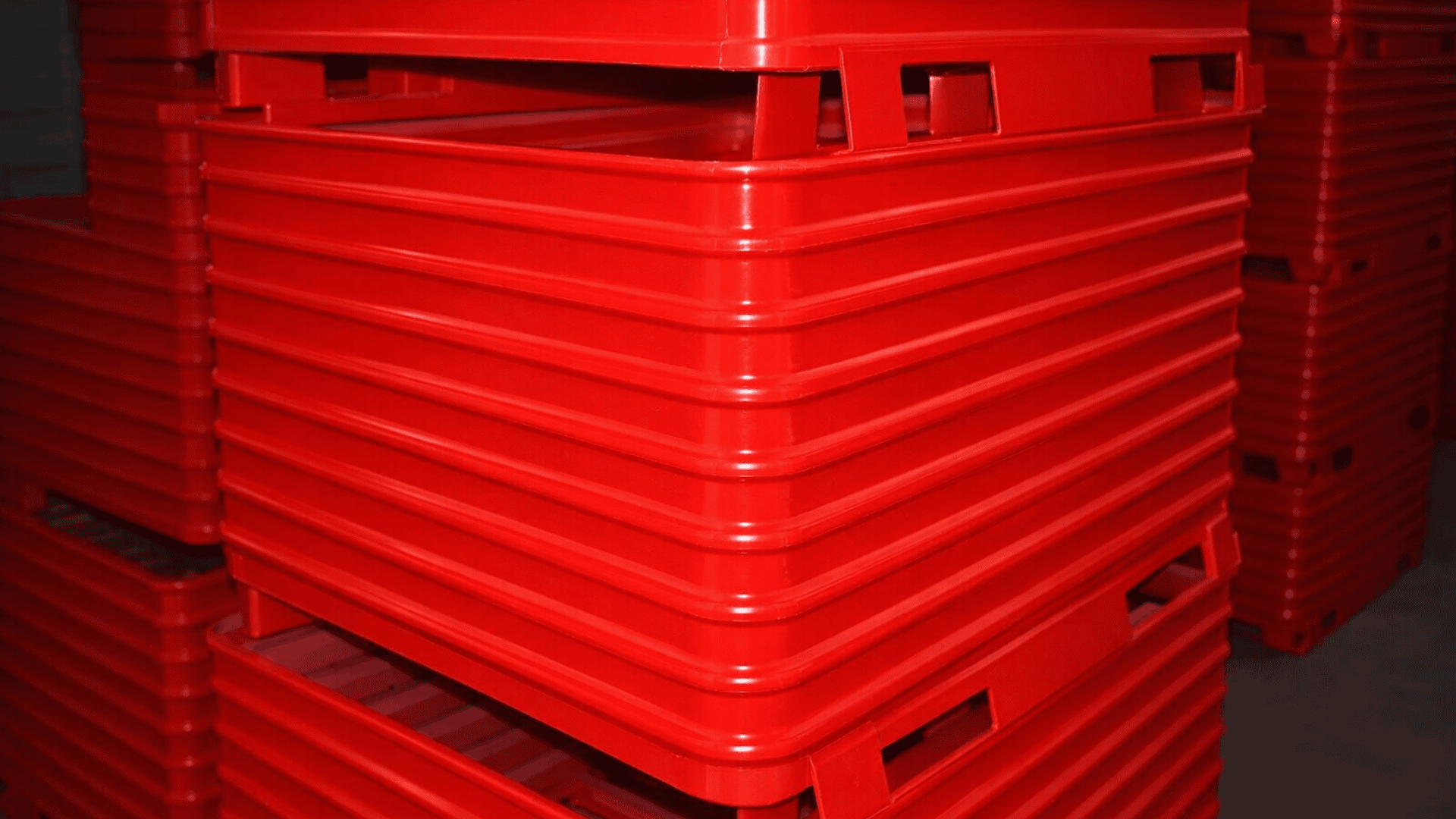
Contact with objects or equipment is the third-leading cause of workplace fatalities, according to the National Safety Council. On foundry and automotive floors, that risk often traces back to containers that crack, warp, or tip when exposed to heat and heavy loads.
You deal with these failures every day. Hot parts move fast, space is tight, and bins are expected to hold up through constant handling. When they don’t, you face unstable stacks, safety exposure, and production slowdowns tied directly to container performance.
In this blog, we’ll explore what ‘hot and heavy’ really means in industrial material handling, why standard bins fail under heat and weight, and how container design choices support safer handling in demanding operations.
Key Takeaways:
Hot and heavy conditions combine heat, dense weight, and repeated handling that standard bins are not built to withstand.
Metal parts can damage metal bins through thermal stress, point loads, stacking pressure, and frequent forklift contact.
Rugged steel containers differ from standard bins through thicker steel, reinforced floors, and stacking designs rated for heavier loads.
Container configurations such as drop-bottom, roll-over, and smooth-sided designs address specific handling and discharge needs.
Custom-built steel containers help foundries and automotive plants maintain safer handling and consistent material flow.
Where Hot & Heavy Conditions Appear in Manufacturing
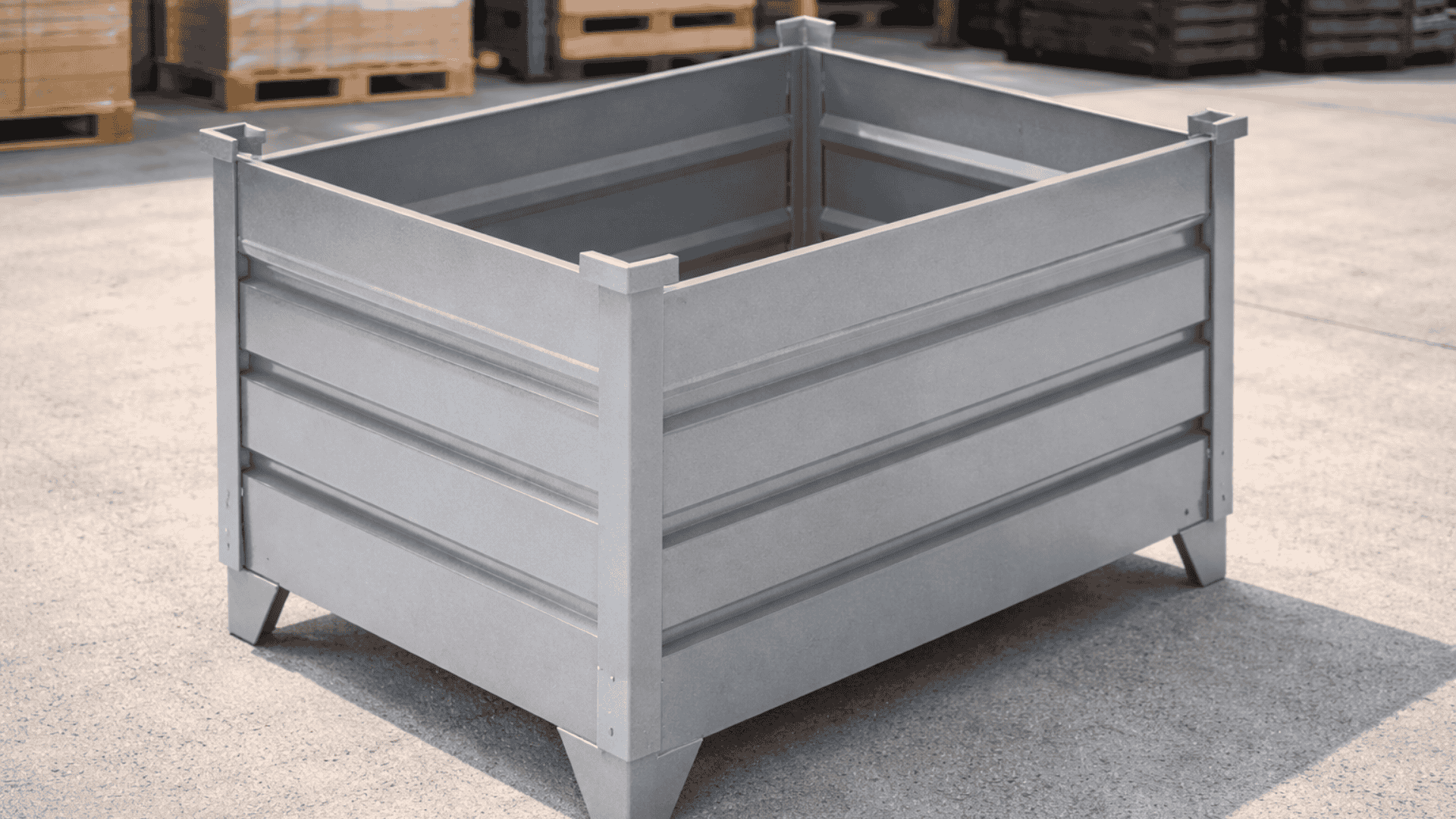
Hot and heavy conditions occur where parts are heavily weighted, exposed to high temperatures, and handled repeatedly. These factors put constant stress on containers, leading to quick failures if they’re not designed for such abuse, which can disrupt operations.
The most common hot and heavy applications fall into a few core manufacturing environments.
Foundry Operations
Foundries handle some of the most punishing material flows in manufacturing. Containers are exposed to heat straight off the process and must carry dense, uneven loads without losing stability.
Here are the typical hot and heavy demands found in foundry operations:
Hot castings: Parts enter containers while still retaining heat, placing thermal stress on steel walls and welds.
Forgings and rough shapes: Irregular geometry creates point loads that test container strength.
Scrap handling: Heavy, sharp scrap requires containers that resist deformation during dumping and transport.
Stacked staging: Floor space limits push vertical storage, increasing load on lower containers.
Automotive Manufacturing & Supply Plants
Automotive plants rely on steady part flow, tight schedules, and consistent handling. Containers are expected to perform through continuous cycles without becoming a weak point in the process.
Here are the hot and heavy conditions common in automotive environments:
Dense stampings: High-weight parts concentrate loads in small footprints.
Fastener storage: Nuts, bolts, and washers add up to heavy loads that expose thin container walls.
Line-side feeding: Containers must hold shape while supporting frequent forklift access.
Stacked WIP storage: Stable stacking is required to keep aisles clear and loads secure.
Heavy Industrial & Fabrication Environments
Beyond foundries and automotive plants, many industrial operations face similar hot and heavy demands during fabrication and assembly.
Here are the conditions that push containers into the hot and heavy category:
Large fabricated components: Size and weight place stress on container frames during movement.
Repeated handling cycles: Containers move between stations multiple times per shift.
Forklift-heavy traffic: Constant lifting and setting down tests structural integrity.
Limited floor space: Vertical storage becomes necessary, increasing stacking pressure.
These environments share common stresses, which explains why similar container failures show up across foundries, automotive plants, and fabrication areas.
Why Standard Steel Bins Don’t Last in Harsh Conditions
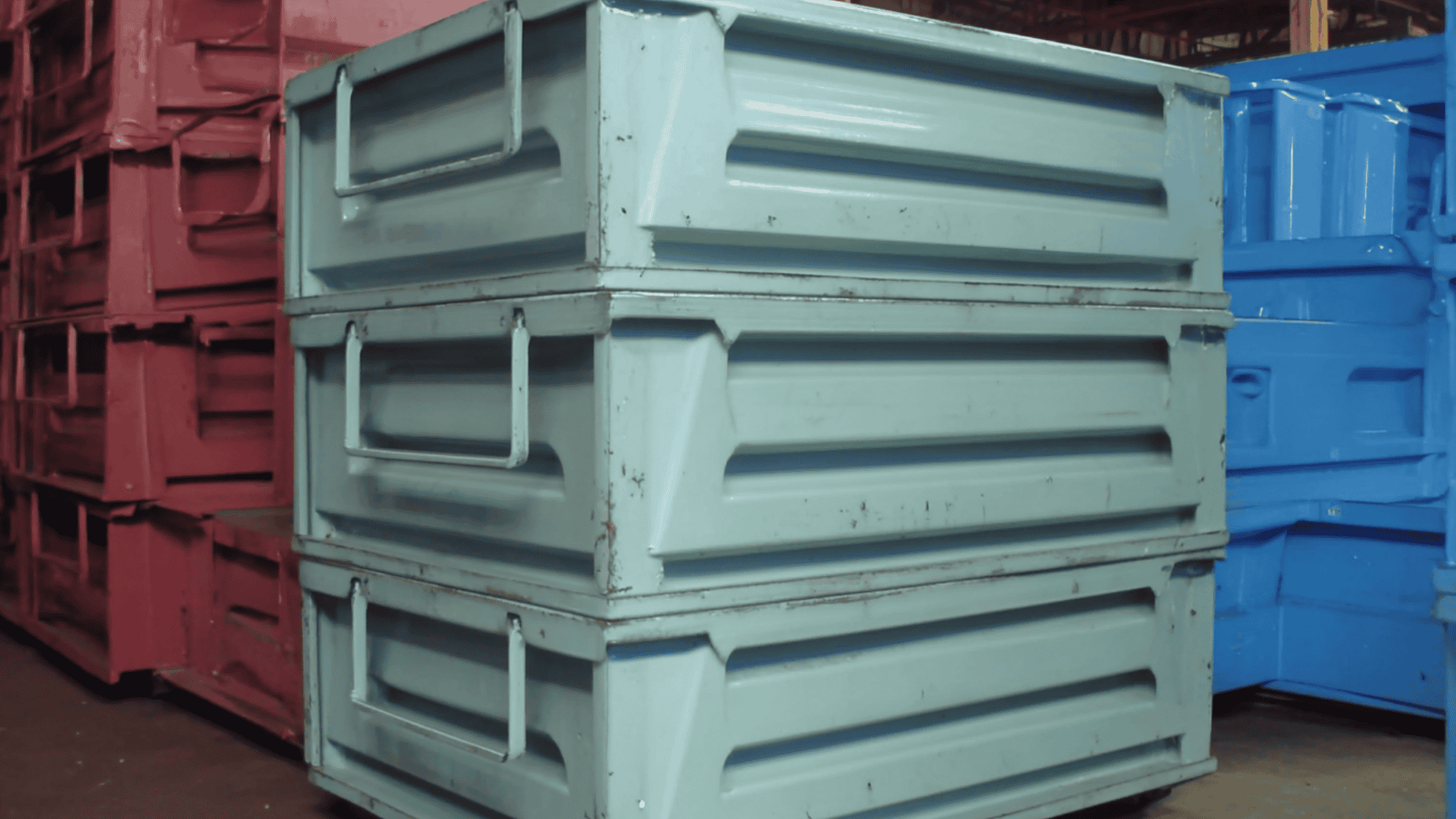
Metal bins often fail not because they are poorly made, but because they are asked to handle conditions they were never designed for. Heat, weight, and repeated handling work together to wear down steel over time. When these stresses stack up, even metal containers begin to lose their shape, stability, and safety margin.
Here are the most common challenges that cause containers to fail under hot and heavy conditions:
Thermal stress from hot parts: Parts loaded while still hot transfer heat directly into container walls, weakening steel over repeated cycles and leading to warping or cracked welds.
Concentrated point loads: Dense parts settle unevenly, placing extreme pressure on small areas of the container floor and sidewalls.
Fatigue from repeated handling: Constant lifting, setting down, and transport across shifts wears on lift points, weld seams, and stacking legs.
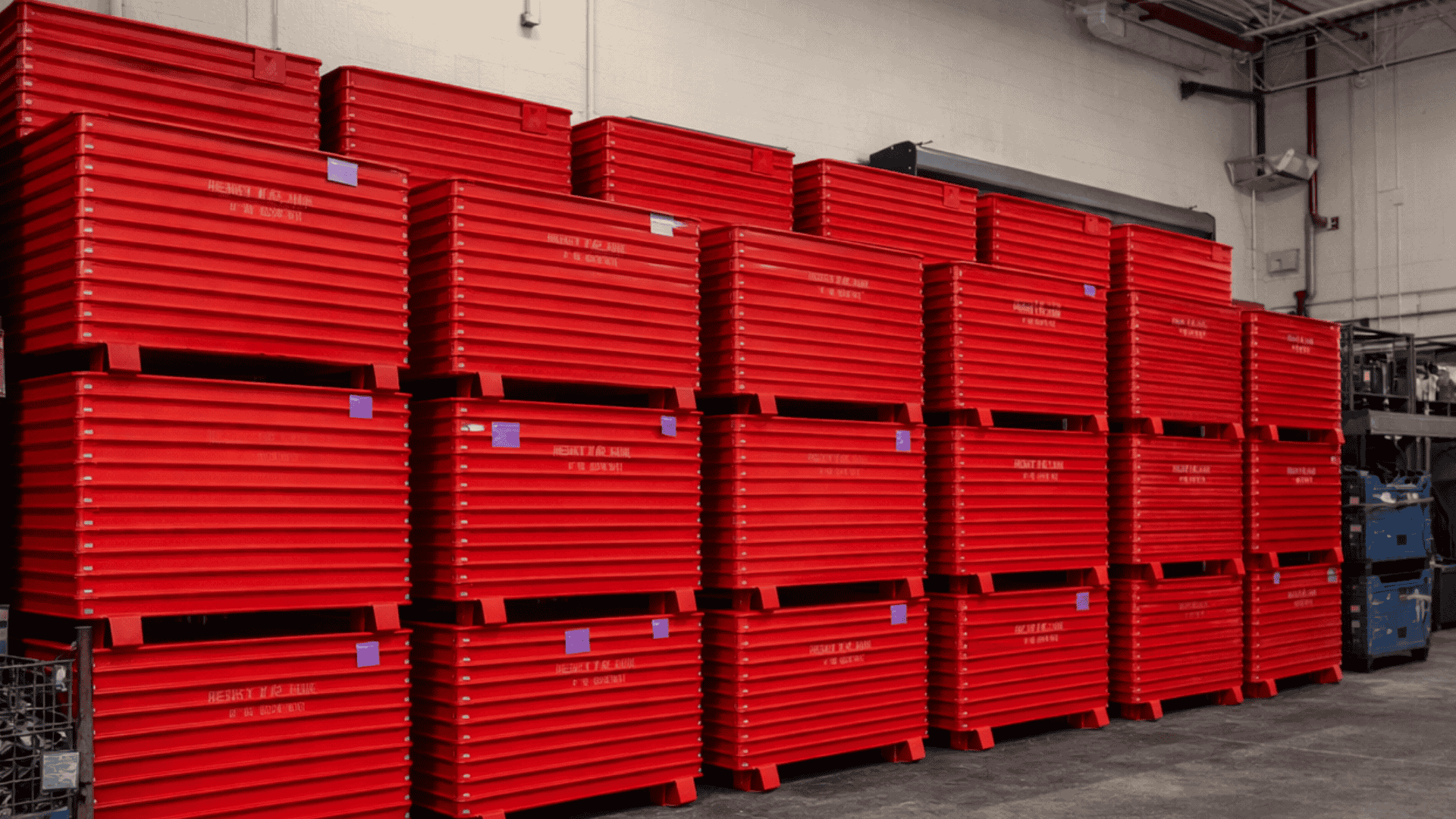
Stacking pressure: Fully loaded containers stacked multiple levels high place sustained weight on lower units, exposing weak frames and poor load paths.
Forklift contact damage: Frequent fork entry increases the risk of bent channels, distorted bases, and unstable loads.
Loss of stability: As containers deform, stacks lean, loads shift, and the risk of tip-over rises.
These challenges highlight why not all steel containers perform the same once they face sustained heat, load, and handling pressure.
Also Read: Material Handling Container Types Every Plant Manager Should Know
Rugged Steel Containers vs. Standard Industrial Bins
At a glance, many steel containers look similar. The difference shows up after weeks of heat exposure, heavy loading, and constant handling. Standard industrial bins are often built for general storage, while rugged steel containers are built to survive abuse without losing shape or stability.
Here is how rugged steel containers compare to standard industrial bins:
Feature | Standard Industrial Bins | Rugged Steel Containers |
Steel thickness | Lighter-gauge steel intended for moderate loads | Heavier-gauge steel designed for dense, concentrated weight |
Heat tolerance | Prone to warping when loaded with hot parts | Built to withstand repeated heat exposure |
Load distribution | Flat floors that allow point loads to stress panels | Reinforced floors that spread weight evenly |
Weld construction | Basic weld seams suited for light handling | Weld patterns designed for repeated lifting and stacking |
Stacking capability | Limited stacking height due to frame flex | Higher stacking capacity with stable load paths |
Forklift entry | Basic channels that bend with frequent use | Reinforced fork pockets that resist impact |
Service life | Shorter lifespan with frequent repair or replacement | Longer service life under continuous use |
After comparing container types, attention naturally shifts to the design details that allow rugged containers to hold shape under harsh conditions.
Critical Design Features That Define a True Hot n Heavy Container
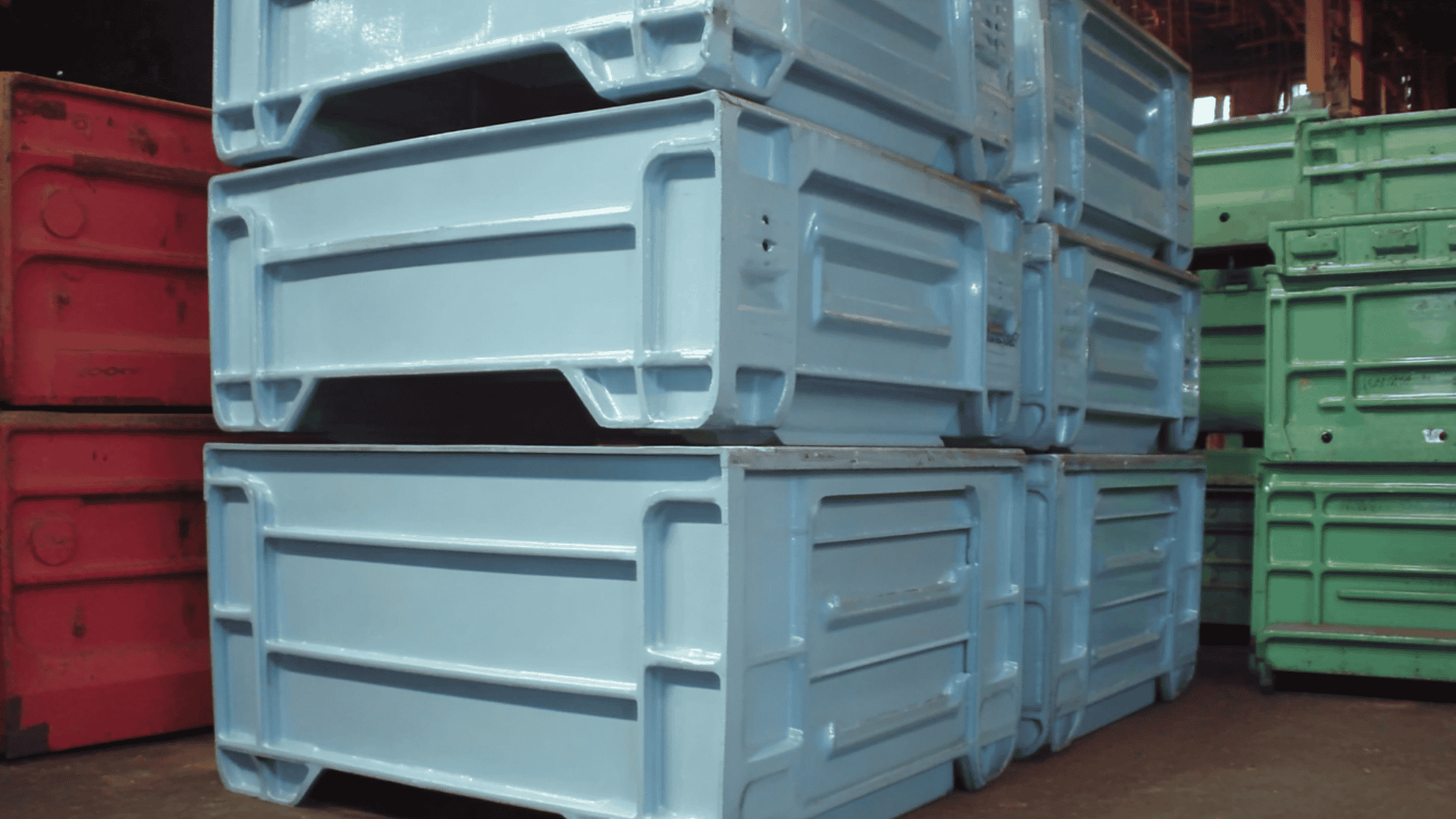
A true hot and heavy container is not defined by size alone. It is defined by how each design choice supports weight, heat, and constant handling without distortion or loss of stability. These containers are built from the ground up to handle abuse that causes standard bins to fail early.
Here are the design features that separate true hot n heavy containers from general-purpose steel bins:
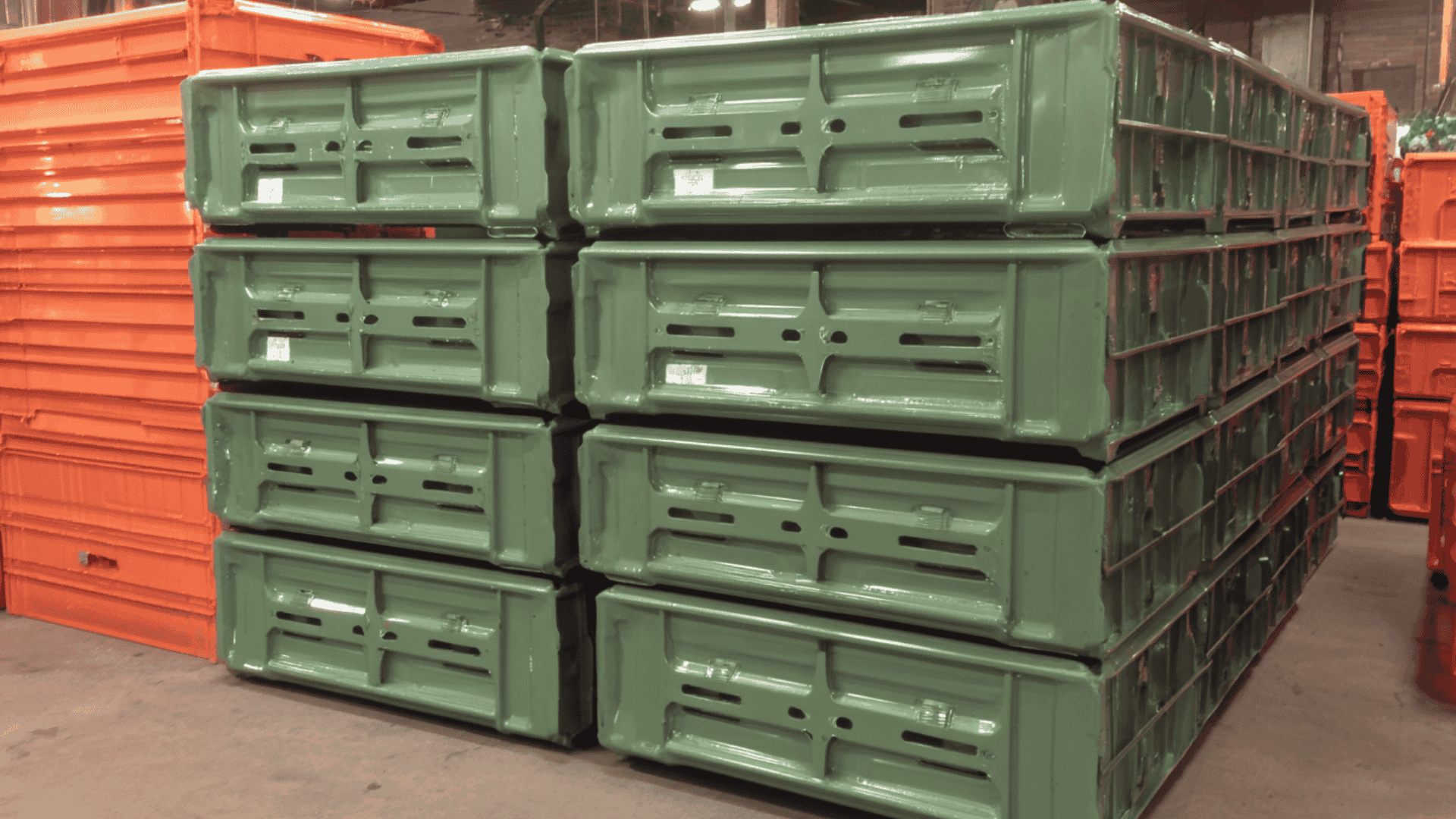
Heavy-gauge steel construction: Thicker steel resists bowing and sidewall collapse when loaded with dense parts.
Reinforced floor structure: Internal supports spread the weight across the base instead of allowing loads to settle into weak points.
Corrugated sidewalls: Formed corrugations increase strength without adding unnecessary bulk.
Heat-tolerant weld patterns: Welds are placed and sized to hold through repeated heating and cooling cycles.
High-capacity stacking legs: Defined stacking features carry vertical loads safely without shifting.
Forklift channel reinforcement: Strengthened entry points reduce damage from frequent fork contact.
Oil-tight construction options: Sealed seams prevent leaks when handling parts coated with oils or residue, where required by the application.
These design features support performance, but configuration choices determine how well containers fit specific handling tasks on the shop floor.
Also Read: Container Management in Automotive Manufacturing
Common Configurations Used in Hot & Heavy Environments
Hot and heavy environments demand more than a single container style. Different parts, handling methods, and discharge needs call for specific configurations that control weight, heat, and movement without placing added strain on workers or equipment.
Here are the most common container configurations used in hot and heavy applications and where each fits best:
Container Configuration | Where It Is Used |
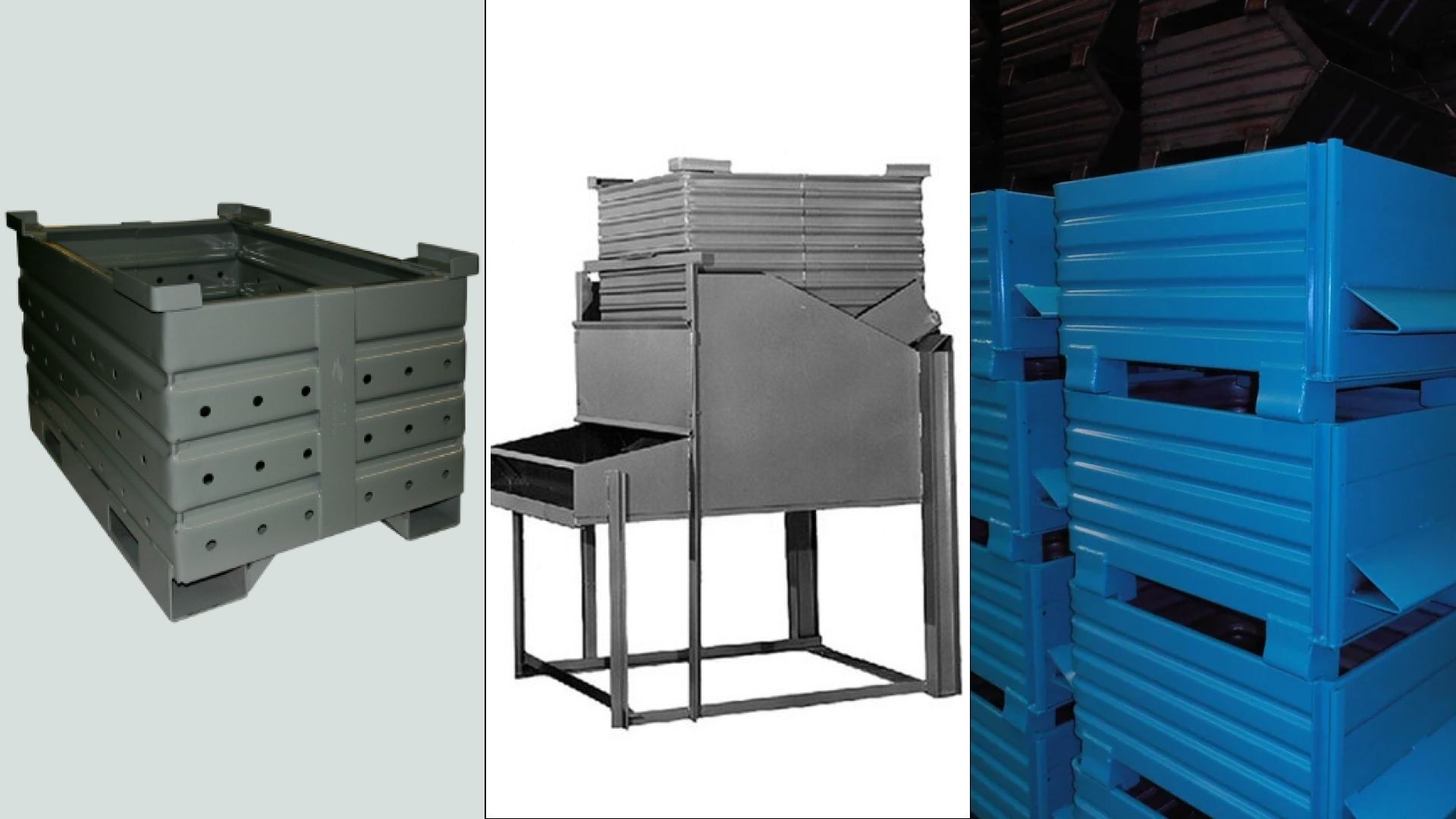
Drop-bottom containers | Controlled release of scrap or castings onto conveyors or into hoppers without manual dumping |
Roll-over containers | Safe emptying of heavy loads using forklift-mounted rotary attachments |
Smooth-sided containers | Storage of fasteners and small parts where cleanout and batch control matter |
Corrugated containers | Handling dense or irregular parts that place high stress on the sidewalls |
Platform boxes | Support of large or oversized components that do not fit standard bin footprints |
Tapered nose containers | Improved nesting and space control in staging or transport areas |
2-way fork entry containers | Dedicated flow paths where the forklift approach remains consistent |
4-way fork entry containers | Congested plant layouts requiring flexible access from multiple directions |
Selecting the right configuration helps control risk, improve handling, and keep material moving safely through hot and heavy operations.
Container Customization Based on Plant Conditions
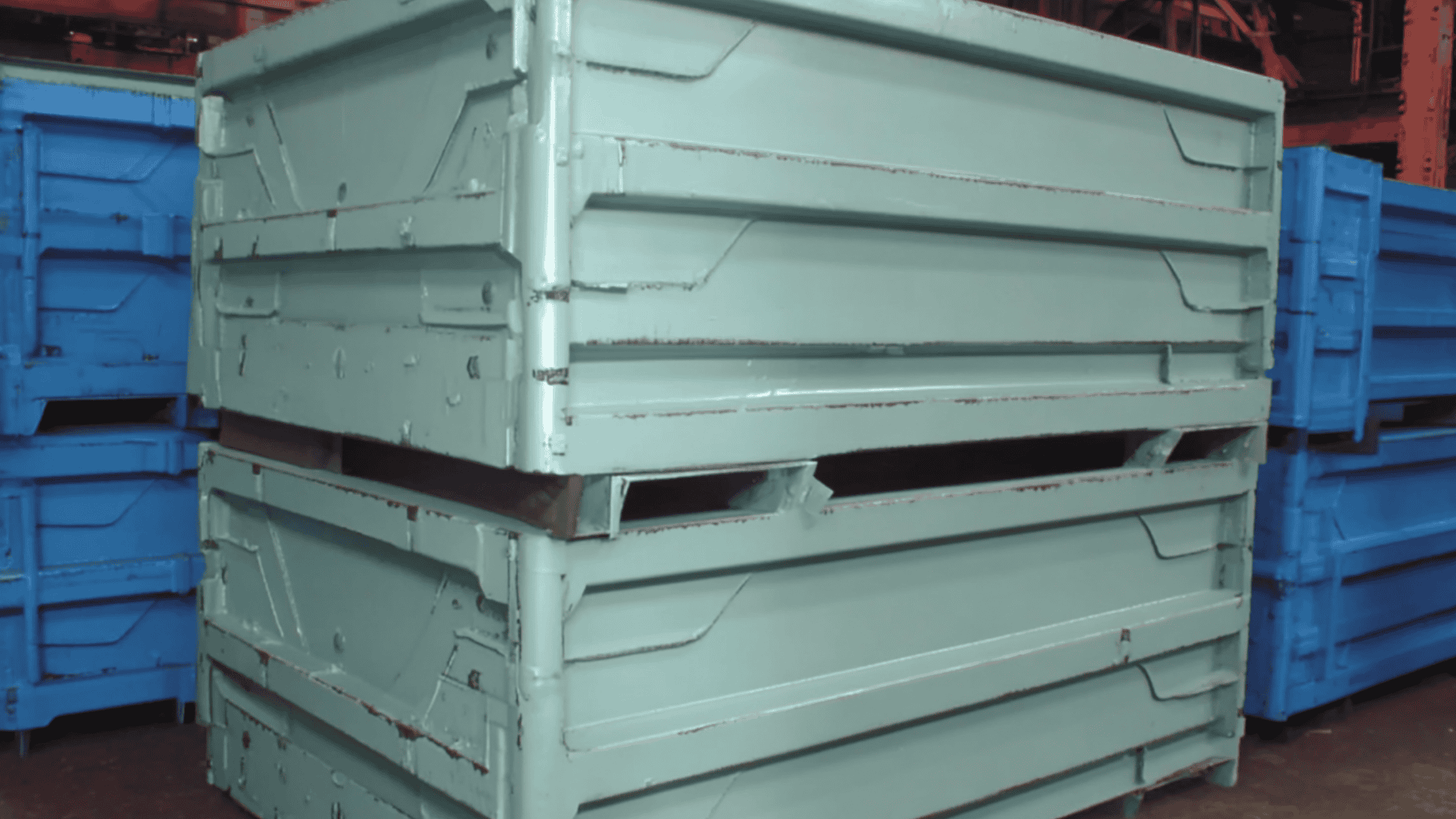
No two plants handle parts the same way. Differences in part weight, temperature, handling equipment, and floor layout mean standard container sizes and features often fall short. Customizing containers allows plants to match container design to actual shop floor conditions rather than forcing processes to work around fixed dimensions.
Here are the most common customization considerations in foundries and automotive plants:
Container size and footprint: Dimensions are adjusted to fit conveyors, workstations, and trailer space without wasted volume.
Steel gauge selection: Thicker steel is specified for dense parts or high stacking loads, while lighter gauges may suit lower-impact areas.
Fork entry style: Two-way or four-way entry is chosen based on aisle width and traffic patterns.
Discharge features: Drop gates, hinged bottoms, or side access doors are added to control how parts are released.
Interior features: Dividers or smooth interiors support batch separation and cleanout between runs.
Underclearance height: Leg height is set to match forklift capacity and floor conditions.
Identification and color coding: Paint colors and welded ID plates support visual control and part tracking.
With requirements defined, you can better evaluate suppliers that focus on containers built for hot and heavy handling environments.
Powell Systems: Built for Hot n Heavy Conditions
When containers are exposed to heat, dense loads, and constant handling, design shortcuts show up fast. Powell Systems builds steel containers with these conditions in mind, focusing on strength, stacking control, and long service life in foundry and automotive environments. Its Hot N Heavy line addresses applications where standard containers fall short.
Here are the ways Powell Systems supports hot and heavy container requirements:
Hot N Heavy 'The Brute' : Extra-heavy-duty steel containers built for castings, forgings, stampings, and other hot or dense parts that damage lighter bins.
High stacking capability: Container designs support vertical storage while maintaining load stability and floor safety.
Broad configuration options: Standard, smooth-sided, drop-bottom, roll-over, platform, tapered nose, and gravity-feed styles support different handling needs.
Heavy-gauge construction: Box and platform designs are available in steel gauges suited for dense loads and repeated handling.
Custom build flexibility: Length, width, height, corrugation depth, fork entry, and discharge features can be adjusted to match plant requirements.
Oil-tight and specialty designs: Sealed construction options support parts coated with oils or residue.
Midwest manufacturing base: Containers are built in the U.S. to support regional plants with shorter lead times and direct communication.
These capabilities allow Powell Systems to supply containers that match hot and heavy operating conditions without forcing plants to compromise on safety or handling control.
Conclusion
Hot and heavy conditions place constant stress on containers through heat, dense loads, and repeated handling. When containers are not built for these demands, safety risks rise, and material flow suffers. Choosing rugged steel containers designed for hot and heavy applications helps maintain stable stacking, controlled handling, and consistent production on the shop floor.
Contact Powell Systems today to review your part weight, temperature, and handling requirements.
FAQs
What are steel containers used for?
Steel containers are used to store, protect, and move parts within manufacturing plants. They support material flow between processes such as casting, machining, staging, and assembly while keeping loads contained and stable during forklift handling and stacking.
How long do heavy-duty steel containers typically last?
Service life depends on load, heat exposure, and handling frequency. In many plants, heavy-duty steel containers remain in use for years or decades because worn components can be repaired rather than replaced, extending usable life far beyond disposable alternatives.
Can steel containers be repaired after damage?
Yes. Bent stacking legs, worn fork channels, and cracked welds can often be repaired through straightening, reinforcement, or re-welding. This helps reduce replacement costs and keeps container fleets consistent.
How are steel containers rated for load and stacking?
Load ratings usually separate internal capacity from stacking capacity. A container may safely hold a certain weight while supporting fewer fully loaded containers stacked above it. Both ratings should be reviewed together to confirm safe use.
What happens to steel containers at the end of their service life?
When containers can no longer be repaired, they can be recycled as scrap metal. This allows plants to recover value instead of disposing of containers as waste.