
If you manage storage on a foundry or automotive production floor, small storage issues don’t stay small for long. Containers bend, parts stack where they shouldn’t, and operators lose time working around systems that were never built for heat, weight, or constant movement. These problems show up every shift, not on a planning document.
You’re not just storing parts. You’re trying to keep material moving safely, keep aisles clear, and keep operators supplied without delays. When storage systems fall short, the impact is felt in safety risks, damaged components, and lost production time.
In this blog, we’ll explore what a storage system in industry really means for heavy manufacturing, why storage must support material flow, which systems work best for foundries and automotive plants, and how to choose solutions built for long-term use on the production floor.
Key Takeaways:
A storage system in industry must support material movement, stacking, and part access, not just hold inventory between processes.
Foundries and forging operations require bulk storage built to handle heat, impact, and heavy loads without failure.
Automotive assembly storage must deliver parts directly to operators while reducing reaching, bending, and manual dumping.
Fastener storage demands smooth, clean containers to prevent part carryover and protect lot integrity.
Storage layout and container design play a direct role in floor safety, aisle control, and consistent production flow.
Non-Negotiable Requirements for Industrial Storage Systems
An industrial storage system is more than a place to hold parts. In heavy manufacturing, it must support how material is handled, moved, stacked, and presented on the production floor while holding up under harsh conditions like heat, weight, and impact.
Here are the core requirements that define whether a storage system actually works in industrial environments:
Durability and load capacity: Storage must handle heavy castings, forgings, and dense fasteners without bending, cracking, or failing under repeated use.
Safety under daily use: Containers and stacks should stay stable, predictable, and safe for operators, forklifts, and surrounding equipment.
Access and part presentation: Parts need to be easy to reach, see, and retrieve without excessive bending, reaching, or repositioning.
Space control: Storage should support stacking and vertical use of space to reduce floor congestion and keep aisles clear.
Fit with material flow: Storage must support how parts move through the plant, from incoming material to work-in-process and assembly.
When those requirements meet foundry and forging conditions, bulk storage becomes the first major stress test for any system.
Types of Storage Systems Used in Industrial Environments

Industrial facilities rely on different storage systems based on part weight, handling method, heat exposure, and where materials sit in the production process. No single system works across every area, which is why most plants use multiple storage types across bulk zones, workstations, and outbound areas.
Below is a comprehensive breakdown of common industrial storage systems and where each one fits best.
Storage System Type | Primary Use | Best Suited For | Key Considerations |
Bulk storage containers | Holding large volumes of material | Castings, forgings, heavy stampings | Must handle high weight, impact, and repeated forklift handling |
Pallet-based storage | Inbound and outbound material | Packaged goods, short-term staging | Requires strict weight limits and clear floor planning |
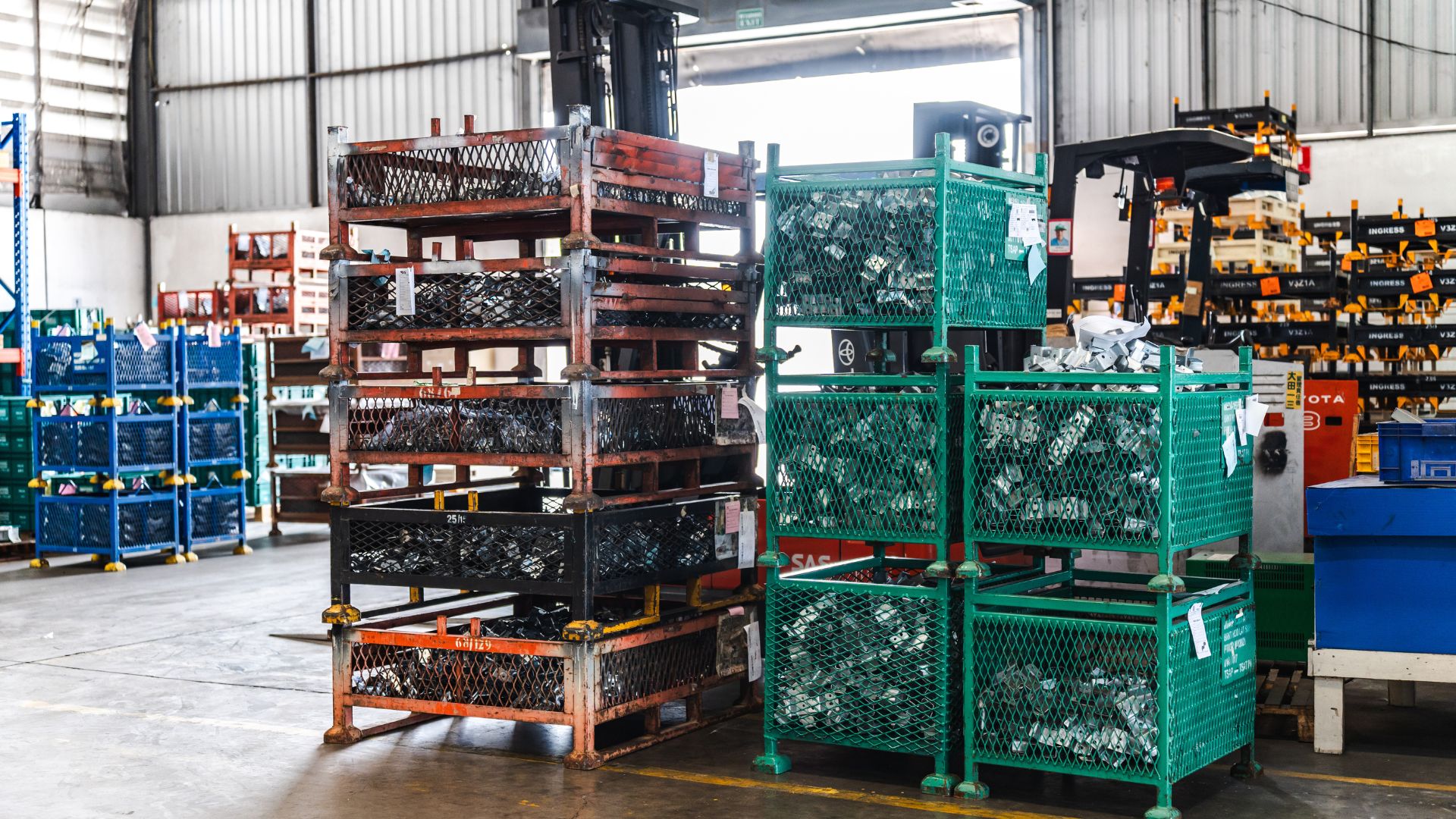
Stackable steel containers | Vertical storage | Dense or heavy parts | Needs reinforced stacking legs and consistent footprints |
Work-in-process containers | Between production steps | Machining, heat treat, plating | Must withstand frequent movement and handling |
Gravity-feed storage systems | Operator-level part access | Assembly lines, workstations | Focus on reach, visibility, and controlled part flow |
Drop-bottom containers | Controlled part discharge | Machining centers, hoppers | Requires precise positioning and secure release mechanisms |
Small-part storage systems | Part separation and clean changeovers | Nuts, bolts, washers, screws | Smooth interiors help prevent part carryover |
Rack-supported storage | Light-duty storage | Tooling, packaged components | Not suited for high heat or heavy impact |
Mobile storage units | Flexible storage locations | Temporary staging areas | Needs controlled traffic to reduce contact risk |
Automation-ready storage | Feeding machines or packaging | Weigh/count, feeders, filling lines | Must match equipment interface and discharge needs |
With storage systems in place, their impact extends beyond holding parts to controlling space usage and reducing floor-level risks.
Also Read: Material Handling Container Types Every Plant Manager Should Know
Using Storage Systems to Control Floor Space, Flow, and Safety
On production floors, clutter creates risk. When storage spreads outward instead of upward, aisles shrink, visibility drops, and forklift traffic becomes harder to control. A well-planned storage system helps bring order to spaces that handle constant movement and heavy loads.
Here are the key ways storage supports safer and more controlled floor conditions:
Vertical stacking: Uniform containers allow material to stack upward, freeing floor space and reducing scattered pallets.
Clear aisles: Defined storage footprints help keep forklift paths open and predictable.
Improved visibility: Consistent container sizes make it easier to see inventory levels without digging or rearranging stacks.
Reduced trip hazards: Fewer loose pallets and stray containers lower the risk of slips, trips, and contact incidents.
Support for 5S practices: Standard storage layouts help maintain order through sorting, placement, and routine checks.
When floor space and movement are under control, storage can begin supporting automated equipment instead of slowing it down.
Automation’s Role in Modern Industrial Storage Systems

Storage no longer stops at holding parts. On many production floors, containers now serve as the first step in automated processes, feeding parts directly into machines and packaging equipment. This shifts storage from a passive role into an active part of daily operations.
Here are the ways storage supports automation on the floor:
Feeding automated equipment: Containers are designed to release parts in a controlled way to support automated handling.
Weigh and count filling: Storage can tie into systems that fill parts to set weights or counts for shipping or downstream use.
Vibratory feeding: Bulk parts move from storage into feeders that orient and present them for assembly or packaging.
Reduced manual handling: Automation-supported storage lowers the need for scooping, lifting, and repeated forklift moves.
Consistent part flow: Predictable container output helps keep machines supplied without sudden shortages or pileups.
Making storage work across bulk handling, assembly, and automation depends on choosing a partner who understands production realities.
Also Read: Container Management in Automotive Manufacturing
Why Manufacturers Choose Powell Systems for Industrial Storage
Choosing a storage partner in heavy manufacturing means trusting that systems will hold up under daily abuse, not just look good on paper. Long service life, consistent performance, and a deep understanding of production floors matter more than broad claims or generic offerings.
Here are the reasons many manufacturers rely on Powell Systems:
Heavy-duty steel container expertise: Designed to handle castings, forgings, stampings, and hot parts without bending, warping, or stack failure.
Production-focused container designs: Gravity-feed, drop-bottom, and smooth-sided containers built to support part flow, operator access, and clean changeovers.
Fastener industry specialization: Storage built to prevent part carryover and protect lot integrity for nuts, bolts, washers, and small stampings.
Automation-ready systems: Containers, feeders, and weigh/count equipment designed to work together on the production floor.
Custom-built solutions: Sizes, capacities, and discharge methods matched to how parts move through each operation.
Midwest manufacturing roots: Over 100 years of experience supporting foundries, automotive plants, and fastener manufacturers across the region.
Contact Powell Systems today to discuss storage solutions built for the weight, heat, and handling demands on your production floor.
Conclusion
A storage system in industry does more than hold parts between steps. It affects safety, floor space, material flow, and how easily your team can keep production moving. When storage is built for the weight, heat, and pace of heavy manufacturing, problems stay controlled instead of spreading across the floor.
If you’re dealing with damaged containers, cluttered aisles, or storage that slows down your operation, it may be time to rethink how your system is built. The right approach starts with understanding your parts, your processes, and the demands of your facility.
Ready to talk through your storage challenges? Get a quote or speak with an expert to review your operation and identify storage solutions designed for heavy manufacturing environments.
FAQs
How do steel containers compare to plastic bins for long-term industrial use?
Steel containers are commonly used in heavy manufacturing because they resist impact, high loads, and heat exposure found on production floors. Plastic bins are lighter but more likely to crack or deform under sustained weight or elevated temperatures, making steel a more reliable choice for harsh environments.
Can damaged steel containers be repaired, or do they require full replacement?
Most industrial steel containers are designed to be repairable. Bent frames, damaged stacking legs, or wall deformation can often be corrected through straightening or welding, allowing continued safe use when repairs follow approved maintenance procedures.
What methods are used to identify parts stored in steel containers?
Common identification methods include color coding, stenciled numbering, and attached card holders. Many facilities follow ISO-based marking practices to support consistent material identification, safety awareness, and inventory tracking across departments.
How is safe stacking height determined in an industrial facility?
Safe stacking height depends on the loaded container weight, floor load ratings, and manufacturer-provided static load data. OSHA regulations require stored materials to be secured against sliding or collapse, making adherence to posted load limits essential.
What routine maintenance helps keep industrial storage systems safe?
Facilities typically conduct scheduled inspections to check stacking feet, lift points, welds, and surfaces for cracks or forklift damage. Inspection frequency varies by usage level and site policy, but regular checks help reduce structural risk over time.