
You deal with constant pressure to keep parts moving while energy costs, equipment runtime, and labor demands keep piling up. Forklifts, conveyors, and other handling systems stay powered on all shift, even when they’re only moving parts a short distance. Over time, that steady power draw becomes hard to ignore.
Electricity plays a major role in this challenge. Industrial electric motors consume roughly 70% of the electricity used in manufacturing facilities, which means material handling systems can account for a large share of operating costs, especially in plants moving heavy metal components.
In this blog, we’ll explore where energy is commonly lost in traditional material handling, how gravity-fed storage solutions reduce electricity use on the shop floor, why these savings matter for metalworking and automotive plants, how gravity-fed systems compare to powered options, and when this type of storage makes sense.
Key Takeaways:
Gravity-fed storage reduces reliance on motors, conveyors, and powered movement on the shop floor.
Material handling can account for a large share of plant electricity use, especially when moving heavy metal parts.
Gravity-fed systems support consistent part flow with fewer mechanical components and less downtime risk.
Metalworking and automotive plants benefit most when part movement is repeatable, and point-of-use access matters.
Comparing gravity-fed storage with powered systems helps identify where lower energy handling makes sense.
Gravity-Fed Storage Systems and Their Role on the Shop Floor
Gravity-fed storage refers to material-handling systems that rely on natural downward movement rather than powered equipment to move parts. These systems use container design and slight elevation changes to allow parts to flow to the point of use with minimal mechanical input.
This type of storage is not related to grid-scale energy storage or electrical power generation. It works by positioning containers or racks so parts move forward as items are removed, keeping inventory accessible without motors, conveyors, or hydraulics. The result is a steady part presentation with fewer powered movements on the shop floor.
Common Manufacturing Use Cases
Here are typical ways gravity-fed storage is applied in production environments.
In process part flow: Keeps work in progress moving between operations without repeated forklift trips
Workstation feeding: Presents parts at a consistent height and location for operators during assembly or machining
Fastener handling: Supports controlled flow of nuts, bolts, and washers while limiting spills and rehandling
Heavy component staging: Holds dense metal parts close to where they are needed without powered positioning
Quality-controlled environments: Reduce part mixing and stray components by maintaining a defined flow path
With the basics established, it becomes easier to compare gravity-fed storage against common powered handling approaches.
Traditional Material Handling vs Gravity-Fed Storage
Many production floors rely on powered systems to move parts from one step to the next. Forklifts, conveyors, lifts, and automated handling all require electricity, maintenance, and operator time. When parts are heavy, and moves are frequent, these systems can create a steady energy draw and additional handling steps that affect daily operations.
Here are the key differences between traditional powered handling and gravity-fed storage systems.
Factor | Traditional Material Handling | Gravity-Fed Storage |
Power source | Electric motors, batteries, or hydraulics | Gravity only |
Energy use | Continuous or frequent power draw | No electrical input during part movement |
Equipment run time | Forklifts and conveyors operate throughout shifts | Movement occurs only when parts are removed |
Maintenance needs | Motors, chains, rollers, batteries | Minimal moving components |
Labor involvement | Operator-driven moves and positioning | Parts advance automatically |
Downtime risk | Breakdowns can stop material flow | Fewer mechanical points of failure |
Suitability for heavy parts | Higher wear on equipment | Designed to support dense metal components |
The operational impact becomes more meaningful when viewed through the lens of heavy parts and high production volumes.
Also Read: Material Handling Container Types Every Plant Manager Should Know
Why Energy Reduction Matters in Metalworking and Automotive Plants

In metalworking and automotive production, parts are heavy, moves are frequent, and material handling never really stops. Each powered transfer adds to electrical use, equipment wear, and labor time. Reducing the number of powered movements can ease day-to-day operating pressure across the plant.
Here are the reasons these energy savings carry real weight in these environments.
Heavy parts increase energy demand: Dense components require more force to lift, carry, and position, raising power use with every move.
High part volumes magnify costs: Small energy reductions add up quickly when thousands of parts move through each shift.
Less rehandling reduces waste: Gravity-fed flow keeps parts moving forward, limiting backtracking and repeat moves.
Cleaner flow supports quality control: Defined part paths help prevent mixing, damage, and lost components.
Support for long-term cost control: Lower power use and fewer mechanical systems help stabilize operating expenses over time
With industry needs in mind, buyers often look for clear comparisons before committing to a handling approach.
Gravity-Fed Containers vs Powered Systems: A Practical Buyer Comparison
Choosing between gravity-fed containers and powered handling systems often comes down to how much control, energy use, and maintenance a plant is willing to manage. Both approaches move parts, but they do so in very different ways that affect daily operations, costs, and reliability on the shop floor.
Here are key points buyers often compare when evaluating these options.
Consideration | Powered Handling Systems | Gravity-Fed Containers |
Energy input | Requires electricity or battery charging | No electrical input required to advance parts once positioned |
Equipment complexity | Motors, drives, controls, and sensors | Basic structure with minimal moving parts |
Maintenance workload | Regular service and part replacement | Limited upkeep needs |
Downtime impact | System faults can halt material flow | Part flow continues without power |
Labor involvement | Operators manage moves and positioning | Parts advance as items are removed |
Fit for heavy metal parts | Higher wear over time | Built to support dense components |
Layout flexibility | Fixed paths and layouts | Easier to reposition within the plant |
Even with clear differences, choosing the right system depends on how well gravity-fed storage fits your specific production needs.
Also Read: Container Management in Automotive Manufacturing
When Gravity-Fed Storage Makes Sense on the Shop Floor
Gravity-fed storage works well in many production settings, but it is not a match for every operation. Understanding where it fits and where other approaches may be required helps avoid layout changes that do not support actual production needs.
Here are situations where gravity-fed storage works well and where it may fall short.
High volume, repeatable part flow: Ideal for parts that move in a consistent sequence between processes
Heavy or dense components: Supports weight without relying on powered lifting or positioning
Point of use part access: Keeps parts close to operators without constant forklift support
Limited value from automation: Less suitable when complex routing or frequent part changes are required
Long-distance transport needs: Powered systems may be better when parts must travel across large facilities.
Selecting the right storage approach often leads manufacturers to focus on container design, construction, and long-term shop floor use.
Why Manufacturers Rely on Powell Systems Gravity-Fed Containers

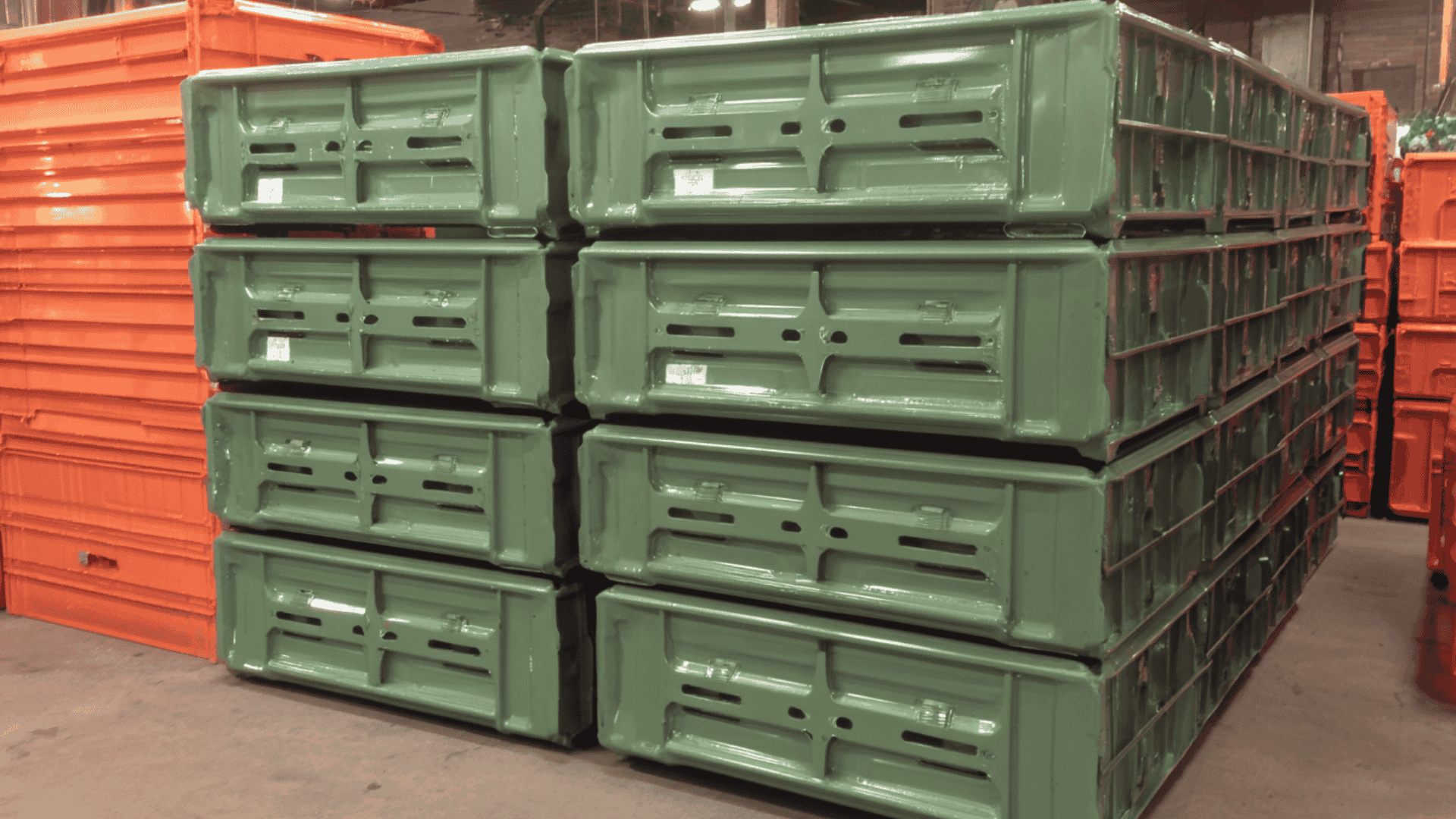
Manufacturers that handle heavy-metal parts need storage equipment that withstands daily use while supporting consistent part flow. Gravity-fed containers from Powell Systems are built around production needs found in fastener, metalworking, and automotive plants, with designs focused on durability, control, and predictable part movement.
Here are the reasons many manufacturers select these gravity-fed container systems.
Steel construction for heavy parts: Built to handle dense fasteners, forged components, and machined parts without relying on powered movement.
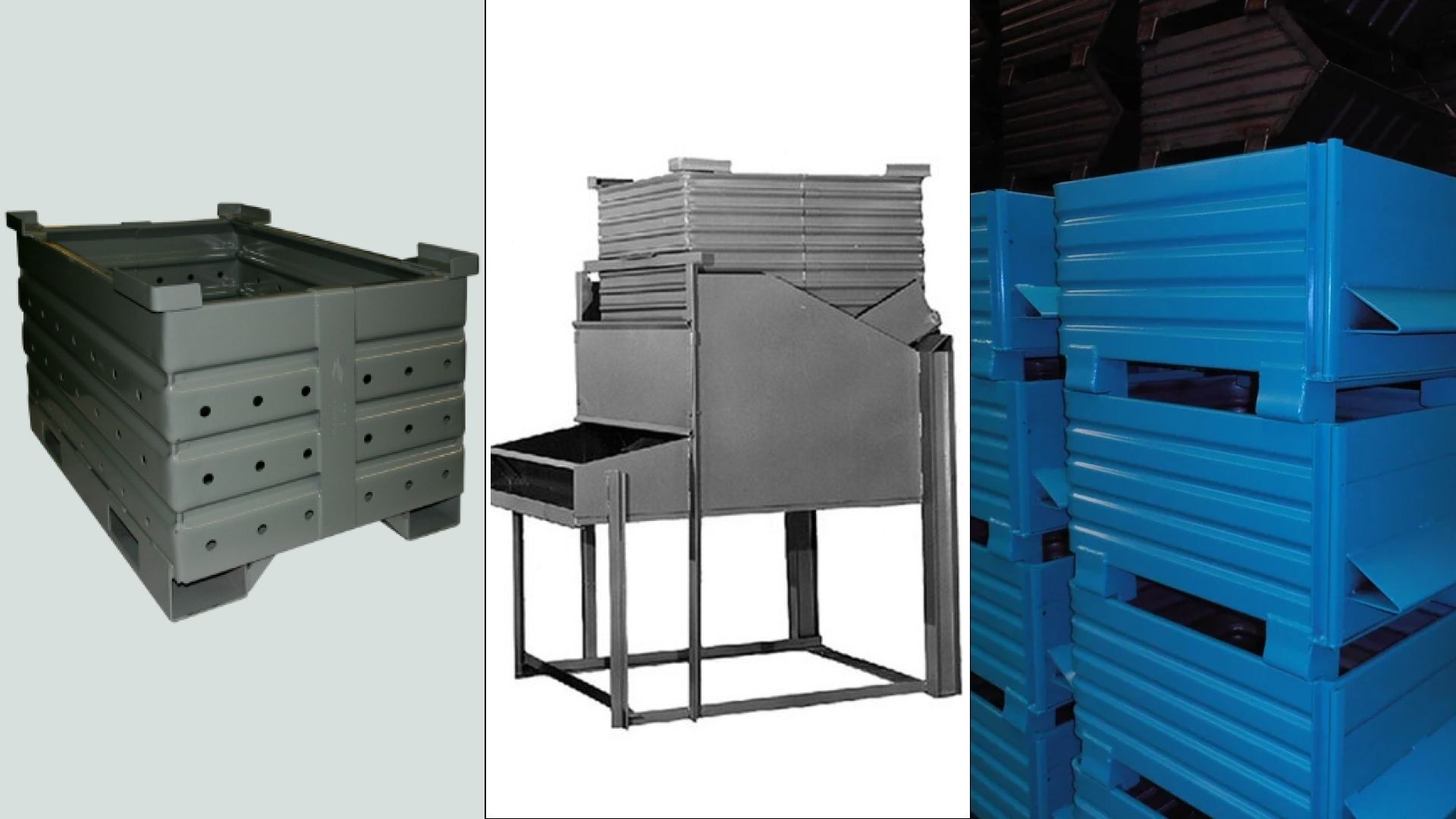
Flowmatic gravity feed design: Allows parts to move forward as they are removed, keeping access consistent at the point of use.
Stackable and forklift ready: Formed stacking legs allow stable stacking with two-way or four-way forklift entry.
Clean container design: Smooth sides, welded seams, and capped legs reduce areas where stray parts can collect.
Support for quality programs: Controlled discharge and reduced part mixing help maintain part separation between runs.
Custom build options: Available with drop bottoms, roll-over channels, gates, oil-tight designs, and size variations to match plant requirements.
Contact our team to get a quote and review available gravity-fed container options built to support heavy parts and consistent shop floor use.
Conclusion
Energy use in material handling is often overlooked, impacting costs and production flow. Gravity-fed storage reduces reliance on powered movement, keeping parts accessible where work is performed. This approach supports smoother workflows in metalworking and automotive plants without complicating the shop floor.
If you are reviewing how parts flow through your operation and want to reduce energy use tied to handling, contact us today to discuss gravity-fed container options and next steps.
FAQs
How much floor space do gravity-fed containers typically require?
Gravity-fed containers are often placed close to workstations or between operations, which can reduce the total space needed for staging parts. Actual space requirements depend on container size, stacking height, and aisle access rather than added equipment or support systems.
Can gravity-fed storage handle oily or coated metal parts?
Yes. Many gravity-fed container designs can be specified to manage parts with oil or surface treatments. Options such as solid panels, controlled discharge openings, and oil-tight construction help keep fluids contained and floors cleaner.
Are gravity-fed containers compatible with existing forklifts and pallets?
Most gravity-fed steel containers are designed for standard forklift handling and can be stacked or moved using common lift trucks. This allows them to fit into existing material handling practices without requiring special attachments.
How do gravity-fed containers support part changeovers between production runs?
Clear container identification, defined discharge points, and controlled part flow help simplify changeovers. Emptying, cleaning, and resetting containers can be done without powered systems or extended downtime between runs.
What factors affect lead time when ordering gravity-fed containers?
Lead time is influenced by container size, load rating, paint or finish selection, and any requested design changes. Standard configurations are often available faster than custom builds that require unique dimensions or features.