
You see the signs every shift. Containers crowd aisles. Parts wait longer than planned. Operators walk farther just to do routine work. Nothing is broken, yet progress feels harder than it should.
This is a common frustration in industrial material handling. The basics may be in place, but storage and movement methods often fall short once real production pressure sets in. Weight, heat, and constant handling expose gaps that were easy to miss on paper.
This article looks at where material handling breaks down during production, why storage matters beyond the warehouse, and how shop-floor conditions shape better decisions.
Key Takeaways:
Material handling and storage affect production at every stage, not just in the warehouse.
Heavy industry places unique demands on containers due to heat, dense loads, and frequent handling.
Storage design and stack stability play a major role in floor space use and daily safety.
Container material choice impacts service life, repair options, and long-term handling risk.
Routine inspection and repair help keep handling equipment safe and usable over time.
Material Handling and Storage Across the Production Flow
Material handling and storage applications do not stop at the warehouse door. Inside a plant, materials move, pause, and wait at multiple points during production. Each pause counts as storage, even when parts are only held for minutes or hours. When these moments are overlooked, flow suffers, and small handling issues repeat throughout the shift.
Here are the main stages where material handling and storage shape daily production.
Receiving and Inbound Staging
This is the first point of control. Materials arrive in bulk, pallets, or containers and must be staged before entering production. Poor inbound handling often shows up later as mixed parts, damaged loads, or unplanned rehandling. Containers used here set the tone for how materials are tracked, stacked, and moved through the plant.
Work-in-Process Buffering
Work-in-process storage sits between operations and sees constant movement. Parts are lifted, set down, stacked, unstacked, and repositioned throughout the day. These areas carry more handling cycles than long-term storage, which raises the risk of congestion and extra operator motion. When WIP storage is not planned for frequent access, it becomes a choke point instead of a buffer.
Line-Side and Point-of-Use Storage
At the line, storage becomes part of the job itself. Containers must hold parts while also allowing easy access during assembly or processing. When storage is poorly matched to the task, operators bend deeper, reach farther, and work around clutter. Line-side storage should support steady work without adding steps or distractions.
Finished Goods and Outbound Staging
Finished parts often wait before shipment, sometimes longer than expected. Stable stacking and consistent footprints matter here, since containers may be moved several times before leaving the facility. When outbound storage is unreliable, loads shift, aisles tighten, and damage risk rises just before delivery.
Once you see how materials move through production, the next concern is how harsh conditions place extra strain on handling methods.
Material Handling Challenges in Heavy Industry
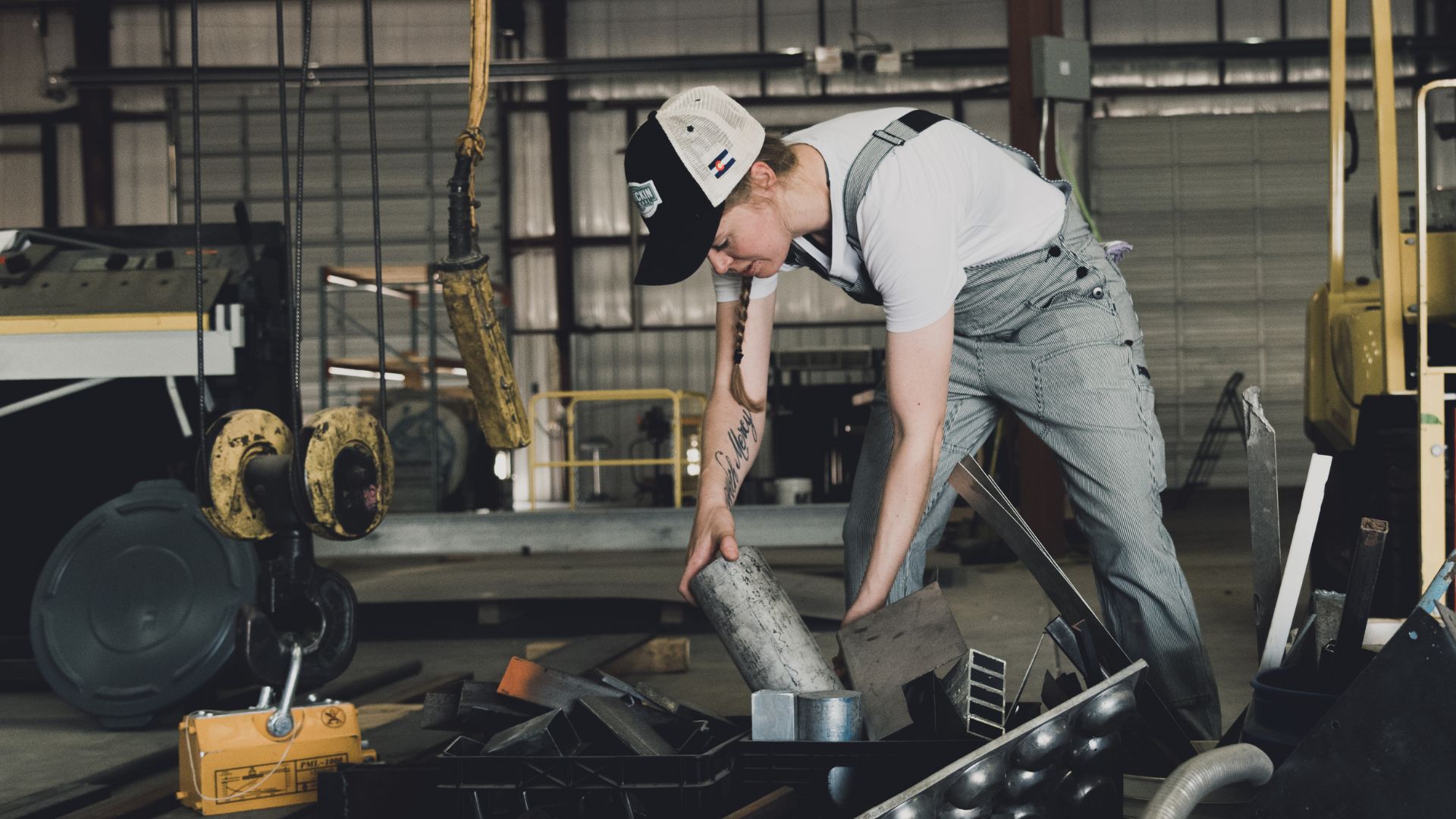
Heavy manufacturing brings conditions that push standard handling methods past their limits. Parts are denser, handling cycles are more frequent, and mistakes carry greater consequences. When containers and storage methods are not built for these demands, problems surface quickly on the production floor.
Here are the most common material handling challenges tied to heavy industrial applications.
Heat and thermal exposure
In foundries and forging areas, parts often enter containers while still hot. Repeated exposure can weaken container walls, distort shapes, and reduce stacking stability. Heat also raises safety concerns when containers are handled too soon or shift during lifting.
High load density
Heavy parts concentrate weight in a small footprint. Even when total weight ratings seem adequate, dense loads place added stress on fork pockets, stacking legs, and base panels. Over time, this leads to bending, cracked welds, and unstable stacks.
Frequent handling cycles
In-process containers are lifted and set down many times per shift. Repeated movement accelerates wear and turns small design flaws into recurring handling problems.
Contamination risks with small parts
Fasteners and small stampings can lodge in seams, corners, or surface gaps. Left behind parts cause mixing between batches and create counting errors that are hard to catch before shipment.
Unsafe unloading and discharge
Dense or awkward parts often require dumping or controlled release. When containers are not suited for the task, operators rely on manual tipping or improvised methods that raise injury risk and slow work.
When handling challenges repeat, storage design often plays a larger role than expected in how safely materials stack and occupy space.
Why Storage Design Matters More Than Floor Space
When floor space is tight, the first reaction is often to spread out horizontally instead of building upward safely. Racks grow wider, staging areas creep into aisles, and movement becomes harder. In many cases, the issue is not a lack of space but poor use of vertical capacity. Storage design plays a direct role in how much work fits safely within the same floor footprint.
Here are the storage design factors that influence cube utilization while keeping people and materials safe.
Stacking capability and structural strength: Containers must support full loads at multiple stack heights without flexing. Weak walls or undersized legs limit how high loads can go, forcing materials to spread across the floor instead of stacking upward.
Stable stack interfaces: Consistent stacking points and interlocking features help loads settle where they should. When stacks rely on friction alone, even minor bumps can shift containers and raise the risk of collapse.
Predictable container footprints: Storage works better when containers share a consistent length and width. Mixed footprints lead to uneven stacks, blocked aisles, and wasted space between loads that cannot be reclaimed.
Clear forklift access: Fork pockets and entry points must remain open at every stack level. Poor access encourages partial lifting or off-center picks, which strain equipment and destabilize stacks.
Vertical planning tied to floor limits: Stack height should account for floor load ratings and traffic patterns, not just container strength. Safe vertical storage depends on how the weight is distributed across the slab and how often stacks are moved.
Damage visibility and maintenance: Storage systems work best when wear is easy to spot. Bent legs, cracked welds, or deformed bases reduce safe stack height and should trigger repair or removal before failures occur.
Storage design sets the structure, but container material determines how well that structure holds up under repeated handling and exposure.
Also Read: Material Handling Container Types Every Plant Manager Should Know
Material Selection in Industrial Material Handling

The material used to build containers and storage equipment shapes how they perform over time. Initial cost often drives the first decision, but daily handling, exposure, and repair needs determine whether that choice holds up on the floor. Comparing materials side by side helps show where performance limits appear during regular, high-cycle use.
Here are common container material options used in industrial material handling and how they compare.
Factor | Steel | Plastic | Wood |
Load capacity | Handles heavy and dense loads without flexing | Can crack or deform under high weight | Strength varies based on build quality |
Heat exposure | Tolerates heat without loss of shape | Softens or becomes brittle with heat | Susceptible to scorching and splintering |
Stack height | Supports higher stacking when properly designed | Stack height limited by wall strength | Stack limits change as boards wear |
Repairability | Repairable through welding or part replacement | Damage often requires full replacement | Repairs are temporary and inconsistent |
Service life | Long life under repeated handling | Shorter life with frequent lift cycles | High replacement rate with daily use |
Cleanliness | Non-porous surfaces limit debris buildup | Gouges can trap material | Wood debris creates cleanliness issues |
Dimensional stability | Maintains footprint over time | Dimensions can shift with temperature | Warping alters the footprint and stack fit |
With material limits understood, a short checklist helps you verify whether a container truly matches your operation.
Industrial Material Handling Equipment Selection Checklist
Choosing the right container often comes down to asking the right questions before buying. A short review of your specific application can help avoid mismatches that show up later as damage, extra handling, or safety concerns. Use this checklist to clarify what your operation actually requires.
Load and Environment Requirements
Weight: Does the container rating exceed the heaviest expected load, including shock loads from dropped or uneven parts?
Heat: Will parts enter the container while still hot? If so, is the container material suited to handle thermal exposure without warping?
Impact: How are parts loaded—by hand, conveyor, or overhead drop? Drop loading places added stress on floors and welds.
Movement and Handling
Stacking: How high must containers stack to free floor space? Confirm the leg design supports that height with full loads.
Transport: Will containers move by forklift, pallet jack, or crane? Check for four-way entry or lifting points as needed.
Dumping: Will loads need to rotate or discharge? Fork pockets and frames should support controlled dumping without distortion.
Point-of-Use Performance
Access: Do operators reach into the container often? Drop-front or gravity-feed designs can reduce bending and deep reaching.
Contents: Are parts small or prone to sticking? Smooth interior surfaces help reduce batch mixing and leftover parts.
Flow path: Will the container remain in-house or travel outside the facility? Returnable use places different demands on durability and handling.
Even well-matched containers face wear, which makes regular inspection and maintenance part of responsible handling practices.
Get a quote to review container design, stacking limits, handling conditions, and budget fit before committing to long-term use on the production floor.
Maintenance and Safety in Industrial Material Handling
In heavy manufacturing, containers take hits. Forks clip legs, loads shift, hot parts stress metal, and repeated handling wears down joints. The question is not whether damage will occur, but how early it is noticed and how it is addressed. Regular inspection and repair keep handling equipment safe, predictable, and usable over a long service life.
Here are key areas plant teams should review as part of routine container inspection.
Structural Integrity
Stacking legs and corners: Look for bent legs, cracked welds, or uneven contact points. Even small distortions can reduce safe stack height and increase collapse risk.
Sidewalls and base panels: Check for bowing, dents, or oil-canning caused by dense loads or impact. Deformed panels change how weight transfers through a stack.
Fork pockets and lift points: These areas absorb repeated stress. Elongation, cracking, or thinning of metal signals rising failure risk during lifting.
Stability and Handling Safety
Stack alignment: Containers should sit squarely when stacked. Leaning stacks or visible gaps between units point to wear or damage that needs attention.
Fork entry condition: Obstructed or distorted fork openings increase off-center picks, which raise tip-over risk during transport.
Discharge mechanisms: For drop-bottom or dumping containers, hinges, latches, and pivot points should move freely and close fully without binding.
Cleanliness and Part Control
Interior surfaces: Inspect for buildup, lodged parts, or surface damage that could trap material. Leftover parts create batch mixing and counting issues.
Drainage and debris zones: Corners, seams, and base joints should remain clear so parts and debris do not accumulate over time.
As inspection findings add up, you need clear criteria to decide whether damaged containers should be repaired or removed from active service.
Repair vs. Replacement Decisions
One advantage of steel containers in industrial material handling is repairability. Bent legs, cracked welds, or worn fork pockets can often be restored and returned to service rather than discarded. Clear guidelines help teams decide when repair makes sense and when removal is safer.
Repair is appropriate when damage is localized and does not affect the overall geometry.
Removal is necessary when deformation changes stack alignment, load paths, or lifting safety.
When containers are kept in safe working condition, they are better suited to support orderly workflows and predictable daily production routines.
Also Read: Container Management in Automotive Manufacturing
Integrating Handling Equipment with Lean Manufacturing
On many shop floors, lean efforts focus on processes, while handling tools stay unchanged. When containers and equipment do not match how work is done, waste shows up in small, repeatable ways. Handling choices influence motion, access, and order at the point of work, which makes them part of daily lean outcomes.
Here are practical ways to handle equipment that supports lean manufacturing on the floor:
Reducing unnecessary motion: Containers that present parts at a consistent height limit bending, reaching, and extra steps. When parts stay within easy reach, operators spend more time working and less time adjusting their position.
Supporting visual order: Standard container sizes and clear openings help define where materials belong. This makes it easier to spot shortages, excess parts, or misplaced loads during routine checks.
Keeping work areas clear: Containers designed for stacking and stable placement reduce sprawl around machines and benches. Clear aisles and defined zones lower the interruption and make movement more predictable.
Limiting double handling: When the same container can be used for storage, movement, and point-of-use access, parts are handled fewer times. Fewer transfers reduce labor and the chance of damage.
Improving access without added steps: Features such as angled bases or controlled discharge bring parts forward as they are used. This keeps the flow steady without manual sorting or repeated repositioning.
Supporting lean work requires containers built for heavy use, which is where experience with demanding industrial conditions becomes important.
How Powell Systems Supports Demanding Material Handling Needs
Heavy manufacturing places demands on containers that light-duty designs were never meant to handle. Weight, heat, and constant movement quickly expose weak points. This is where a specialist approach matters, one built around how materials are actually handled on industrial floors.
Here is how Powell Systems supports demanding industrial material handling requirements.
Longstanding experience: With roots going back more than 100 years, the company has worked closely with foundries, automotive suppliers, and metalworking operations. This history reflects long exposure to dense parts, hot processes, and high handling frequency.
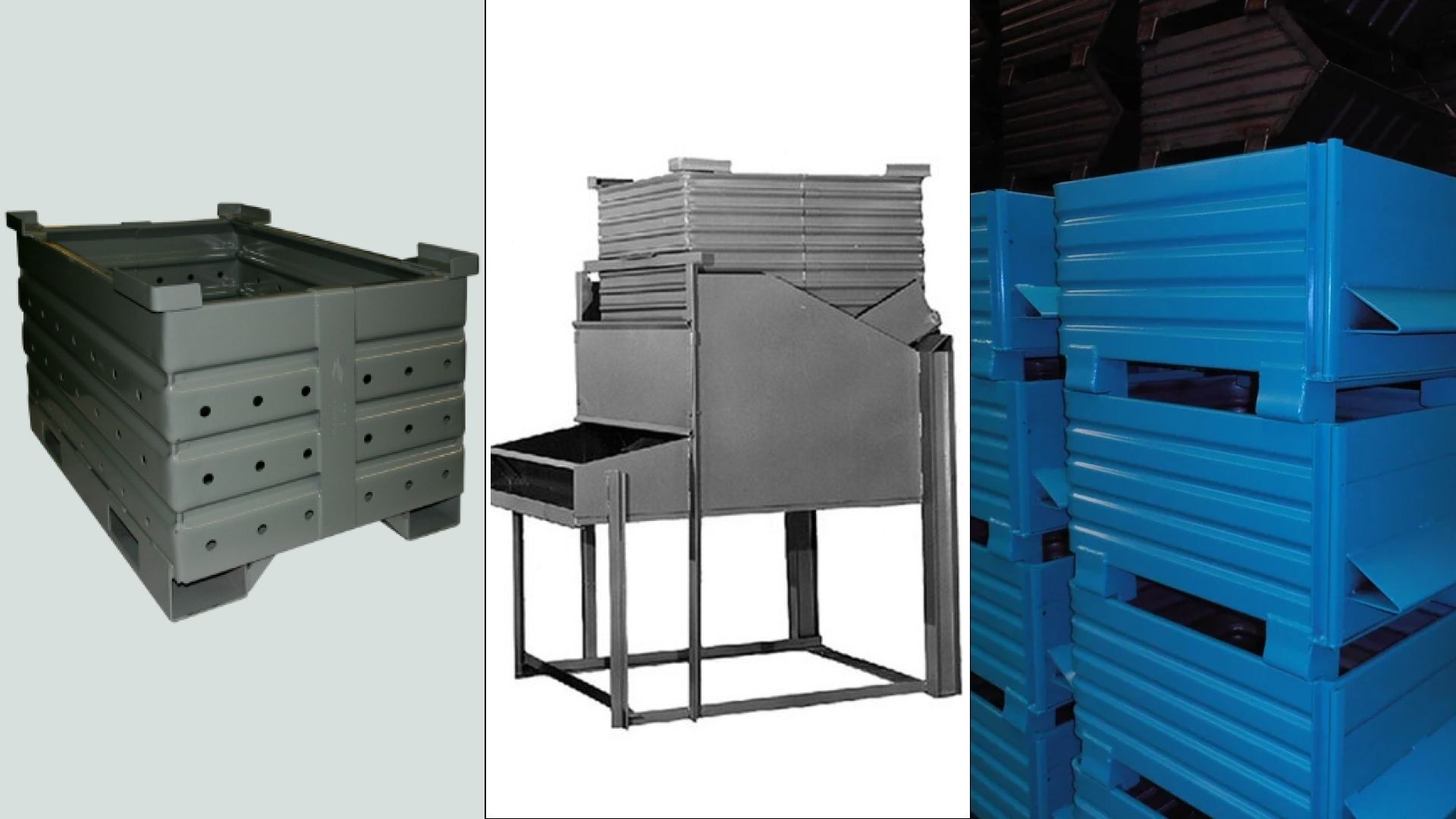
Focused on corrugated steel containers: Product development centers on steel container designs intended for weight, heat, and repeated forklift handling. The emphasis stays on durability and predictable performance rather than light-duty use.
Solutions for heat and heavy loads: Containers such as the Hot & Heavy “The Brute” are built for castings, forgings, and stampings. Thicker steel and reinforced construction support stacking and handling where standard containers often deform.
Support for controlled part flow: Gravity-feed designs like the Flowmatic container help keep parts accessible during in-process handling. Smooth movement of parts reduces the need for manual sorting at the line.
Contamination control for small parts: Smooth-sided container designs address issues with stray fasteners and small stampings. Flat interior surfaces reduce trapped parts and support cleaner batch handling.
Options for controlled discharge: Drop-bottom and related designs allow dense parts to be released without tipping or manual dumping. This supports safer unloading in assembly and processing areas.
Custom-built container capability: When standard sizes or features do not fit a process, designs can be adjusted for dimensions, access openings, discharge methods, or handling equipment already in use.
Regional manufacturing presence: Production based in the Midwest allows closer collaboration with manufacturers facing similar layouts, equipment, and handling practices.
For operations handling hot parts, dense loads, or strict part control needs, early discussion around container design can prevent long-term handling issues.
Conclusion
Material handling problems rarely appear all at once. They surface as crowded aisles, unstable stacks, extra steps, or small safety concerns that repeat every day. In industrial material handling, these issues often trace back to how materials are stored and handled during production, not a lack of effort on the floor.
Looking closely at flow stages, storage design, load conditions, and container construction helps reveal where handling is working against the operation. Small changes in how parts are held, stacked, or accessed can remove friction that slows work and adds risk.
Contact us to review your current handling setup, discuss container options, or explore designs that better match your application.
FAQs
What are the four types of material handling equipment?
Material handling equipment is often grouped into four categories: storage equipment, transport equipment, positioning equipment, and bulk handling equipment. Each category supports a different role, from holding materials in place to moving or dumping loads. Most plants rely on a mix rather than a single type.
What are the ten principles of material handling?
The ten principles act as general guidelines for planning how materials move and are stored. They cover areas such as planning ahead, reducing unnecessary movement, improving space use, supporting safety, and considering long-term cost. These principles guide decisions but must be adapted to actual shop-floor conditions.
What is the formula for material handling?
There is no single mathematical formula that defines material handling. Instead, it is evaluated through factors like handling time, labor involved, space required, and damage or safety risk. Plants often assess handling performance by reviewing how often materials are touched, moved, or delayed.
What is “lean” material handling?
Lean material handling focuses on reducing wasted motion, excess handling, and unnecessary storage between steps. The goal is to support steady work by keeping materials accessible, organized, and predictable at the point of use. It supports lean processes but does not replace them.
What are the three main material handling activities?
The three main activities are movement, storage, and control of materials. Movement covers how items travel between locations, storage covers where and how they pause, and control covers tracking, access, and condition. All three occur repeatedly during production, not just at the warehouse level.